


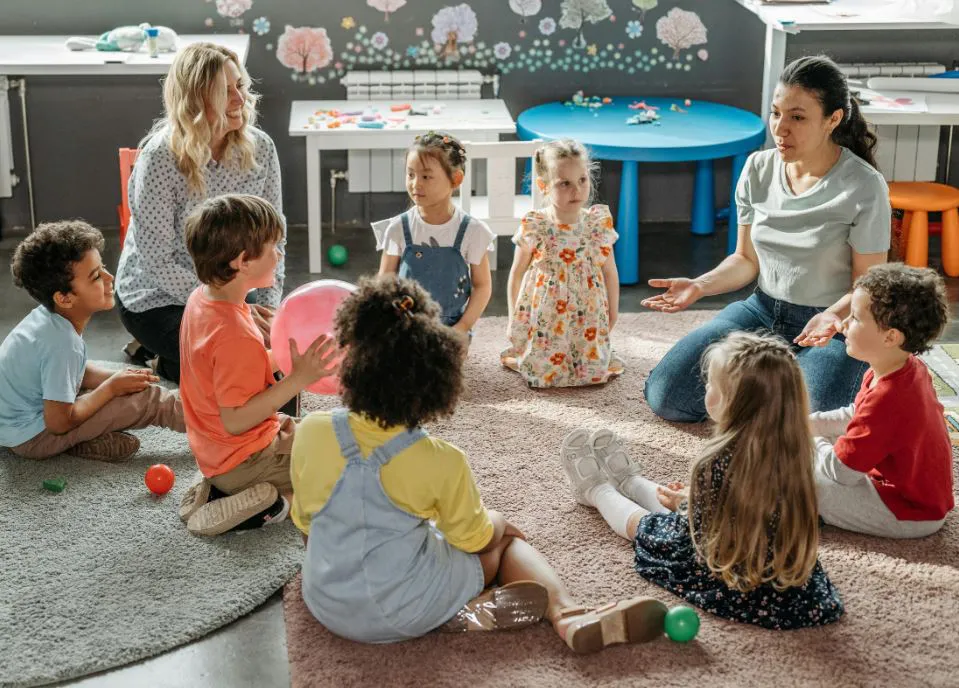

In a world where children are surrounded by fast-moving routines, screens, and constant stimulation, emotional overwhelm has become increasingly common. Many children struggle to understand or manage their inner experiences, and this is where mindfulness can play an important role. Research suggests that mindfulness-based interventions can help children develop emotional awareness, self-control, and resilience (Suárez-García et al., 2020; Treves et al., 2023).
What Is Mindfulness And How Does It Help Children?
Mindfulness, as defined by Jon Kabat-Zinn (1994), is “paying attention in a particular way: on purpose, in the present moment, and non-judgmentally.” For children, mindfulness does not mean sitting still for long meditations; it means learning to notice thoughts, emotions, and bodily sensations through simple, playful practices.
Child-adapted mindfulness programs often include breathing games, short guided practices, or activities that teach awareness through imagination and movement (Sop & Hançer, 2024).
In a school-based study with 7 to 9-year-olds, an eight-week mindfulness program significantly reduced negative affect and improved metacognitive awareness compared to a control group (Suárez-García et al., 2020). Other early childhood studies report improvements in attention, empathy, and emotion regulation after regular mindfulness practice (Sop & Hançer, 2024).
The Link Between Mindfulness And Emotion Regulation
Emotion regulation refers to recognizing, understanding, and appropriately responding to one’s emotions. When underdeveloped, it can lead to anxiety, aggression, or withdrawal. Mindfulness helps by:
-
Recognizing emotions: “I feel angry right now, and that is okay.”
-
Slowing down reactivity: Replacing automatic reactions with conscious choice.
-
Building empathy: Becoming more attuned to the emotions of others.
A recent systematic review found that group-based mindfulness interventions improved emotion regulation and psychological well-being in children and adolescents (Journal of Child and Family Studies, 2023).
Bringing Mindfulness Into Daily Life
Parents and educators can introduce mindfulness in simple, age-appropriate ways:
-
Three mindful breaths: Taking a few slow breaths and naming the current feeling.
-
Emotion mapping: Helping children label what they feel and where they sense it in their body.
-
Mindful play: Games like “silent listening” or “feel your heartbeat” for one minute.
-
Pre-screen pause: Taking a brief mindfulness moment before starting digital activities.
Even short, 5 to 10 minute sessions once or twice a week at school have been linked to improved focus and emotional balance (Mindfulness, 2023).
What Are The Limitations?
Mindfulness is not a universal cure. Reviews emphasize that results vary depending on age, duration, and baseline mental health. Some studies also note methodological limitations (Mindfulness, 2023). Therefore, mindfulness should be seen as a supportive tool, effective when combined with consistent practice, parental modeling, and a nurturing environment.
Conclusion
Mindfulness offers a gentle, evidence-based way to strengthen children’s emotional awareness and regulation skills. Teaching children that “thoughts and feelings come and go” empowers them to approach life’s challenges with greater calm and resilience.
Just a few minutes of conscious breathing or reflection each day can help children grow into more balanced, empathetic, and self-aware individuals.
References
Sop, A., & Hançer, B. (2024). Effects of mindfulness-based practices on children’s self-regulation: A review on early childhood research. HAYEF: Journal of Education, 21(1), 66–73.
Suárez-García, Z., Álvarez-García, D., García-Redondo, P., & Rodríguez, C. (2020). The effect of a mindfulness-based intervention on attention, self-control, and aggressiveness in primary school pupils. International Journal of Environmental Research and Public Health, 17(7), 2447.
Treves, I. N., Li, C. E., Wang, K. L., et al. (2023). Mindfulness supports emotional resilience in children during the COVID-19 pandemic. PLoS ONE, 18(7), e0278501.
Do group mindfulness-based interventions improve emotion regulation in children? (2023). Journal of Child and Family Studies.
The effectiveness of school-based mindfulness and cognitive behavioural programmes to improve emotional regulation in 7–12-year-olds: A systematic review and meta-analysis. (2023). Mindfulness.