


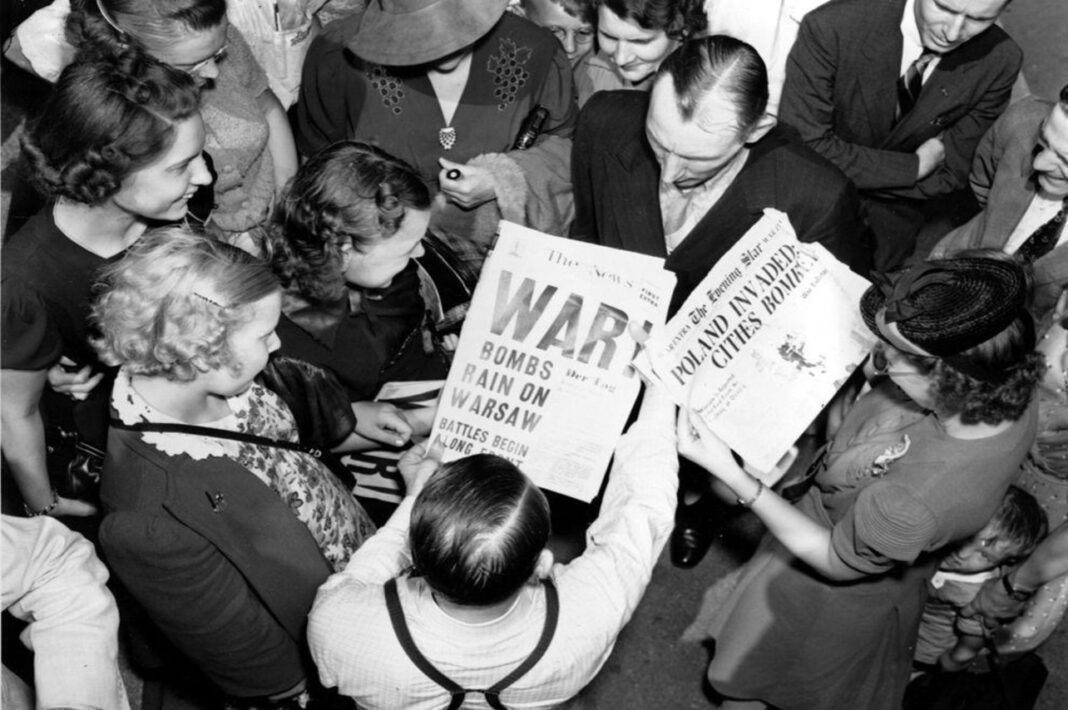

Today, wars continuing in different regions of the world deeply affect not only political balances but also the psychological worlds of millions of people. Armed conflicts, forced migrations, and losses cause us to reconsider trauma, human resilience, and behavior. Interest in understanding the effects of war on human psychology is actually not new. One of the periods in which this interest emerged most prominently was World War II, which began in 1939 and is considered one of the most devastating wars in history. Soldiers fighting on the front lines, civilians living under bombardment, and people trying to survive in concentration camps… These experiences laid the groundwork for an intensive research process aimed at understanding how the human mind reacts under extreme conditions (Winter, 1995).
This environment created by the war confronted researchers with several fundamental questions: How do people behave under extreme stress? How do traumatic experiences leave traces in an individual’s mind? How does the human mind adapt to such harsh conditions? In this article, the effects of World War II on the development of psychological science will be discussed.
The Emergence Of Post-Traumatic Stress Disorder
During World War II, similar psychological symptoms began to be observed in many soldiers returning from the front. Intense fear, nightmares, sudden startle reactions, the repeated re-experiencing of past events in the mind, and a constant state of alertness were among these symptoms. At that time, this condition was generally explained through concepts such as “shell shock” or “combat fatigue” (Young, 1995).
Studies conducted on war veterans revealed that traumatic experiences could affect an individual’s mental health for a long time. These studies laid the groundwork for the trauma concept to be addressed more systematically. In the 1970s, with studies conducted on Vietnam War veterans, these symptoms were defined more comprehensively and the concept of Post-Traumatic Stress Disorder (PTSD) entered the psychiatric literature (American Psychiatric Association, 2013).
Today, PTSD is accepted as an important psychological condition that can emerge after traumatic experiences such as war, natural disasters, serious accidents, or violence (American Psychiatric Association, 2013). These studies have also contributed to the development of a new research field examining the long-term effects of trauma.
The Development Of Psychological Tests and Military Selection Processes
World War II contributed significantly to psychology not only remaining a theoretical field but also beginning to be used in practical areas. During the war, millions of soldiers needed to be evaluated quickly and accurately. This need led psychologists to develop methods that could measure soldiers’ mental abilities and their capacities to work under stress (Cronbach, 1990).
During this period, psychological tests began to be widely used to determine which tasks soldiers were most suitable for. For different positions such as piloting, intelligence, or technical duties, individuals’ attention levels, decision-making abilities, and cognitive performances were evaluated (Cronbach, 1990).
After the war, these practices did not remain limited to the military field. Psychological tests gradually began to be used in many different areas such as education, industry, and clinical psychology. The foundations of many psychometric assessment methods used today were also laid during this period (Kaplan & Saccuzzo, 2017).
Social Psychology and Propaganda Research
World War II was also an important turning point not only for understanding individual traumas but also for understanding mass behavior. During the war, propaganda was used as a powerful tool to influence the thoughts and behaviors of societies (McGuire, 1985).
Especially in Nazi Germany, propaganda played a central role in spreading ideology and mobilizing society. This situation paved the way for psychologists to conduct studies aimed at understanding the effects of propaganda and ideological discourse on masses. After the war, research conducted in the field of social psychology began to examine how individuals behave under group influence (Hogg & Vaughan, 2018).
Studies such as Stanley Milgram’s obedience to authority experiments gained an important place in the social psychology literature by demonstrating how individuals could push their own moral boundaries in the face of authority (Milgram, 1963).
Viktor Frankl and The Search For Meaning
The effects of World War II on psychological science were not limited only to trauma and social behavior research. The extreme inhumane conditions created by the war also paved the way for the emergence of new approaches that questioned how humans could find meaning in the face of difficulties.
Austrian psychiatrist Viktor Frankl argued, based on his experiences in Nazi concentration camps, that human beings can attribute meaning to their lives even under the most difficult conditions. According to Frankl, the fundamental motivation of humans is not the search for pleasure or the desire for power, but the search for meaning (Frankl, 2006).
This idea later formed the basis of the psychotherapy approach called logotherapy. According to Frankl, even if a person cannot always change their conditions, they have the freedom to choose how they will respond to these conditions (Frankl, 2006). This approach has gained an important place in the history of psychology as it demonstrates that human beings can maintain psychological resilience even under the most difficult conditions.
Conclusion
In conclusion, although World War II paved the way for important developments in many areas of psychological science, the deep psychological and social wounds it left on humanity go beyond these advancements. The effects of war are not limited only to the period in which they occur; they leave traces in the memories of individuals and societies for generations.
For this reason, peace is not only a political ideal but also a fundamental necessity for the psychological well-being of humanity. Indeed, Mustafa Kemal Atatürk’s words express this reality concisely: “Peace at home, peace in the world.”
References
-
American Psychiatric Association. (2013). Diagnostic and statistical manual of mental disorders (5th ed.). APA Publishing.
-
Cronbach, L. J. (1990). Essentials of psychological testing (5th ed.). Harper & Row.
-
Frankl, V. E. (2006). Man’s search for meaning. Beacon Press.
-
Hogg, M. A., & Vaughan, G. M. (2018). Social psychology (8th ed.). Pearson.
-
Kaplan, R. M., & Saccuzzo, D. P. (2017). Psychological testing: Principles, applications, and issues (9th ed.). Cengage Learning.
-
McGuire, W. J. (1985). Attitudes and attitude change. In G. Lindzey & E. Aronson (Eds.), Handbook of social psychology (3rd ed.). Random House.
-
Milgram, S. (1963). Behavioral study of obedience. Journal of Abnormal and Social Psychology, 67(4), 371–378.
-
Winter, J. (1995). Sites of memory, sites of mourning: The Great War in European cultural history. Cambridge University Press.
-
Young, A. (1995). The harmony of illusions: Inventing post-traumatic stress disorder. Princeton University Press.