


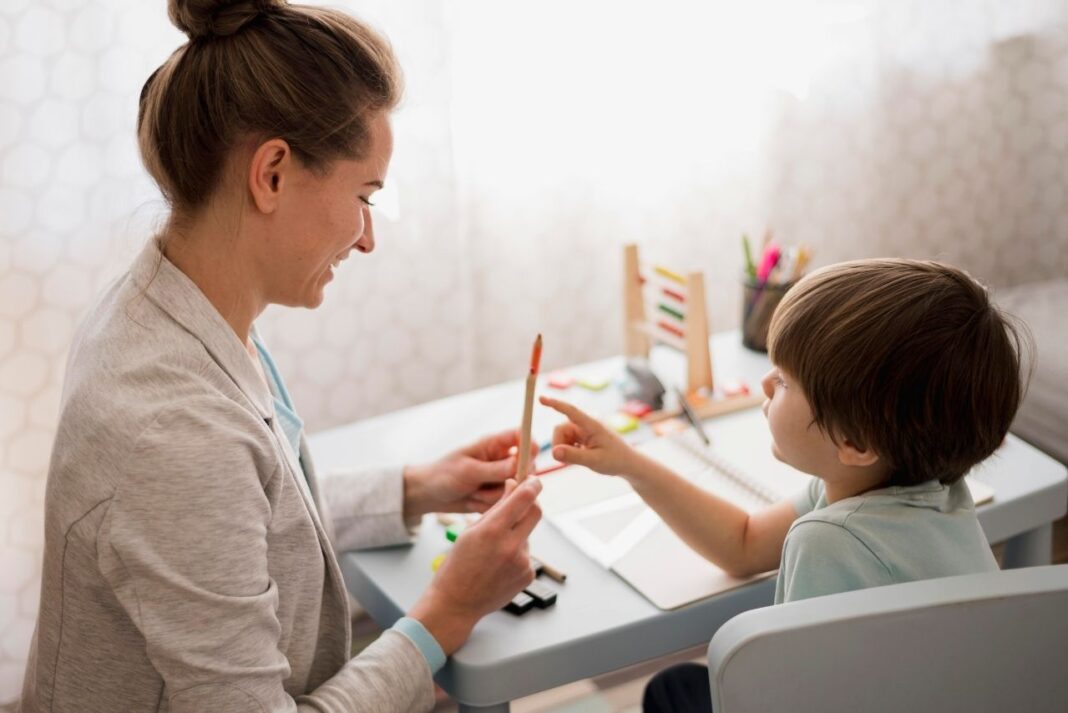

This article presents an innovative learning model designed to develop children’s emotional, cognitive, physical, and social competencies through an integrated, holistic approach. The model combines metaphor therapy, science education, entrepreneurship, nature-based learning, and yoga-wellness practices to strengthen emotional resilience, mental, and physical resilience in children. Developed in collaboration with interdisciplinary experts, the approach is implemented in multisensory, interactive, and nature-immersed learning environments. It offers preventive mental health support while simultaneously equipping children with the essential life skills needed for the future.
In the 21st century, children require not only academic success but also emotional intelligence, creative problem-solving abilities, body–mind awareness, and an entrepreneurial mindset. Conventional educational systems often neglect these dimensions.
The model integrates psychology-based metaphor therapy, scientific exploration, entrepreneurship, nature immersion, and yoga-wellness practices in a developmentally appropriate framework. Yoga-wellness practices activate the parasympathetic nervous system, supporting stress management, focus, emotional regulation, and body–mind connection. Regular practice enhances nervous system balance, contributing to more efficient and sustainable learning processes.
Fostering self-awareness, creativity, and a meaningful relationship with nature from an early age increases both individual potential and the capacity for social contribution. This approach supports child mental health not only through clinical interventions but also by employing preventive and holistic methods.
Core Learning Modules
1. Metaphor Therapy in Science and Psychology
Experimental activities, storytelling therapy, cinema therapy, and art-based metaphor production enable children to interpret concepts from multiple perspectives, enhancing social and emotional awareness.
2. Storytelling in Science and Experimentation
Complex scientific concepts such as molecular structures and ecosystems are simplified through child-friendly metaphors and reinforced through hands-on experiments.
3. Emotional Intelligence Laboratories
Role-playing, empathy mapping, and emotional journaling activities foster self-awareness, self-regulation, and resilience.
4. Yoga-Wellness and Nervous System Regulation
Breathing exercises, meditation, and mindfulness practices activate the parasympathetic nervous system, improving focus, creativity, and emotional balance.
5. Entrepreneurship Modules
Design thinking, market simulations, and age-appropriate business model canvases develop creativity, risk-taking, and problem-solving skills.
6. Experiential Learning
Active, hands-on experimentation allows children to discover cause–effect relationships and learn from mistakes, while collaborative group work fosters leadership and social skills.
7. Nature-Based Learning
Outdoor activities enhance physical awareness and strengthen children’s bond with the natural environment.
8. STEM Project Design
Project-based learning that integrates science, technology, engineering, and mathematics (STEM) is supported by prototyping, coding, and digital production techniques.
9. Drama-Musical and Speaking Club
Language practice, stage performance, and group presentations boost confidence, communication skills, and cultural awareness.
The Power of Metaphors
Metaphors bridge abstract and concrete concepts, supporting memory retention, creativity, and emotional integration. In educational settings, metaphorical narratives deepen understanding and make learning more meaningful.
Interdisciplinary Collaboration
Developed in collaboration with experts in child psychology, science education, environmental education, entrepreneurship, and body–mind health, the model ensures scientific accuracy, pedagogical appropriateness, and ethical integrity.
Effects and Findings
Pilot implementations have shown significant improvements in self-awareness, interest in STEM subjects, group collaboration, environmental sensitivity, emotional expression, and nervous system balance. Parents have reported positive changes in their children’s resilience, creativity, and social engagement.
Discussion and Conclusion
This holistic learning model integrates social-emotional learning, experiential education, experiential science, nature-based education, yoga-wellness, and entrepreneurship, preparing children not only academically but also as thinking, feeling, producing, nature-connected, and creative individuals who can influence their surroundings.
Children educated through this model become capable of thinking differently, generating original ideas, challenging conventional patterns, and offering new perspectives—forming a generation that does not merely consume knowledge but produces solutions, inspires others, and contributes to societal transformation.
The model offers an educational vision that strengthens the mind, body, heart, and connection to nature simultaneously, making it a pioneering approach with the potential to inspire future educational systems.
References
Bybee, R. W. (2013). The case for STEM education: Challenges and opportunities. NSTA Press.
CASEL. (2020). Core SEL competencies. Collaborative for Academic, Social, and Emotional Learning.
Dweck, C. (2006). Mindset: The new psychology of success. Random House.
Heathcote, D., & Bolton, G. (1995). Drama for learning: Dorothy Heathcote’s mantle of the expert approach to education. Heinemann.
Lakoff, G., & Johnson, M. (2003). Metaphors we live by. University of Chicago Press.
Maley, A., & Duff, A. (2005). Drama techniques: A resource book of communication activities for language teachers. Cambridge University Press.
Parents.com. (2024). Benefits of yoga for kids. Retrieved from https://www.parents.com/benefits-of-yoga-for-kids-7406600
PMC. (2024). Yoga for children: A review. Retrieved from https://pmc.ncbi.nlm.nih.gov/articles/PMC11495296
Frontiers in Psychology. (2023). Yoga and mindfulness for social-emotional development. Retrieved from https://www.frontiersin.org/articles/10.3389/fpsyg.2023.1083028/full
Social Work Today. (2011). Mind-body approaches in education. Retrieved from https://www.socialworktoday.com/archive/111511p8.shtml
ResearchGate. (2019). Metaphor counseling in elementary education. Retrieved from https://www.researchgate.net/publication/337233292_Metaphor_Counseling_and_Students_Responsibility_on_Elementary_School