


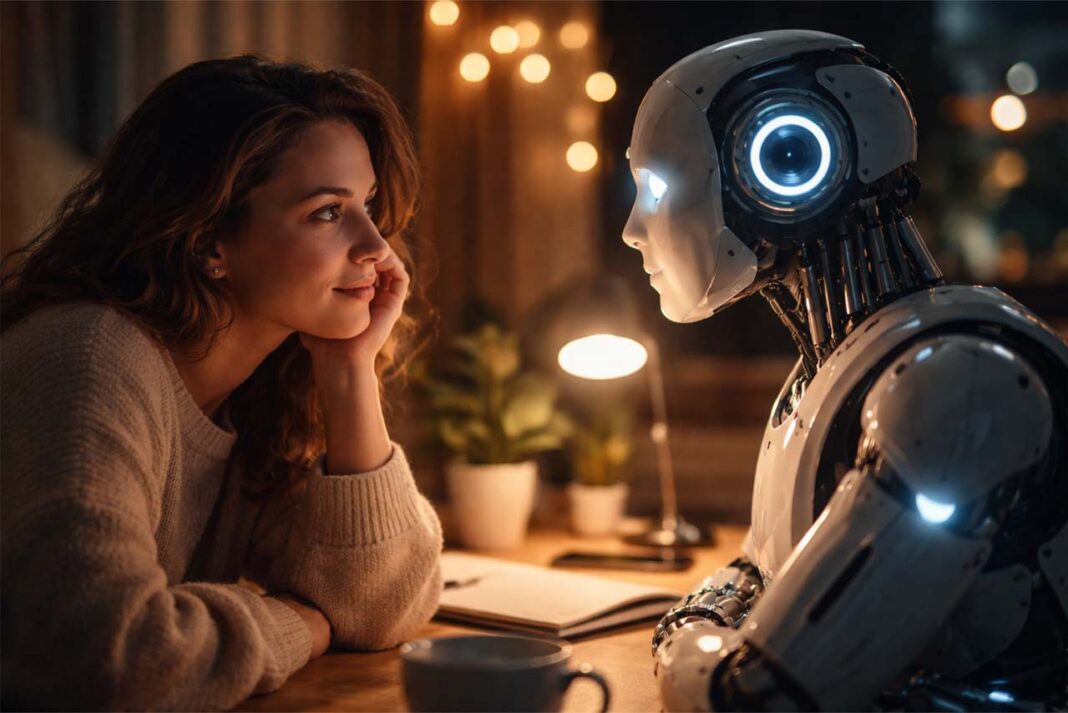

Artificial intelligence is no longer merely a tool that provides information; it has increasingly become a space where emotions are expressed and thoughts are left behind. People are turning more and more to digital systems in order to feel understood, relieved, and heard. But can this form of Digital Intimacy truly replace real human contact, or does it remind us of another unmet need?
The Need To Be Heard And The Digital Space
In today’s world, expressing oneself has gradually become a difficult need to fulfill. Human relationships have accelerated, encounters have become more superficial, and emotions are often rushed through rather than genuinely processed. In such an environment, individuals seek spaces where they can pause, speak, and be listened to without judgment. Artificial intelligence positions itself precisely at this point—as a digital listening space.
AI systems offer users continuous accessibility. They do not interrupt, rush, or reject what is being shared. These qualities can create a soothing experience, particularly for individuals carrying a heavy emotional load. As people transfer the complexity of their inner world into this space, they may feel, perhaps for the first time, that they are truly “heard.”
However, this experience cannot replace a therapeutic relationship. Although artificial intelligence can generate responses that resemble empathy, these responses are not grounded in a living, reciprocal emotional connection. What is healing in real relationships is the bond formed between two people—a bond that can be challenging at times, yet deeply transformative. The digital space, by contrast, offers a sense of safety by excluding these challenges. For this reason, artificial intelligence can function as a supportive tool, but it cannot replace Human Connection.
Why Do We Open Up More Easily To Artificial Intelligence?
Emotional closeness directed toward artificial intelligence is often fueled not by technological curiosity, but by relational fatigue. In contemporary life, people desire closeness while simultaneously trying to avoid being hurt, misunderstood, or disappointed. Emotional openness in real relationships always carries a certain risk. The other person’s silence, delay, or withdrawal can create uncertainty.
In communication with artificial intelligence, these uncertainties are largely eliminated. The system always responds, does not belittle what is shared, and does not terminate the interaction. This creates a powerful attraction, especially for individuals who have long felt unseen or unheard. Artificial intelligence may be experienced as a space where emotions can be released safely.
Yet this sense of safety also introduces clear limits to connection. While artificial intelligence makes room for emotions, it does not allow those emotions to be tested within a real relationship. Over time, individuals may develop lower tolerance for delays, conflicts, and emotional labor in human relationships. Digital Intimacy, through its ease, makes the demanding nature of real human contact more visible.
At this point, what matters is not opening up to artificial intelligence itself, but recognizing what this openness is attempting to compensate for. Artificial intelligence reflects the need to be understood and heard. When the source of this need remains unexamined, digital connection may begin to replace real relationships.
Can The Feeling Of Intimacy Replace Real Contact?
Digital intimacy is fast, structured, and effortless. Emotions receive immediate responses, and experiences are addressed within a calm framework. Human relationships, however, are inherently disorganized; they involve silences, misunderstandings, and conflicts. Depth emerges precisely through moving through these difficulties.
In relationships formed with artificial intelligence, such challenges are suspended. While this may feel soothing in the short term, it carries the risk of limiting emotional development in the long run. Skills such as empathy, setting boundaries, coping with disappointment, and repair can only be learned within living, reciprocal relationships.
For this reason, digital intimacy becomes functional when it is viewed not as an alternative, but as a complement. Artificial intelligence can be used to regulate emotions and clarify thoughts. However, when it replaces real contact, individuals may unknowingly deepen their sense of loneliness.
Conclusion
Emotional bonds formed with artificial intelligence offer important insights into the relational patterns of our time. These bonds reflect the individual’s need to be understood, heard, and experience safe connection. While artificial intelligence may provide a temporary response to these needs, it cannot offer the reciprocity and depth inherent in human relationships.
The essential question is not what artificial intelligence provides, but what the individual is seeking. Digital intimacy does not replace real contact; rather, it reveals why real contact has become so difficult. When approached with this awareness, artificial intelligence can contribute to a more conscious relationship both with oneself and with others.
References
Turkle, S. (2017). Reclaiming Conversation: The Power of Talk in a Digital Age. Penguin Press.
Gergen, K. J. (2009). Relational Being. Oxford University Press.
Pariser, E. (2011). The Filter Bubble. Penguin Books.
American Psychological Association. (2023). Artificial Intelligence and Mental Health.