


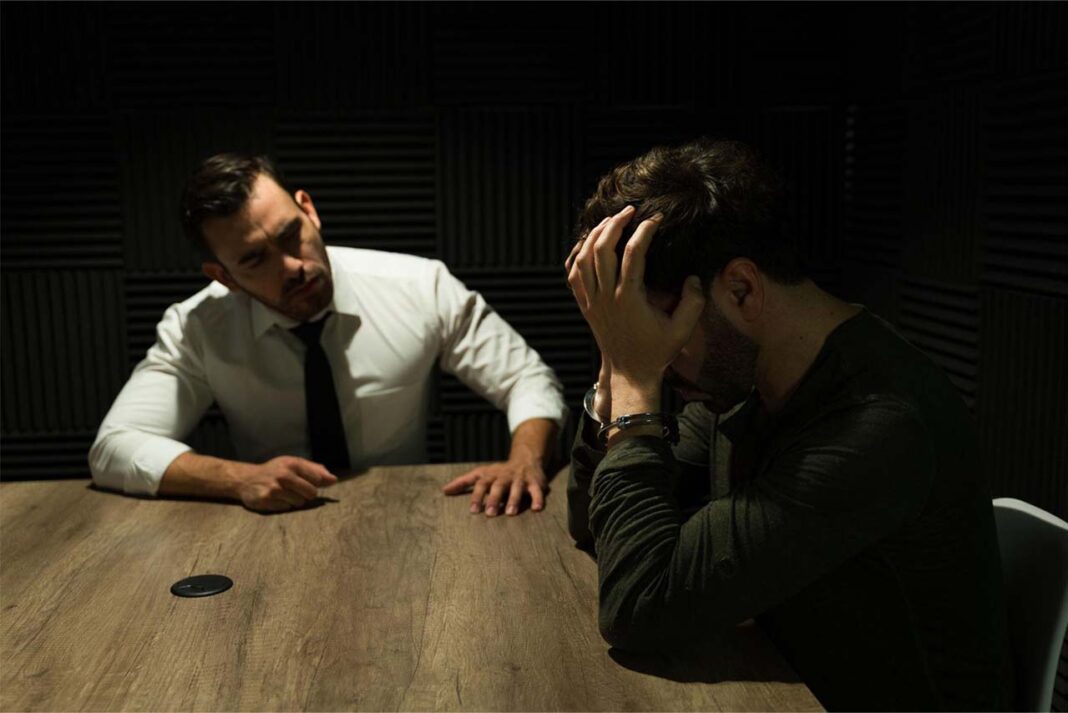

Forensic psychology examines how human behavior and mental processes affect legal decisions. Modern research shows that courts often rely on psychological evidence such as confessions, eyewitness testimony, and risk assessments. However, these forms of evidence are not always reliable.
This article explains three major areas where psychology influences legal outcomes: false confessions, eyewitness memory errors, and the prediction of criminal behavior. Drawing on research findings, the article demonstrates how normal cognitive processes can lead to wrongful convictions. It also discusses reforms aimed at making the justice system more consistent with psychological science.
The Role of Human Cognition in Courtrooms
When people imagine a criminal trial, they often think of physical evidence such as fingerprints or DNA. In reality, many court decisions depend heavily on human thinking. Jurors listen to suspects, witnesses, and experts and decide what seems believable.
Forensic psychology studies how memory, personality, and decision-making affect legal outcomes. Research shows that these mental processes can both help and harm justice. Three major psychological issues appear repeatedly in wrongful convictions: false confessions, mistaken eyewitness identification, and predicting future criminal behavior.
False Confessions
A confession seems like the strongest possible evidence. Most people believe nobody would admit to a crime they did not commit. However, psychological research demonstrates that innocent individuals sometimes confess.
Gisli Gudjonsson (1992) found that certain personality traits increase vulnerability during police questioning. People who are highly compliant, anxious, or eager to please authority figures are more likely to agree with accusations under pressure.
Interrogations can last many hours and create intense stress. Investigators may present false evidence or suggest that confessing will lead to leniency. Over time, suspects may focus more on ending the situation than on long-term consequences.
Saul Kassin and Katherine Kiechel (1996) showed experimentally that participants could be led to confess to damaging a computer even when they were innocent. Some even developed detailed memories of the event. This demonstrates that memory is not simply retrieved; it can be constructed.
Young suspects are especially vulnerable. Developmental research shows adolescents have weaker long-term decision-making and higher sensitivity to authority. Because they want immediate relief from stress, they may accept blame without fully understanding legal outcomes.
Eyewitness Memory Errors
Courts often trust eyewitnesses because they believe seeing is equivalent to knowing. Psychological science shows memory does not operate like a camera. Instead, it reconstructs events based on fragments and expectations.
Elizabeth Loftus (1975) demonstrated that wording changes memory. When participants heard questions implying a broken headlight, many later remembered seeing one even when none existed.
Witness confidence is also misleading. Gary Wells and Amy Bradfield (1998) found that confirming feedback increases confidence without increasing accuracy.
If police say, “You picked the suspect,” witnesses become more certain even when mistaken. Jurors interpret confidence as honesty, which increases conviction rates.
DNA exoneration cases frequently reveal mistaken identification. Stress, darkness, weapons, and cross-racial identification all reduce accuracy. Yet witnesses remain convinced they are correct because reconstructed memories feel real. The brain values coherence over accuracy, making eyewitness testimony persuasive but risky.
Predicting Criminal Behavior
Courts also ask psychologists to estimate future risk, especially during sentencing and parole decisions. One major research area involves psychopathy, a personality pattern marked by a lack of empathy and impulsive behavior.
Robert Hare and colleagues (1998) found that psychopathy scores predict higher rates of violent reoffending. This makes risk assessment useful for public safety decisions.
However, prediction is never perfect. Donald Andrews and James Bonta (2010) argue that focusing on changeable factors improves accuracy. Substance abuse, employment, and social relationships predict recidivism better than personality labels alone.
This approach emphasizes rehabilitation rather than permanent classification. The challenge is balancing protection and fairness. Overestimating risk can keep individuals incarcerated unnecessarily, while underestimating risk may endanger the public. Psychological assessment therefore guides decisions but cannot replace judgment.
Improving Legal Procedures
Research has led to reforms intended to align legal practices with psychological knowledge. Recording entire interrogations helps courts evaluate pressure and suggestion. Some jurisdictions restrict deceptive interrogation methods, especially for minors. Providing legal counsel early reduces false confessions.
Eyewitness procedures have also changed. Double-blind lineups prevent officers from influencing choices. Immediate confidence statements preserve original certainty levels. Separating witnesses prevents memory contamination.
Risk assessment tools increasingly combine psychological testing with social information such as housing and employment support. These methods aim to reduce bias and improve rehabilitation outcomes.
Conclusion
Forensic psychology reveals that legal decisions depend not only on facts but also on human cognition. Confessions can occur without guilt, memories can feel real but be incorrect, and predictions about behavior are probabilities rather than certainties.
Understanding these limitations helps courts avoid errors. Justice improves when the legal system recognizes how the mind truly works rather than assuming perfect reasoning. Psychological science does not weaken law; it strengthens it by preventing preventable mistakes.
References
- Andrews, D. A., & Bonta, J. (2010). The psychology of criminal conduct (5th ed.). Routledge.
- Gudjonsson, G. H. (1992). The psychology of interrogations, confessions, and testimony. Wiley.
- Hemphill, J. F., Hare, R. D., & Wong, S. (1998). Psychopathy and recidivism: A review. Legal and Criminological Psychology, 3(1), 139–170.
- Kassin, S. M., & Kiechel, K. L. (1996). The social psychology of false confessions. Psychological Science, 7(3), 125–128.
- Loftus, E. F. (1975). Leading questions and the eyewitness report. Cognitive Psychology, 7(4), 560–572.
- Wells, G. L., & Bradfield, A. L. (1998). “Good, you identified the suspect.”: Feedback to eyewitnesses distorts reports. Journal of Applied Psychology, 83(3), 360–376.