


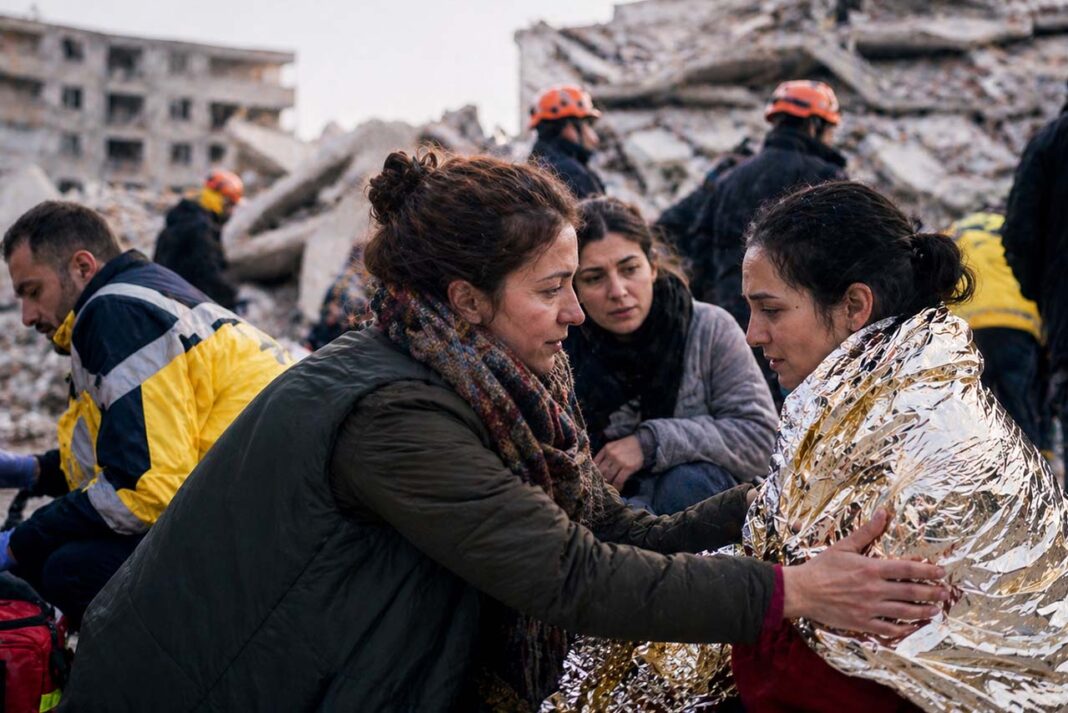

As a fact of the century that we live in, we’re facing crisis a lot. And as a society, we talk much about it in terms of what was the right thing to do before that event happened or how we can prevent that kind of situation. But as mental health professionals, we need to talk about something different, and with that we have to take action different from talking. Because on those days, people need aid, firstly physically then psychologically. The aid that I mention as psychological is not therapy, because we know that we cannot conduct any therapy in an acute time period and also we cannot provide this service if the threatening situation or crisis is not ended (World Health Organization [WHO], 2011).
I think I need to define “crisis” first, because it is not just a difficult situation. We do not include every hard situation that human beings face. The need for involvement comes from the difference between a difficult situation and a crisis, which is: a person’s usual coping resources are no longer enough (James & Gilliland, 2017).
There are lots of types of crises, but I do not see any need to mention them one by one. Regardless of the type of crisis, we will face different emotional, cognitive, physical, or behavioral reactions from people who experienced the crisis. These reactions may affect you, but as a professional we need to carefully choose our responses and we have to be understandable toward them because we should keep in mind that these are abnormal responses to abnormal events, so we need to see them as normal (Everly & Lating, 2017).
Core Principles of Psychosocial Crisis Support
Our core goals and priorities of psychosocial crisis support are divided into five categories. These principles guide how we respond in the moment and shape the foundation of crisis intervention:
(1) Increase safety is a primary goal of psychosocial crisis support, focusing on ensuring both physical and psychological security.
(2) Reduce immediate distress and try to provide calmness is implemented through supportive communication and grounding strategies during crisis situations.
(3) Support orientation and stabilization is essential for helping individuals regain cognitive and emotional balance.
(4) Strengthen connection with available support and try to bring individuals into the here and now is used to reduce isolation and enhance present-moment awareness.
(5) Protect dignity and choice is maintained by respecting autonomy and involving individuals in decision-making whenever possible.
These steps highlight that crisis response is not about deep analysis, but about psychological first aid and immediate stabilization.
What we Actually Do: Psychological First Aid
More important than what we know is what we do — what counts as psychological first aid in those moments. When we check the literature, we see the Simple Response Model; it suggests four-step actions (Ruzek et al., 2007; WHO, 2011):
(1) Notice: What is happening? What signs of distress do I observe? Is there immediate risk?
(2) Contain: Slow the pace. Create calm. Reduce chaos.
(3) Support: Listen. Validate. Identify immediate needs. Strengthen coping and social support.
(4) Refer: When needs go beyond your role, competence, or profession.
This model emphasizes that our role is not to interpret deeply, but to regulate the environment, support the individual, and act within our professional boundaries.
Conclusion
In conclusion, effective crisis intervention requires a structured, evidence-based, and ethically grounded approach that prioritizes immediate safety, psychological stabilization, and respect for human dignity. The aim is not to solve the crisis in that moment, but to create the psychological conditions in which recovery can later begin.
Note:This paper was prepared based on notes taken from the crisis management seminar delivered by Ahmet Salih Şen, organized by YECED.
References
Everly, G. S., & Lating, J. M. (2017). The Johns Hopkins guide to psychological first aid. Johns Hopkins University Press.
James, R. K., & Gilliland, B. E. (2017). Crisis intervention strategies (8th ed.). Cengage Learning.
Ruzek, J. I., Brymer, M. J., Jacobs, A. K., Layne, C. M., Vernberg, E. M., & Watson, P. J. (2007). Psychological first aid. Journal of Mental Health Counseling, 29(1), 17–49. https://doi.org/10.17744/mehc.29.1.0n74r1371k246p0j
World Health Organization (2011). Psychological first aid: Guide for field workers. https://www.who.int/publications/i/item/9789241548205