


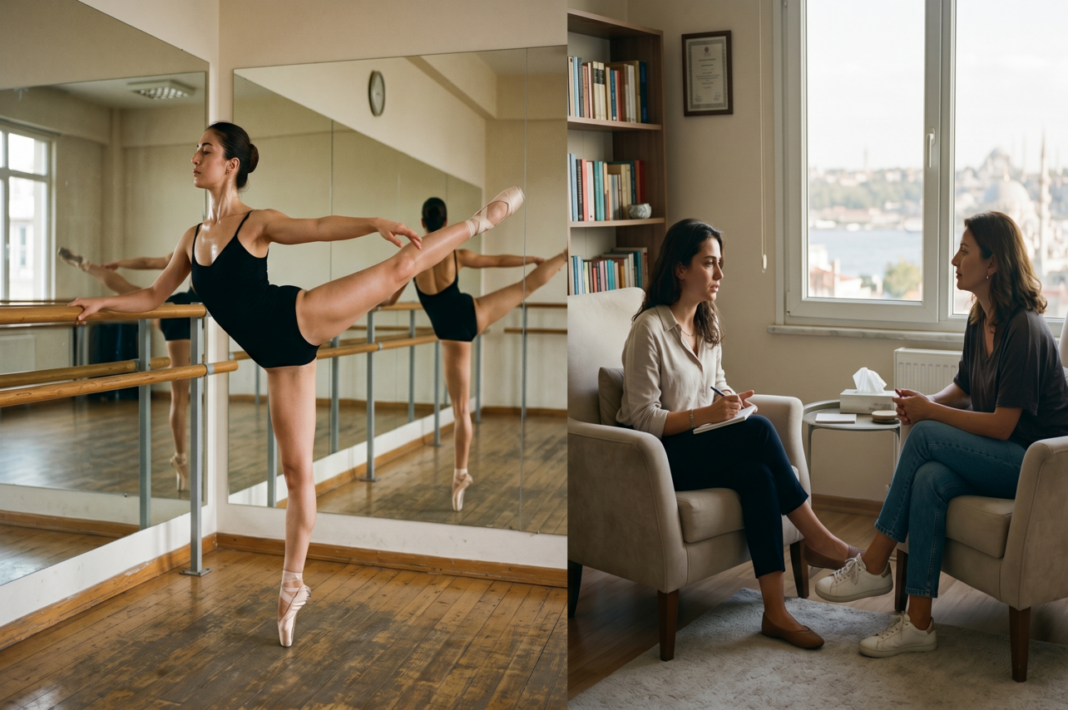

Ballet… sometimes the graceful glide of a swan, sometimes the determination expressed on the tips of the toes. On stage, it appears as a spectacle of aesthetics and unity, yet behind the curtain lie years of effort, silent labor, and traces of an invisible inner journey. In this sense, ballet is not only a physical performance but also a process of mental and emotional transformation. And precisely for this reason, ballet and psychology intersect—in the shared effort of self-discovery, transformation, and expression. This is true both for the psychologist navigating difficult paths in their profession and for the client cooperating with their therapist in the journey of psychotherapy. Ballet and psychology form a space of discovery and convergence.
The Common Language Of Discipline
Psychology seeks to understand the unseen; ballet seeks to reveal it. Psychology describes the inner world with words; ballet translates that world into movement, form, and rhythm. One aims to uncover emotions; the other to build a structure from them. Yet both share a common language: discipline.
Discipline, often associated with rigid rules, takes on another meaning here. It is the act of standing before mirrors in the studio before the city awakens. It is repeating the same movement countless times—training not only the muscles but also shaping the mind. A ballerina does not only train the body; she also trains her inner world. Each repetition is not just physical development but also emotional resilience. When a step is missed, the disappointment felt is not only technical—it is the threshold of a mental challenge. Ballet teaches growth through these challenges and sacrifices.
The Journey Of Awareness and Healing
This demanding path resembles both the journey of becoming a psychotherapist and the process of psychotherapy itself. A client comes to sessions with emotional burdens. At first, they may resist, avoid, or feel exhausted. Yet, much like a dancer progressing step by step, the client gradually discovers their own rhythm through repetitions, confrontations, cooperation, and patience. Healing is not a quest for perfection but a journey of awareness. The same is true for ballet. The seemingly flawless stage performance is, in reality, an expression of inner conflict, effort, and self-discovery.
A ballerina learns to recognize which movements challenge her, where she loses balance, and what her body is telling her. These questions are also at the heart of psychology. Mental balance comes through bodily awareness. When posture falters, the imbalance is not only physical but also mental. Drooping shoulders may not only signal posture collapse but also the heaviness of the soul. That is why ballet is not just an art—it is an inner narrative told through the body’s language.
Balancing Control and Surrender
The delicate balance between control and letting go brings ballet and psychology even closer. In life, striving to control everything drains us, while surrendering completely leaves us adrift. True well-being lies in the balance between the two. On stage, the ballerina controls every step in detail, while also surrendering to their flow. Neither too rigid nor too loose—just as it should be in life. Likewise, in therapy, the mind learns new dances while working through problems and wounds. The psychological maturity in balancing resistance and acceptance is hidden in this process.
The Power Of Rituals and Safe Spaces
We must also recognize the power of rituals. The ballerina’s daily warm-up is not only a technical repetition but also a state of inner balance. This routine offers the mind a safe space—just as the therapy room represents safety. The same movement, the same breath, the same transition… not only trains the muscles but also regulates the mind. In trauma recovery, individuals often find their safe zone again through steady routines and rhythmic breathing. Likewise, dancers find their center—their inner safe space—through ritual. In both, the individual is engaged in inner training.
The Wholeness Of Being Human
Ultimately, ballet is far more than aesthetic expression. It is the meeting point of body and soul, mind and movement, discipline and freedom. Psychology is the mirror that seeks to understand and internalize this process. Together they embrace the wholeness of being human. Muscles gain flexibility, but so do emotions. Posture changes, but so do thoughts. A ballerina gliding on stage does not merely dance—she embodies willpower, patience, emotion, and inner strength. Each step is the silent echo of inner resistance—much like the quiet turbulence in the therapy room, accompanied by the body itself.
And perhaps ballet makes us all ask: How do we dance with life? Which steps keep us balanced? Do our bodies and souls move in the same rhythm? Let us remember: discipline is not merely following rules—it is an act of self-love, inner strength, and peace.
Shall we meet again, in these new shared spaces where body and soul come together?