


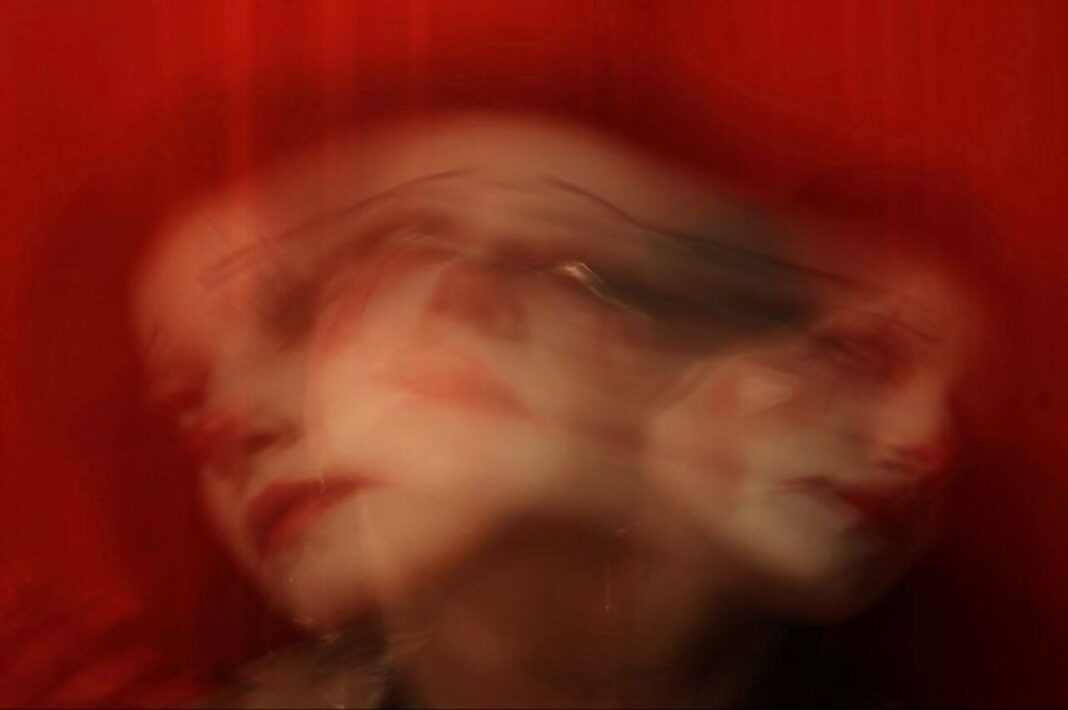

Dance, Laughter, and Cats
In the summer of 1518, on the streets of Strasbourg, a woman began to dance relentlessly. As days passed, she did not stop. What initially seemed like an odd, isolated act soon drew others in. Within days, people joined her; within weeks, nearly 400 individuals were dancing. Until the outbreak subsided in September, some collapsed from exhaustion, while others reportedly lost their lives (Waller, 2009).
Even today, this event (known as the “dancing plague”) remains without a definitive explanation. Biological theories, such as fungal poisoning, fail to account for the sustained, coordinated nature of the phenomenon. Modern psychology instead interprets it as a collective response to extreme social stress, often categorized as mass psychogenic illness.
At the time, Strasbourg was burdened by famine, taxation, and disease. A year earlier, the protest of Martin Luther had unsettled Europe’s religious order. A widespread belief held that angering Saint Vitus would result in a curse an uncontrollable urge to dance. Such fear may have acted as a psychological trigger (Waller, 2009). That the outbreak subsided after dancers were taken to a shrine dedicated to Saint Vitus reinforces this view.
Under extreme pressure, the mind may enter altered states as a form of escape. What began with one woman, Frau Troffea may have evolved into a shared psychological refuge. This was not the only case in which women stood at the center of such phenomena.
In 16th-century France, nuns in a convent reportedly began meowing like cats. The behaviour spread rapidly. Religious interventions failed, yet the phenomenon ceased abruptly when punishment and public humiliation were threatened (Gemelli, 2013).
At first glance, such incidents may seem strange even amusing. Yet they point to a deeper psychological reality: hysteria.
Within rigid and repressive environments, suppressed emotions and unexpressed anger may lead to psychological rupture. These behaviours became more than individual symptoms, they formed a collective language. A group stripped of voice and agency appeared to adopt alternative identities, expressing resistance in passive-aggressive ways (Showalter, 1985).
Beyond One Era: The Persistence Of Collective Hysteria
The crises of early modern Europe created fertile ground for such outbreaks. Yet these phenomena were not limited to the past.
In 1962, in Tanganyika, a laughter epidemic began in a boarding school when several girls started laughing uncontrollably. The behaviour spread rapidly, eventually forcing the school to close.
Across contexts, these cases highlight the role of social pressure, gender norms, and the unconscious in shaping collective symptoms (Bartholomew & Wessely, 2002).
The Unnamed Figures Of Hysteria: Anna O. and Beyond
The concept of hysteria derives from the Greek hystera (uterus) and has long been associated with the female body. In ancient medicine, women’s symptoms were attributed to movements of the womb—an unscientific idea that nonetheless shaped medical and social perceptions for centuries.
Thus, hysteria became more than a diagnosis; it functioned as a framework for interpreting women’s bodies and minds.
At times when women’s access to public life was restricted, emotions that could not be expressed openly emerged instead as bodily symptoms or unusual behaviours, often dismissed under this label.
In the 19th century, Jean-Martin Charcot defined hysteria as a neurological and psychological condition. Sigmund Freud later interpreted it as the expression of repressed desires and internal conflict, though often through a male-centered lens.
The case of Bertha Pappenheim (Anna O.) remains central. She presented with speech disturbances, paralysis-like symptoms, and hallucinations despite no identifiable physical illness (Breuer & Freud, 1895/1957). While Freud sought meaning in her inner world, this approach often reduced such experiences to individual pathology, overlooking broader social realities.
Elaine Showalter later reframed hysteria as a culturally coded language, a way of expressing what could not be spoken. Similarly, Nancy Chodorow and Carol Gilligan emphasized how the ideal of the “good woman”, ‘obedient, silent, self-sacrificing’ produced internalized suppression. These repressed emotions could return as hysteria, depression, or collective crises (Chodorow, 1978; Gilligan, 1982).
From this perspective, Anna O.’s case reflects not only individual distress but also the embodied impact of invisible social burdens.
The Female Body Against A Disordered World
Hysteria is not merely a diagnosis; it is a form of expression, a manifestation of silenced experiences.
The female body is more than a site of symptoms; it is shaped by culture, history, and power. Understanding hysteria therefore requires attention not only to the individual mind but also to the structures that constrain it.
Every uncontrolled laugh or repetitive movement may not simply signal disorder, but rather a form of resistance emerging from what society suppresses. The unconscious is not only personal, it is also social. Freedom, then, is not about ceasing the dance, but recognising the forces that create it: pressure, constraint, and silence.
Throughout history, women have followed an unseen rhythm, sometimes in the streets, sometimes within their bodies, and sometimes within male-dominated systems of thought. What we call laughter (or even “hysteria”) may be the quiet storyteller of a society’s hidden psychology.
Perhaps the world has always been, in some way, unwell. And perhaps, at times, women were left with no choice but to dance until exhaustion and to laugh within that madness.
REFERENCES
Bartholomew, R. E., & Wessely, S. (2002). Breuer, J., & Freud, S. (1895/1957). Charcot, J.-M. (1887). Chodorow, N. (1978). Gemelli, C. (2013). Gilligan, C. (1982). Showalter, E. (1985). Waller, J. (2009).