


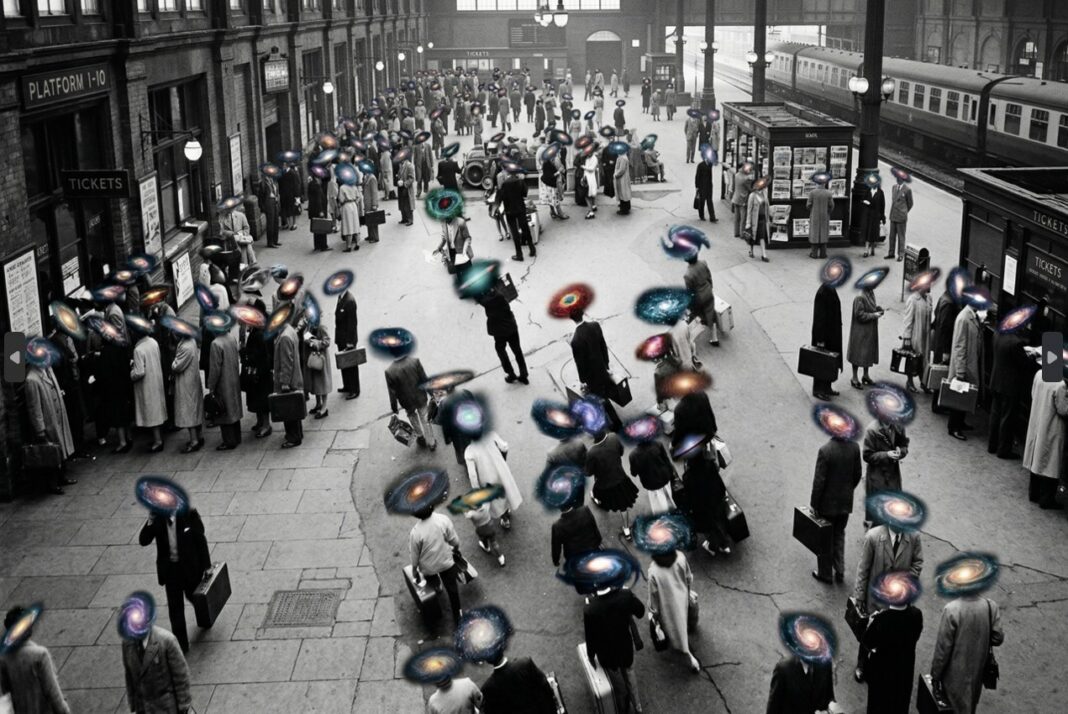

Assuming What You See Is Real
A person believes what they see. Throughout the day, they encounter dozens of people and witness dozens of situations. Within a few seconds, they form an opinion and are often quite sure of it. We use definitive judgment patterns such as “This person is cold,” “They are distant toward me,” “They are definitely this kind of person.” Being able to make decisions this quickly is one of the mind’s greatest abilities. But at the same time, it is also one of its greatest illusions. Because the mind is not a system that records the external world as it is. Rather, it is a cognitive structure that tries to make sense of what it sees, interprets situations and people within the possibilities in the mind, fills in the missing parts, and constantly works. For this reason, what we see is often not reality itself, but how we perceive it. In simpler terms: We do not see the world as it is, but as we are.
The Mind Dislikes Uncertainty
Life is quite fast. People speak, move, their facial expressions change, and their tone of voice shifts. The brain has to make sense of this complexity and perceive it as a whole. But it does not do this from scratch every time. Instead, it relies on what it has learned before. It finds familiar patterns, establishes similar connections, and fills in the missing parts. In this way, it makes quick decisions and reacts quickly. However, there is sometimes an unpredictable small problem here: while the brain gains speed internally, it occasionally loses accuracy. We may misread someone’s facial expression. We may fill a sentence with a meaning that was never actually said. We may feel a glance as more intense or colder than it really is. In fact, what we see is not the entirety of the external world, but a version completed by our mind; what we see is nothing more than our perception.
Seeing Outside What Is Within Us
Sometimes we look at someone and a feeling arises within us. This feeling can be so strong that we believe it comes from the other person. But this is not always about them. A person has difficulty recognizing some of the emotions they carry within themselves. Tension, insecurity, fear, anger, or anxiety… Sometimes these do not stay inside but are projected outward. And we perceive these emotions as if they belong to the person in front of us. At this point, our perception becomes not a way of seeing reality, but a way of projecting our inner world onto the outer world. We continue this unconsciously. The person in front of us becomes not who they truly are, but a surface for what is inside us. In other words, what we see is not what exists, but what we assume exists.
The Effect Of The Past On Us
Have you ever felt something instantly toward someone you have never met before? A sense of closeness or distance that you cannot fully explain? This is not a coincidence. A person does not completely leave behind the experiences and processes they have gone through in the past. Especially relationships with strong emotional weight remain somewhere in the mind. When we meet someone new, those old traces come into play. The person you just met may remind you of someone from your past. But you do not consciously realize this. You simply feel something. That is why sometimes the reaction we give to someone is not about who they are, but about who we have encountered before and what we have experienced in the past. The past blends into the present unnoticed and sometimes shapes the moment.
Being Mistaken Is Possible
When all these processes come together, the result is that perception is not perfect. People often cannot understand each other because they perceive things differently. Two people can assign completely different meanings to the same event. The same statement can create entirely different emotions in two individuals. The same behavior can seem normal to one person and quite hurtful to another. Everyone looks at the external world through the window of their own mind, and everyone assumes that what they see is real.
Taking A Step Back
Perhaps the most important thing to do at this point is to pause for a moment. Instead of judging immediately, stepping back and thinking: “Why did I interpret this this way?”, ”Is this really about the other person, or is it about me?” Asking these questions is not always easy. Sometimes it is even uncomfortable. Because the answers are often not outside, but inside. Reflecting on them may not always feel pleasant. But this is exactly where awareness begins. As a person starts to recognize their own emotions and reactions, they begin to see others more clearly. Because they no longer only look outward; they also take their inner world into account. They realize that what they project is a part of themselves.
Between Reality and Interpretation
We think we see the person in front of us. We assume we know them, that we understand what they feel. But most of the time, what we see is not who they are, but the version formed in our mind. Perception is not only about the external world; it is also about who we are. Therefore, perhaps the real issue is this: not how accurately we see others, but how much of what we see belongs to us. Because while trying to understand another person, we often encounter ourselves. And sometimes, even at the moment we think we see most clearly, we are actually just looking at our own reflection.
Facing Reality
A person does not see the world as it is; they interpret it through the filter of their own mind. Therefore, every glance, every interpretation, and every judgment belongs not only to the external world but also to our inner world. While trying to understand the person in front of us, we actually come into contact with our own past, emotions, and expectations. When the fine line between reality and interpretation is not recognized, we assume what we see is absolute truth; when it is recognized, our perception deepens and becomes more flexible.
This awareness is not only a gain, but also a skill that transforms our relationships. When a person accepts that their judgments are not absolute, they begin to approach others in a more open, flexible, and understanding way. As they question the source of their reactions, stereotypes are replaced by more conscious ones. Thus, communication ceases to be a surface-level interaction and becomes a deeper and more genuine connection.
Perhaps the real issue is not how accurately we see others, but how much of what we see belongs to us. Because while trying to understand another person, we often encounter ourselves. And sometimes, even at the moment we think we see most clearly, we are actually just looking at our own reflection. Therefore, reality is not only something to be searched for outside, but also a process that needs to be recognized within.