



“I am awake now for the first time.” “No… not before.” “Now. This time I am truly awake.”
Clive Wearing, a musicologist and conductor, wrote these lines obsessively in his diary, yet each moment vanished almost immediately. Before illness, he lived an ordinary life with his wife, immersed in music. In 1985, Wearing contracted herpes simplex encephalitis, a rare viral infection destroying his hippocampi, essential for forming episodic memories, causing retrograde amnesia (loss of past memories) and anterograde amnesia (inability to form new memories) (Cavaco et al., 2012). His conscious experience existed in fleeting twenty- to thirty-second intervals, preventing integration of events into coherent narrative time.
Time lost continuity. Wearing could not distinguish a conversation from minutes ago from one days prior. Diary entries evaporated seconds after writing, yet he persisted (Sacks, 2007). He described existence as a void, without continuous thought or temporal flow, “like being dead.” Such amnesia threatens identity itself. Philosophical frameworks since John Locke link identity to memory: connecting past experiences with present consciousness. If memory forms the thread of the self, what remains when severed?
Yet Wearing’s case shows identity is multi-layered. While episodic memory collapsed, other dimensions endured. Procedural memory preserved his musical ability, allowing him to perform and conduct fluently. Equally remarkable was his emotional and relational constancy. Each time his wife entered, he would rise, embrace her, and declare he had not seen her for years. Minutes later, the scene repeated. Memory of the prior encounter was gone, yet attachment persisted. Wearing demonstrates identity is not reducible to episodic recall; emotional continuity and relational bonds are integral to the self.
Neuropsychologically, Wearing shows hippocampal damage disrupts episodic memory while sparing skills, emotional responsiveness, and attachments. His life demonstrates the self is a network of abilities, dispositions, and attachments, not a singular narrative (McComas, 2022). His music and enduring love reveal meaning can survive memory loss—a testament to human resilience.
A Fragmented Perceptual World
Similarly, Lev Alexandrovich Zasetsky, a Soviet soldier injured during the Second World War, demonstrates self-continuity under cognitive disruption. In 1943, he sustained a gunshot wound to the left parieto-occipital cortex, crucial for visual integration, spatial organisation, and reading. Upon regaining consciousness, the world persisted, yet coherence collapsed. Most motor functions remained intact, but perceptual integration failed: objects appeared fragmented, letters could be read individually but not assembled (alexia), he could not recognize objects (visual agnosia), and he experienced spatial neglect.
Unlike Wearing, Zasetsky retained autobiographical memory, but reconstructing meaning required extraordinary effort. Over twenty years, he meticulously kept a diary, gradually relearning written language; single pages sometimes took days. Neuropsychologist Alexander Luria documented this struggle in The Man with a Shattered World (Kaczmarek et al., 2003). One entry “I wish the war had never happened” reveals moral judgment, emotional depth, and persistence of agency despite fragmented perception.
Zasetsky highlights how deficits (alexia, visual agnosia, spatial neglect) disrupt perception, yet a coherent self can endure through effort, reflection, and narrative reconstruction. Even in a fragmented world, identity survives when memory, practice, and moral awareness converge.
Beyond Memory
These cases show identity cannot be reduced to memory alone. Autobiographical recall supports narrative identity, linking past, present, and future, but narrative is fragile: trauma, infection, or lesions can dismantle it. Wearing lost temporal continuity; Zasetsky lost perceptual coherence. Yet neither lost the capacity to engage meaningfully with the world.
Contemporary cognitive neuroscience differentiates episodic memory (narrative), procedural systems (skills), affective-motivational networks (attachment), and frontal circuits (reflection, goal-directed action). These interacting systems sustain the self. Neuropsychological dissociation shows narrative memory may fragment, but skills, attachment, and goal-directed persistence endure. Resistance anchors in practice, relationships, and meaning: Wearing’s continuity emerged in music and attachment; Zasetsky’s in disciplined effort and journaling. Diaries were strategies to remain connected to a world no longer coherent.
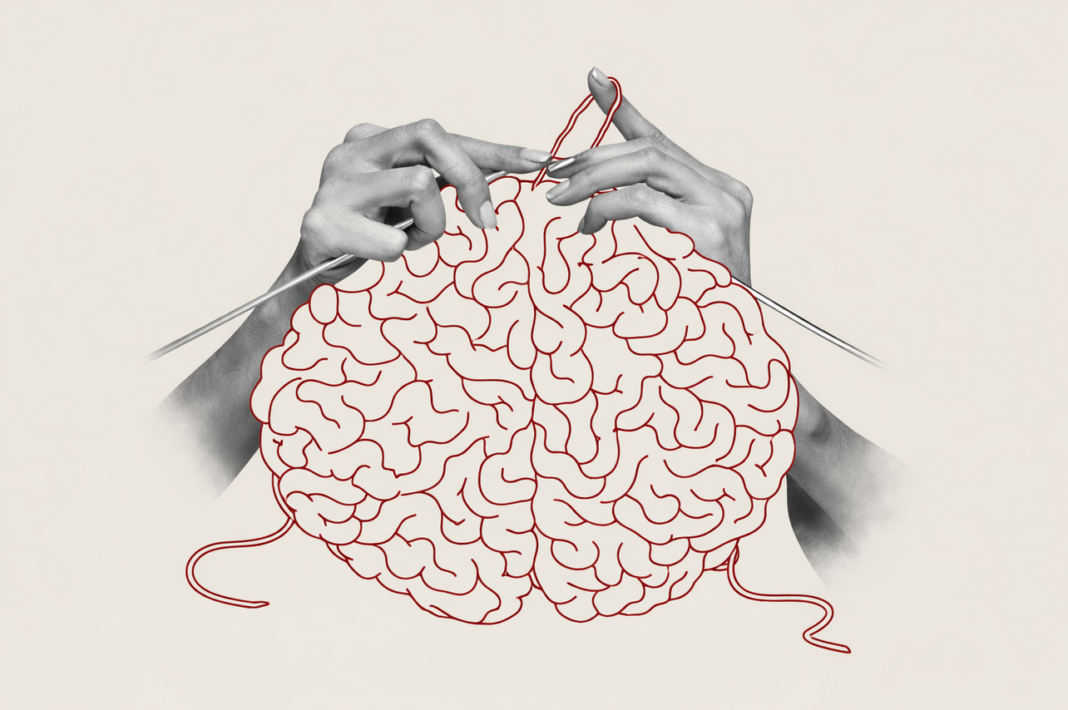
Memory may fail, language fracture, perception disintegrate, yet attachment, agency, and embodied competence preserve selfhood. Identity is not secured solely in stories but in ongoing engagement: the hands we recognise, the practices we enact, the commitments we uphold. When the mind forgets, the self does not vanish; it reorganises. Narrative may fragment, but relational and embodied continuity persist.
In this quiet reorganisation, resilience emerges—not as abstract persistence, but as lived experience. The self is not a simple thread of memory; it is a network of attachments, skills, and purposeful acts enduring across time. Clive Wearing’s music and love, Lev Zasetsky’s journaling and moral awareness, reveal a central truth: human identity is anchored not merely in memory, but in how we act, connect, and engage. Even under cognitive collapse, the self proves adaptive, relational, and alive—a layered architecture of consciousness persisting beyond memory’s fragility.
References
-
Kaczmarek, B. L. J., Code, C., & Wallesch, C. W. (2003). The fractionation of mental life: Luria’s study of Lieutenant Zasetsky. In C. Code, C. W. Wallesch, Y. Joanette & A. R. Lacours (Eds.), Classic cases in neuropsychology: Volume II. Psychology Press.
-
Cavaco, S., Feinstein, J. S., van Twillert, H., & Tranel, D. (2012). Musical memory in a patient with severe anterograde amnesia. Journal of Clinical and Experimental Neuropsychology, 34(2), 193–211.
-
McComas, A. J. (2022). Clive Wearing and Henry Molaison reconsidered. In Aranzio’s Seahorse and the Search for Memory and Consciousness (pp. 261–266). Oxford University Press.
-
Sacks, O. (2007, September 24). The Abyss: Music and amnesia. The New Yorker.