


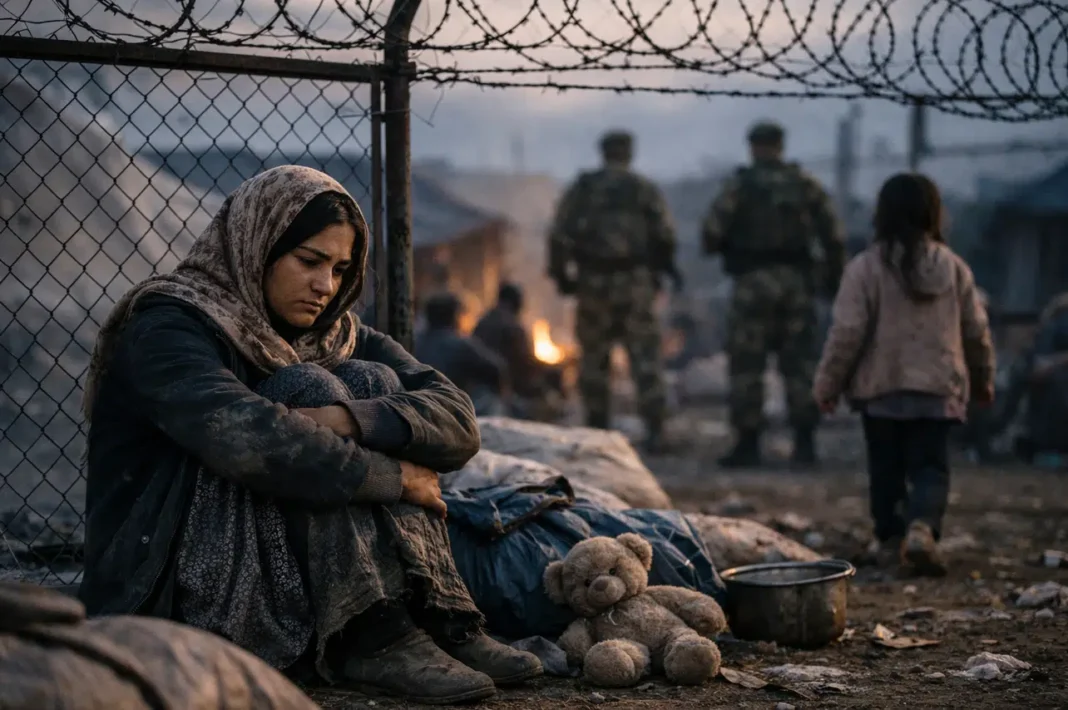

Forced migration cannot be reduced to a mere change of location. It is a multidimensional experience that profoundly affects an individual’s sense of identity, belonging, and bodily integrity. Mass displacement driven by war and political violence generates particular vulnerabilities, especially for women.
Within an already unequal gender order, the experience of migration can further expose women’s bodies to heightened risks. In this context, the body becomes more than a biological entity; it turns into a site upon which power relations, economic interests, and cultural norms operate. This article examines how, under conditions of forced migration, the female body may become an object of control and negotiation, and explores the psychological and social consequences of this transformation.
Migration And Increased Vulnerability
Post-migration conditions such as housing insecurity, economic dependency, and the loss of social networks significantly complicate women’s living conditions. Not knowing the language of the host country, lacking information about legal mechanisms, and being unfamiliar with the cultural structure can render women both invisible and unprotected.
Gender inequality often becomes more pronounced during this process. Although male migrants also face serious challenges, women are at greater risk of sexual exploitation and forced marriage. This heightened vulnerability stems not from individual weakness but from structural inequalities embedded within migration systems.
Exploitation Under The Discourse Of Marriage
Certain arrangements that emerge in the context of migration may be presented under notions such as equality or protection; however, they often involve a clear imbalance between the parties. Field findings from border regions indicate an increase in religious marriages involving young migrant women. These relationships are reported to involve intermediaries, generate specific economic transactions, and evaluate women according to age, appearance, or health status.
The absence of civil marriage leaves women without legal protection, particularly in cases of divorce, inheritance disputes, alimony, or domestic violence. Polygamy, normalized through cultural justifications, may become an opportunity for some individuals in the host country. In particular, it may be framed as a legitimate and accessible option for men seeking a second marriage.
When concerns about housing, security, and access to basic needs become pressing, decisions are often shaped not by genuine choice but by a lack of viable alternatives. Under such circumstances, the extent to which these decisions reflect free will is debatable. “Consent” may represent not an informed and equal agreement, but rather an acceptance shaped by survival pressures.
Commodification Of The Body And Power Relations
In the uncertainty that follows migration, the female body may become a bargaining element in exchange for security or economic support. This process weakens women’s status as subjects and renders their bodies vulnerable to external control.
What is at stake here is not merely isolated incidents. When gender inequality intersects with insufficient migration policies, control over women’s bodies may become normalized. Such normalization makes exploitation more difficult to recognize and challenge.
The commodification of the female body in forced migration contexts reflects broader structural dynamics in which power is exercised through control, dependency, and limited access to rights.
Psychological Impacts: Trauma And Alienation
Forced marriages, relationships formed under economic pressure, and experiences of sexual exploitation have profound effects on women’s sense of self. The feeling of losing autonomy over one’s body may be accompanied by intense fear, shame, and diminished self-worth.
In such circumstances, women may experience their bodies not as spaces over which they have agency, but as domains governed by others. This perception can weaken the connection between body and self, leading to significant disruptions in psychological integrity.
Moreover, the inability to articulate these experiences may deepen trauma. The fear that speaking out could result in loss of shelter, social exclusion, or further violence may transform silence into a survival strategy. Over time, however, such silence can hinder psychological recovery and contribute to complex trauma presentations.
Preventive And Supportive Approaches
Policies addressing migrant women must be structured with attention to gender inequality and gender-based risks. Providing information on legal rights, supporting language acquisition, enhancing vocational skills, and expanding employment opportunities are critical for reducing economic dependency.
In addition, accessible psychosocial services should be ensured, and trauma-informed interventions should be expanded. Incorporating migrant women’s lived experiences into policy development is essential for accurately identifying needs. Interventions should address not only individual symptoms but also the structural conditions that produce them within the broader context of forced migration.
Conclusion
The control and commodification of women’s bodies in the context of forced migration cannot be explained solely through individual cases. Rather, it reflects systemic issues emerging at the intersection of unequal power relations and inadequate protection mechanisms.
Any form of domination imposed on women’s bodies threatens not only physical safety but also psychological integrity. Therefore, discussions on migration and mental health must incorporate ethical and social responsibility dimensions.
Unless comprehensive policies that strengthen women’s agency and provide legal and psychological safeguards are effectively implemented, these structural problems are likely to persist.
References
Armagan-Bogatekin, M., & Ho, I. K. (2024). Contextual factors affecting psychological and physical well-being among Syrian refugees in Turkey. Birey ve Toplum Sosyal Bilimler Dergisi, 14(2), 65–82.
İnsan Hakları ve Mazlumlar için Dayanışma Derneği (Mazlumder). (2014). Kamp dışında yaşayan Suriyeli kadın sığınmacılar raporu. Mazlumder Kadın Çalışmaları Grubu.