


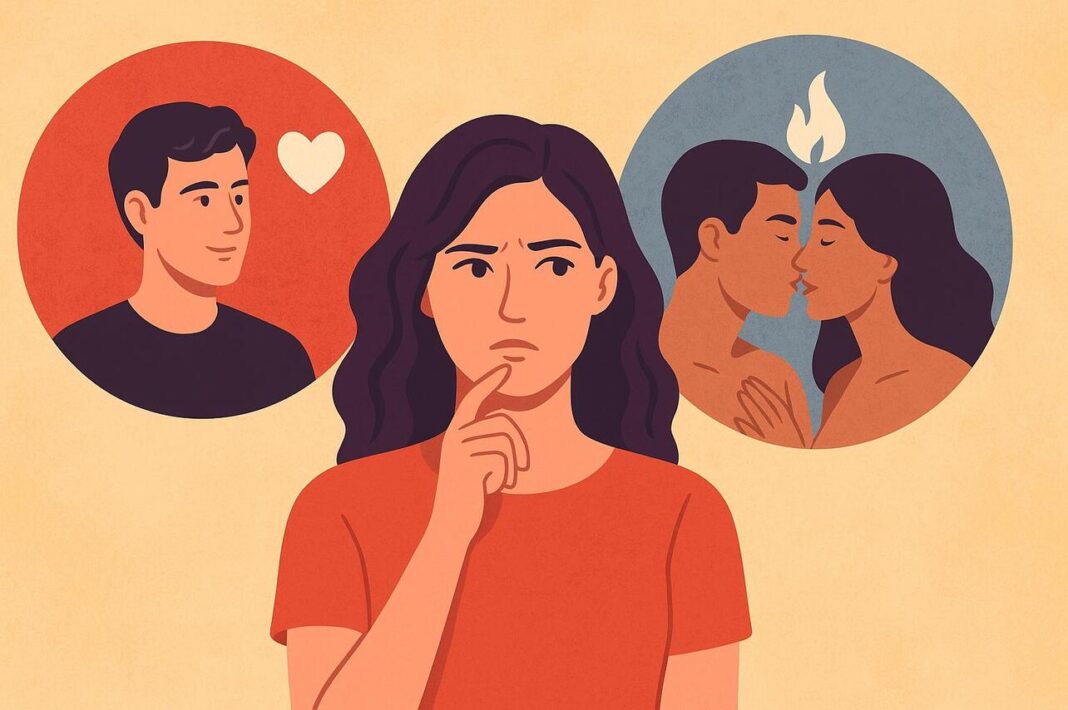

1. Emotions That Can’t Slow Down In An Accelerating World
Contemporary relationships are shaped by fast and fleeting interactions that mirror the pace of technology. This new social landscape transforms the nature of romantic feelings and makes it increasingly difficult to define what love truly is. Numerous studies indicate that individuals now struggle to distinguish love from desire, particularly as digital life frequently intertwines these two emotional experiences.
Traditional literature defines romantic love through intimacy, commitment, and emotional continuity, while desire is framed as a more biological, instinctual, and short-term orientation. Neuroscientific research supports this distinction, showing that love activates oxytocin–dopamine pathways, whereas desire is more strongly associated with testosterone-driven reward systems (Diamond, 2004; Seshadri, 2016).
However, drawing a clear line between these two systems has become increasingly challenging in modern relationships. Digital dating applications—characterized by rapid matching, endless options, and visually driven first impressions—shift romantic orientation toward a more desire-focused foundation (Bowman, 2024; Toma, 2022). This shift complicates the interpretation of emotional experiences, making it harder for individuals to discern whether what they feel is genuine love or momentary desire.
2. The Weakening Foundations Of Love And The Rising Power Of Desire
Several psychological and sociocultural factors contribute to the growing fragility of love in the 21st century. One major factor is the acceleration of relationship initiation. Meeting processes are brief, attempts to form emotional bonds are often superficial, and the intensity of feelings tends to be short-lived. The physiological arousal associated with desire is frequently mistaken for romantic attraction; thus, individuals may interpret desire as a sign of “falling in love” before emotional closeness has even begun to form.
Psychoanalytic perspectives acknowledge that love and desire have always been interconnected. Yet what distinguishes the modern period is the ease with which desire can be satisfied without emotional attachment. This dynamic deprioritizes the effort, continuity, and emotional openness required to sustain love. In a culture driven by speed and accessibility, the deep and gradual nature of love becomes less appealing than the quick gratification provided by desire.
Attachment theory offers an important framework for interpreting this complexity. Individuals with secure attachment styles tend to be better at identifying and differentiating their feelings, whereas avoidantly attached individuals may treat desire as a substitute for emotional closeness. For anxiously attached individuals, desire may function as “proof of attention,” further blurring the distinction between love and desire (Coffey, 2022).
Behavioral research also demonstrates that these two emotional states rely on different cognitive processes. Eye-tracking studies show that individuals experiencing romantic feelings tend to focus on their partner’s face, whereas heightened desire redirects attention toward bodily cues. Despite this, the rapid-consumption logic of digital culture renders these distinguishing markers less visible in everyday relationships.
In addition, constant exposure to high-intensity stimuli raises the threshold of the brain’s reward system, making genuine emotional intimacy feel less stimulating or even boring. This stands as a significant neuropsychological factor that undermines the sustainability of romantic love.
3. The Crisis Of The Modern Relationship
Collectively, these findings illustrate a profound transformation in how people experience love today. Emotions arise quickly, dissipate rapidly, and are frequently confused with surface-level desire. Modern relationships exist at the intersection of two conflicting forces: the slowness, depth, and vulnerability required by romantic love, and the speed, accessibility, and consumption-based logic of contemporary life.
This tension renders love more fragile, while making desire more accessible and appealing. As a result, individuals often struggle to determine whether the intense pull they feel at the beginning of a relationship is a sign of genuine emotional connection or merely a fleeting desire.
4. Rethinking Love In The Digital Age
The crisis of love in the modern world is not only a personal struggle but also a reflection of broader societal transformations. The increasingly blurred boundaries between love and desire have direct implications for the quality and durability of romantic relationships.
To sustain healthier relationships today, individuals may benefit from:
-
Emotional Awareness: Strengthening the ability to identify, observe, and interpret one’s own emotions.
-
Deliberate Slowing Down: Consciously pacing relationship initiation to prevent the rapid pull of desire from being mistaken for romantic connection.
-
Attachment Awareness: Understanding one’s attachment style to recognize recurring relational patterns.
-
Digital Moderation: Acknowledging the impact of dating apps’ endless-option structure on expectations and emotional regulation.
-
Pursuing Depth: Actively nurturing foundational elements of love—shared effort, trust, communication, and emotional openness.
Ultimately, although love in the digital age is easily overshadowed by the intensity of desire, authentic romantic connection requires time, trust, and mutual commitment. Modern conditions may complicate this process, but they do not render it impossible. What love demands today is a heightened awareness of emotional nuance and the courage to resist the accelerated pace of contemporary life.
References
Diamond, L. M. (2004). Emerging perspectives on distinctions between romantic love and sexual desire. Current Directions in Psychological Science, 13(3), 116-119.
Bowman, Z. (2024). Dating apps and their relationship with body image, mental health, and wellbeing: A systematic review. Journal of Social and Personal Relationships, 41(2), 1-22.
Seshadri, K. G. (2016). The neuroendocrinology of love. Indian Journal of Endocrinology and Metabolism, 20(4), 558-563.
Coffey, J.K., Warren, J., & Gottfried, M. (2022). Attachment styles and online romantic relationship experiences. Journal of Social and Personal Relationships, 39(7), 2045-2068.