


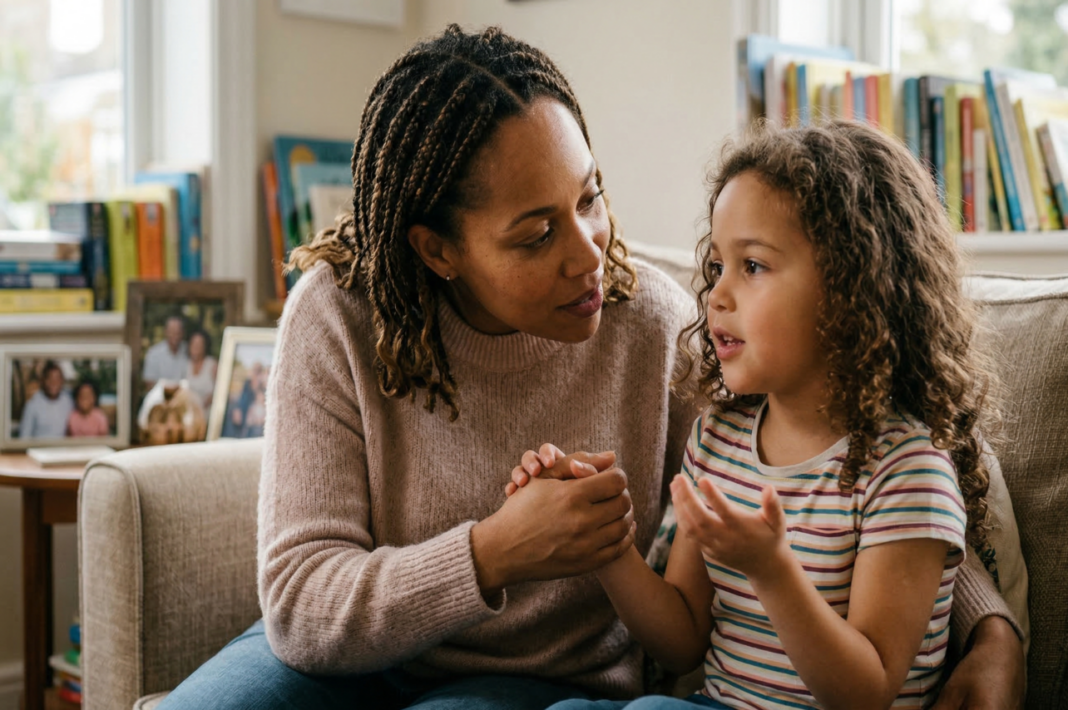

Does the brain know what to remember from birth, or does it learn afterwards? Have you ever thought that the question you ask your child every day, ‘Did you eat your lunch at school today?’, might have an impact on their memory?
Vygotsky, Memory and Culture
Vygotsky addresses children’s mental development not just by considering individual and genetic factors, but also in asocio-cultural context. He argues that memory is a process constructed by society, and suggests that children are trained as apprentices within this social context (Wertsch, 1985). According to him, a child learns what is important to remember and what is forgettable not merely through direct experience, but by observing the society in which they live. The child internalizes what they see in their society and family, and the echoes of these observations are recorded in their memory; in other words, they shape their memory.
In addition to shaping our memory like a dough, culture punishes us when we don’t conform to its teachings. According to research, remembering individual victory memories in Western culture is good for mental health, while in Asian culture, individuals who remember individual memories in detail have lower mental health (Wang et al., 2018). This is due to the alignment or disharmony of memory with culture. In Asian culture,collectivism is emphasized more than individualism. Therefore, those who remember individual memories in detail cannot adapt to the collective lifestyle and experience symptoms similar to depression. In other words, for us to feel a sense of belonging to the culture we are in, our memory must also align with our environment. Culture, which educates children about what to remember and what to forget, can, with all its ungratefulness, drag them into loneliness and symptoms similar to depression if they do not follow this framework. On the other hand, the people we interact with every day and the dialogues we participate in also have an impact on our memory, so the family we are born into also plays a significant role.
The Active Role Of The Family
One of the points where different theories in psychology agree on, is the economy of mind, which is the tendency to conserve mental energy. Memory is working with the economy of mind. In order to use less energy, our brain tends to forget information it doesn’t need or use. For example, if a child is constantly asked what they wrote in their notebook that day instead of how much fun they had, remembering how much fun they had is not logical from the economy of mind perspective, because what they wrote in their notebook is constantly asked, and therefore, what is worth remembering. Memory learns to continue with the information that is useful to it in order to reduce energy. At this point, the role of parents is significant in determining which information is useful and which is not. A study conducted by Cook (2020) showed that the detailed and explanatory style of parents plays a decisive role in children’s capacity to remember past events. As the study supports, regularly asking a child questions about their experiences shows them which part they should focus on remembering.
Suggestion
In this context, it is recommended to prefer open-ended questions when asking children about their experiences. While yes-or-no questions like “Did you do this?” direct the child to focus on a specific part of the experience, open-ended questions allow them to review the experience as a whole. Thus, questions like “How was your day?”, “What were the most enjoyable moments you had today?” facilities for children’s autobiographical memory development.
To Conclude
In light of Vygotsky’s sociocultural theory, we can say that social and cultural interactions, especially those of parents, have an impact on what and how children remember. Therefore, we must remember that the questions we regularly ask our children will guide their memory.
References
Cook, O. K., M. S. (2020). The development of children’s autobiographical and deliberate memory through Mother-Child Reminiscing [Thesis]. The University of North Carolina at Greensboro. https://libres.uncg.edu/ir/uncg/f/Cook_uncg_0154M_12962.pdf?utm_source=chatgpt.com
Wang, Q., Hou, Y., Koh, J. B. K., Song, Q., & Yang, Y. (2018). Culturally Motivated Remembering: The moderating role of culture for the relation of Episodic Memory to Well-Being. Clinical Psychological Science, 6(6), 860–871. https://doi.org/10.1177/2167702618784012