


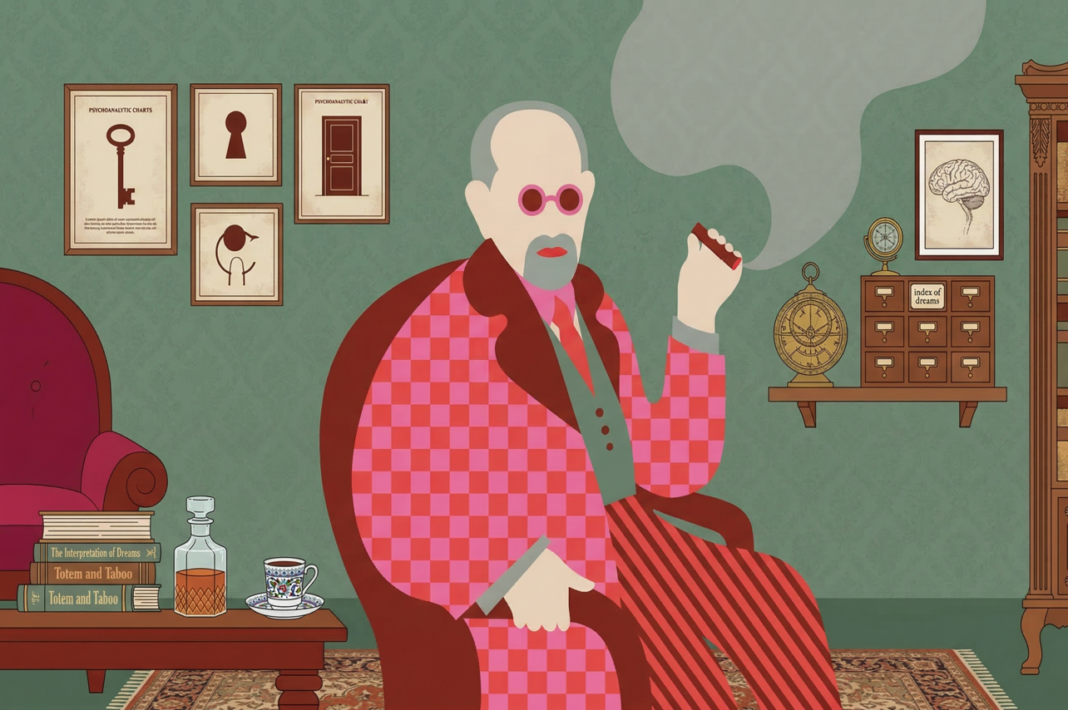

1. Fashion: Beyond Words
Have you ever wondered why you choose certain types of clothes when you go shopping? The choices we make while putting together an outfit at the beginning of the day are rarely random. In fashion psychology, our preferences often reflect our personality traits, emotional states, social identities and even the messages we wish to convey to others. As a result, we should not simply dismiss our clothes; rather, we should pay attention to them.
2. Color Psychology In Fashion
From the perspective of fashion psychology, color is one of the most powerful elements in our psychology. It reveals some of our personal traits. At the same time, we can infer basic information about someone we do not know.
For instance, black is often associated with power and authority, while white is linked to purity and honesty. According to research by Roberts and colleagues, red clothes tended to make participants rate subjects more favorably in terms of attractiveness compared to when they wore clothes of other colors. This result might explain the findings of a study showing that, when waitresses wore different colored t-shirts whilst serving in a restaurant, men would tend to leave higher tips for those wearing red tops than those with t-shirts of other colors.
Naturally, many of the findings from research into the psychology of fashion and clothing choices are subject to the cultural values of the society in which a person lives. Additionally, color meanings are not universal. Therefore, some colors can create different evocations in different cultures. For example, while white symbolizes purity in many Western societies, it is associated with mourning in some Eastern cultures.
3. Clothing And Personality Traits
Clothing plays a significant role in how individuals express themselves in daily life. Contrary to commonly held beliefs, women are more attentive to their appearance than men. However, research demonstrates that men are often more self-conscious than women with regards to their personal dress sense and the way in which they are viewed in public. Concerns about personal presentation are therefore not limited to one gender but reflect broader psychological processes related to self-image and social evaluation.
The effect of personality traits on fashion preferences cannot be denied. For instance, individuals who score high on openness to experience and extroversion often gravitate toward more distinctive clothes such as bold, attention-grabbing fashion, embracing bright colors and unique patterns. Meanwhile, more introverted individuals might lean toward minimalist styles and subtle accessories. Their clothing choices often prioritize comfort over standing out.
Although clothing can function as an extension of our personality, this does not mean that personality rigidly determines fashion choices. In addition to personality, clothing preferences might vary depending on the context, mood, culture, and even social expectations.
4. Mood And Outfit Selection
Apart from the influences of our personal traits on our clothing preferences, our emotional states also have powerful effects. While how we feel can shape our style preferences, what we wear can play a huge role in our mood regulation.
In psychology, this concept is referred to as“enclothed cognition”, a psychological phenomenon where the clothing a person wears influences their thoughts, feelings, and behaviors.
In one study, participants who wore a white coat and identified themselves as doctors performed better oncognitive tasks than those wearing the same coat described as painter’s coats. The symbolic meaning attached to clothing influenced their mental state.
Likewise, individuals who feel depressed often tend to wear dark-colored and oversized clothes which are believed to provide psychological security during stressful periods. In the same way, on days of high energy and confidence, people prefer to wear more colorful clothes or assertive styles.
5. Conclusion: What Our Wardrobe Reveals
Clothes are not merely things that we wear every day; they are much more than that. For example, in many societies, dress sense embodies personal wealth and taste. According to the research of economist George Taylor, he illustrated this most vividly with the “Hemline Index”. Taylor noted that as a country enters recession and adopts austere spending habits, women often show a preference for longer dresses, while during times of prosperity, the opposite result can be seen: hemlines often become shorter.
Consequently, our wardrobe reflects aspects of what we are, how we feel, and how we wish to be perceived. It is a form ofnonverbal communication that signals our personal traits, reveals our social identity, and reflects our emotional state.
Therefore, fashion means much more than only covering the body.
References
Adam, H., & Galinsky, A. D. (2012). Enclothed cognition. Journal of Experimental Social Psychology, 48(4), 918–925. https://doi.org/10.1016/j.jesp.2012.02.008
Elliot, A. J., & Maier, M. A. (2014). Color psychology: Effects of perceiving color on psychological functioning in humans. Annual Review of Psychology, 65, 95–120. https://doi.org/10.1146/annurev-psych-010213-115035
Guéguen, N., & Jacob, C. (2014). Clothing color and tipping: Gentlemen prefer blondes… and waitresses in red. Journal of Hospitality & Tourism Research, 38(2), 275–280. https://doi.org/10.1177/1096348012442546
Johnson, K. K. P., & Lennon, S. J. (2014). Appearance and self-concept: A qualitative approach. Journal of Fashion Marketing and Management, 18(4), 395–409. https://doi.org/10.1108/JFMM-04-2013-0045
Kaiser, S. B. (2012). Fashion and cultural studies. Bloomsbury Academic.
Roberts, S. C., Owen, R. C., & Havlíček, J. (2010). Distinguishing between perceiver and wearer effects in clothing color-associated attributions. Evolutionary Psychology, 8(3), 350–364. https://doi.org/10.1177/147470491000800305
Taylor, G. (1926). The hemline index. Harvard Business Review.