



Introduction: How Should Post-Traumatic Stress Disorder Be Understood?
Post-Traumatic Stress Disorder (PTSD) is one of the most frequently misunderstood mental health conditions within psychiatry and clinical psychology. It is often interpreted as a sign of personal weakness, lack of resilience, or an inability to “move on” from a distressing event. However, contemporary scientific literature clearly demonstrates that PTSD is not a personality trait or a failure of willpower, but rather a neurobiological and psychological survival response of the brain and body to life-threatening experiences.
From a clinical perspective, PTSD is less about the traumatic event itself and more about how the brain encodes, processes, and regulates the experience. For this reason, individuals exposed to similar traumatic events may develop very different psychological outcomes. The impact of trauma is shaped not only by the severity of the event but also by the individual’s psychological resources, attachment history, and the way the nervous system responds under threat. In this sense, PTSD reflects the interaction between external danger and internal regulation systems.
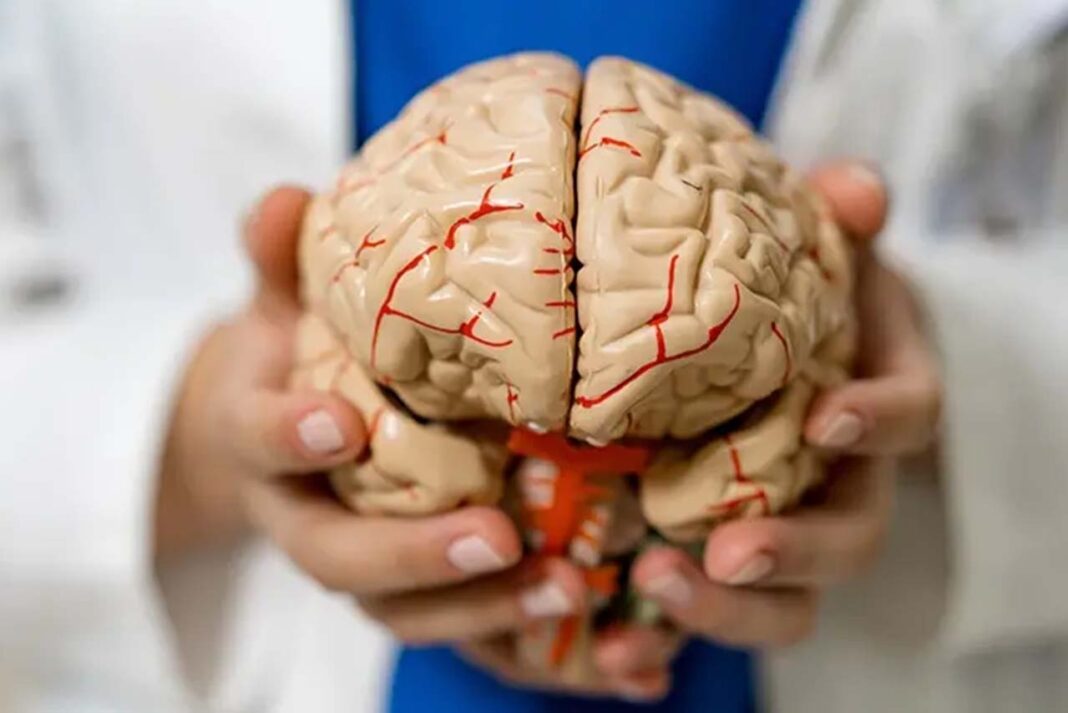
What Happens In The Brain During Trauma? Neurobiological Foundations
During a traumatic event, the brain operates under the perception of imminent danger, prioritizing survival over reflection. Automatic and reflexive responses dominate, while higher-order cognitive processes become temporarily compromised.
Three brain regions play a particularly central role in this process:
The amygdala functions as the brain’s alarm system. It rapidly detects threat and activates the fight, flight, or freeze response. In individuals with PTSD, the amygdala remains hyperresponsive even after the danger has passed, causing neutral stimuli to be misinterpreted as threats. Clinically, this manifests as hypervigilance, exaggerated startle responses, and intense physiological arousal.
The hippocampus is responsible for organizing memories within their temporal and contextual framework. Under traumatic stress, hippocampal functioning is suppressed. As a result, traumatic memories are not stored as past events but are experienced as if they are occurring in the present moment. Flashbacks, nightmares, and intrusive recollections are direct outcomes of this disruption.
The prefrontal cortex, which governs reasoning, emotional regulation, and the perception of safety, loses its regulatory capacity during trauma. In PTSD, individuals may intellectually recognize that they are safe, yet remain unable to calm their bodies and emotions. This dissociation between knowing and feeling safe is a hallmark clinical feature of the disorder.
The Core Problem In PTSD: Unprocessed Traumatic Memories
From both clinical and psychiatric perspectives, PTSD is rooted in the brain’s inability to fully process traumatic memories through its natural information-processing system. These memories remain “frozen,” stored together with intense fear, helplessness, shame, and bodily sensations.
As a result, individuals experience symptoms such as:
-
Avoidance of trauma-related reminders
-
Hyperarousal and exaggerated startle responses
-
Emotional numbing and detachment
-
Sleep disturbances and somatic complaints
Psychopathologically, these symptoms do not indicate dysfunction but rather reveal that the nervous system continues to operate under the assumption that danger is ongoing. Without sufficient signals of safety, the brain remains locked in survival mode, replaying the trauma in the present.
EMDR: Reprocessing Trauma In The Brain
Eye Movement Desensitization and Reprocessing (EMDR) is recognized by the World Health Organization (WHO) and numerous international psychiatric guidelines as an effective treatment for PTSD. The primary goal of EMDR is to facilitate the adaptive reprocessing of traumatic memories.
Through bilateral stimulation, the brain’s innate information-processing system is activated, allowing traumatic memories to be integrated without their original emotional and physiological intensity. The aim is not to erase the memory but to transform its impact so that it is experienced as a past event rather than a current threat. This process leads not only to cognitive insight but also to profound emotional and somatic regulation.
Neuropsychiatric Effects Of EMDR
Following EMDR treatment:
-
Amygdala hyperactivation decreases
-
The hippocampus restores temporal and contextual organization of memory
-
The prefrontal cortex regains its regulatory function
Functional neuroimaging studies demonstrate reduced limbic system activation and increased prefrontal engagement after EMDR. These neurobiological changes closely parallel clinical improvement, reinforcing EMDR’s role as a mechanism-based intervention rather than a purely symptomatic approach.
The Integration Of Psychotherapy And Psychiatric Treatment
Psychotherapy remains the cornerstone of PTSD treatment. EMDR, trauma-focused cognitive behavioral therapy, and other evidence-based approaches directly target maladaptive learning and memory processes.
Psychiatric treatment, when indicated, plays a supportive role. Antidepressants and other pharmacological interventions may help stabilize the nervous system, enabling individuals to engage more effectively in psychotherapy. The goal is not symptom suppression but the creation of a neurobiological environment that supports psychological healing.
Conclusion: PTSD Is Not A Weakness, But An Adaptive Response
Post-Traumatic Stress Disorder does not reflect personal fragility; rather, it demonstrates the brain’s remarkable capacity to protect life under extreme conditions. When these protective systems learn that the threat has passed, recovery becomes possible.
EMDR does more than teach the brain that danger is over—it allows individuals to rebuild a sense of safety within themselves, their bodies, and their relationships with the world. In this way, EMDR supports the transition from mere survival to a life lived with security and meaning.