


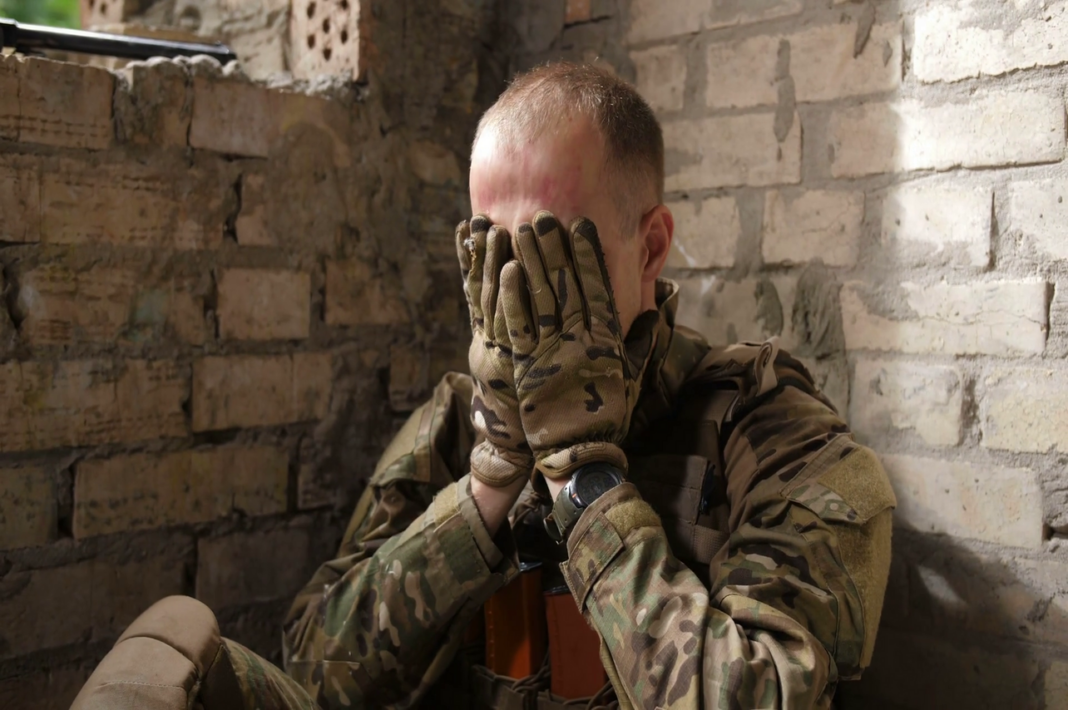

In high-risk occupational groups such as soldiers and police officers, who are constantly exposed to trauma, emotional numbness, traumatic exposure, and empathy loss represent conditions with serious consequences for individual mental health and institutional functioning. This study addresses emotional numbness in soldiers and police officers within the context of post-traumatic stress disorder, secondary traumatization, and chronic stress; it evaluates psychodynamic, cognitive-behavioral, and neurobiological explanations within a comprehensive framework. It also discusses the effects of emotional numbness on job performance, ethical decision-making processes, and civil-authority relations; and includes intervention strategies for prevention and recovery.
Introduction
Military and police work are inherently professions where encounters with threats, violence, and death are common. Individuals working in these fields are constantly exposed to traumatic experiences and develop strong emotional responses over time. However, when this emotional intensity becomes unbearable, emotional numbness is observed in some individuals. Emotional numbness is defined as a marked reduction in positive or negative feelings, difficulty empathizing with others, and a sense of internal detachment (American Psychiatric Association [APA], 2022).
The goal of this article is to evaluate the causes, functioning, and effects of emotional numbness among soldiers and police officers within an academic framework; and to address evidence-based approaches to its prevention and treatment.
What Is Emotional Numbness?
Although emotional numbness is often considered a symptom of post-traumatic stress disorder, it is also a defense mechanism that can develop in connection with chronic stress and job burnout. From a psychodynamic perspective, emotional numbness is seen as a method of detachment and repression created by the ego. The individual attempts to maintain functionality by pushing unbearable feelings into the unconscious.
Cognitive-behavioral perspectives, on the other hand, interpret emotional numbness as a continuation of avoidance behaviors. Avoiding confrontation with traumatic memories and emotions may provide short-term relief, but in the long run, it leads to emotional numbness.
Traumatic Exposure In Soldiers And Police Officers
Soldiers directly confront the fear of war, conflict, and death; while police officers witness many traumatic situations such as violent crimes, accidents, domestic violence, and social distress. Research shows that the rate of post-traumatic stress disorder in this occupational group is significantly higher than in the general population (Hoge et al., 2004).
Repeated traumas, unlike sudden traumas, keep the individual’s stress system constantly active. This leads to a decrease in emotional responses over time and alienation from both the individual’s inner world and their environment.
Neurobiological Mechanisms
When considering the neurobiological basis of emotional numbness, the amygdala, prefrontal cortex, and hypothalamus-pituitary-adrenal (HHA) axis are particularly important. Continuous exposure to trauma leads to excessive stimulation of the amygdala, which in turn causes a decrease in the prefrontal cortex’s ability to regulate emotions.
As a result, the individual develops a general method of emotional repression to balance intense emotional arousal. This repression, over time, prevents the experience of positive feelings as well (van der Kolk, 2014).
Organizational Context And Emotional Numbness
The emphasis on discipline, hierarchy, and power prevalent in military and police institutions often causes the direct expression of emotions to be perceived as a weakness. Such an organizational culture can reinforce numbness by encouraging emotional repression (McCann & Pearlman, 1990; Williams & Kemp, 2019).
The expectation of “being strong” also reduces help-seeking behavior; the desire to seek psychological support is delayed due to fear of stigma. This situation causes emotional numbness to become permanent.
Ethical Decision-Making Processes, Empathy, And Defense Mechanisms
Emotional numbness has a direct impact on the ability to empathize in soldiers and police officers. Empathy can be defined as a person’s ability to understand another’s emotional state and respond appropriately to those emotions. However, in individuals who are constantly traumatized, empathy can be suppressed over time by defense mechanisms that develop subconsciously. This raises an important question: Is loss of empathy a disease or a functional defense mechanism (Bandura, 1999; Litz et al., 2009)?
It can be seen as a defense mechanism developed to cope with intense feelings of guilt, fear, and helplessness. Especially in situations requiring the use of life-threatening force, the burden of empathy can negatively affect performance on duty. Therefore, empathy is not completely absent among soldiers and police officers, but rather relegated to the background situationally. However, when this withdrawal becomes permanent, it can lead to a loss of empathy and emotional distance toward civilians. Research shows that law enforcement officers with reduced levels of empathy are more likely to use disproportionate force. In this context, loss of empathy is not only an individual psychological problem but also a serious issue affecting ethical decision-making processes and relationships with society (Bandura, 1999; Litz et al., 2009).
Psychological Resilience And Organizational Protective Mechanisms
The main goal in studies on emotional detachment in soldiers and police officers is to establish a safe and controlled relationship with repressed feelings. In this regard, evidence-based methods such as trauma-focused cognitive behavioral therapy and EMDR offer effective strategies in reducing emotional detachment and rebuilding the ability to empathize.
In the preventive field, psychoeducation, regular psychological assessments, and institutional support systems that reduce stigma are gaining importance. Viewing emotional detachment not as a weakness but as a natural response to trauma is one of the most critical protective elements in preventing chronicity (Williams & Kemp, 2019).
Conclusion
Emotional detachment in soldiers and police officers should not be seen only as an indicator of an individual psychological disorder; it should also be considered a complex adaptation and defense process resulting from exposure to intense trauma. In this context, loss of empathy is not entirely a disease; it is a defense mechanism that can be beneficial in the short term, but may have devastating effects on moral decision-making, social relationships, and mental health in the long term.
Addressing intervention and prevention strategies reveals that emotional detachment is not only a symptom that needs to be treated, but also a process that needs to be detected early and addressed at the institutional level. Developing a psychological structure that can adjust and flexibly use empathy according to situations, rather than completely suppressing it, is an important goal in terms of the mental resilience and ethical responsibilities of soldiers and police officers.
Understanding emotional detachment and rebuilding empathy is a scientific and ethical necessity that will strengthen the trust relationship with society, as well as preserve the humane aspect of security forces.
References
American Psychiatric Association. (2022). DSM-5-TR: Diagnostic and statistical manual of mental disorders (5th ed., text rev.). American Psychiatric Publishing.
Bandura, A. (1999). Moral disengagement in the perpetration of inhumanities. Personality and Social Psychology Review, 3(3), 193–209.
Hoge, C. W., Castro, C. A., Messer, S. C., McGurk, D., Cotting, D. I., & Koffman, R. L. (2004). Combat duty in Iraq and Afghanistan, mental health problems, and barriers to care. The New England Journal of Medicine, 351(1), 13–22.
Litz, B. T., Stein, N., Delaney, E., Lebowitz, L., Nash, W. P., Silva, C., & Maguen, S. (2009). Moral injury and moral repair in war veterans: A preliminary model and intervention strategy. Clinical Psychology Review, 29(8), 695–706.
McCann, I. L., & Pearlman, L. A. (1990). Vicarious traumatization: A framework for understanding the psychological effects of working with victims. Journal of Traumatic Stress, 3(1), 131–149.
van der Kolk, B. A. (2014). The body keeps the score: Brain, mind, and body in the healing of trauma. Viking.
Williams, R., & Kemp, V. (2019). Principles for managing occupational trauma in police services. Policing: A Journal of Policy and Practice, 13(2), 191–202.