


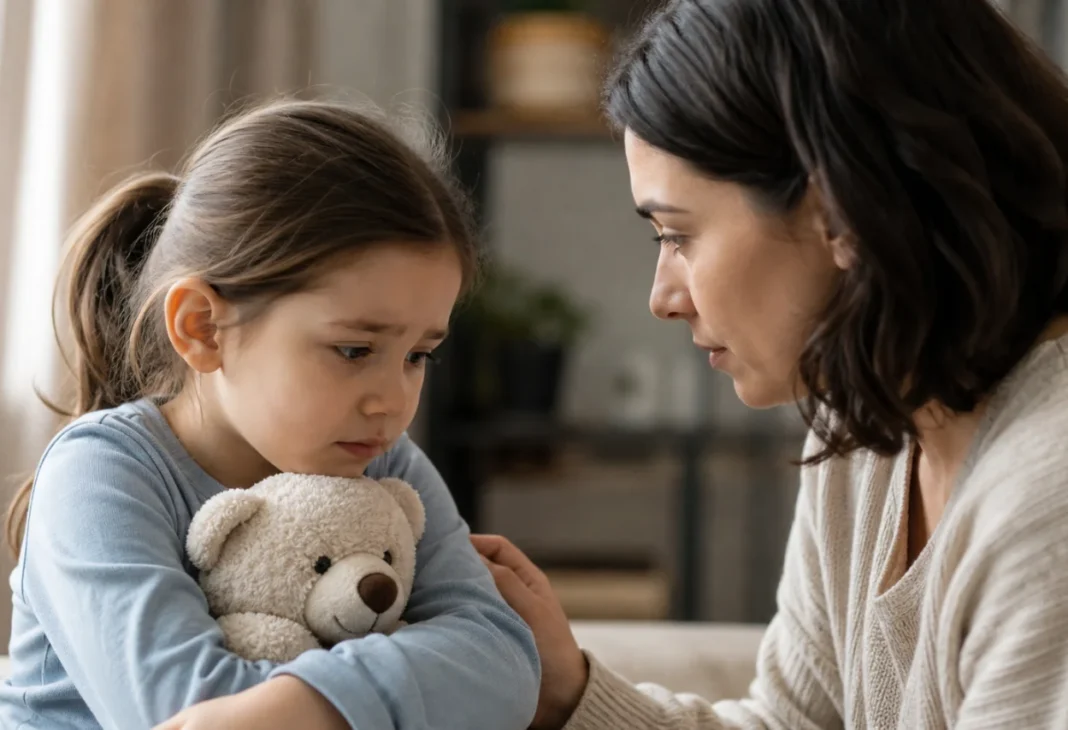

Seeing the Emotions Behind a Child’s Behavior
Why does a child cry, resist simple requests, or become angry when we least expect it? Why might they refuse to talk about their day after school, yet eagerly share every detail on another occasion? As adults, we often interpret children’s behavior too quickly: They are being spoiled, refusing to listen, seeking attention, or acting immaturely.
But what would change if we stopped judging the behavior for a moment and tried to understand the emotions behind it?
Raising a child involves more than meeting physical needs, teaching rules, and preparing them for the future. It also means accompanying a young person who is still learning to understand themselves and the world. Parents, prospective parents, and professionals working with children should ask themselves an important question: I can see what my child is doing, but am I trying to understand why?
Understanding a child does not mean approving of every behavior. It means recognizing the emotions, needs, and messages that may lie behind it.
Beyond What We See
Children cannot always express their experiences in words. Their ability to recognize, regulate, and communicate emotions develops over time. A child may cry when upset, become angry when afraid, or act restlessly when feeling lonely. Sometimes, they struggle to explain the difficulties they have experienced throughout the day and release their accumulated emotions at home in response to a seemingly minor incident.
Imagine a child returning from school, throwing their backpack aside, and responding angrily to their mother’s questions. An adult might immediately criticize the behavior or attempt to impose discipline. Yet the child may have experienced exclusion by classmates, a disagreement with a teacher, or simply an exhausting day.
These are only possible explanations. What matters is not assuming that we already know the reason.
Harvard University’s Center on the Developing Child emphasizes the importance of responsive, reciprocal interactions between children and adults. When adults respond sensitively to children’s attempts to communicate, they support their development and ability to build relationships.
Instead of treating every challenging behavior as a problem that must immediately be corrected, we can consider it an opportunity to understand what the child might be experiencing.
Sometimes, asking, “Did something upset you today?” may be more helpful than saying, “Why are you behaving like this?” The first question can create space for conversation rather than making the child feel they must defend themselves.
Of course, not every behavior indicates an underlying emotional difficulty. Children may also resist because they are tired, testing boundaries, or disappointed that something did not go their way. The key is to observe the situation carefully rather than assigning meaning before understanding the context.
Emotions Are Accepted, Boundaries Remain
Understanding a child does not mean giving them everything they want or overlooking harmful behavior. Emotional understanding and consistent boundaries can work together, helping children feel secure while learning responsibility.
When a child hits a sibling, shouts at a friend, or throws objects in anger, adults need to intervene. However, how they respond can influence what the child learns from the experience.
Saying, “You are a bad child,” attacks the child’s identity. Saying, “It is not okay to hit your sibling. You may be angry, but you cannot hurt them,” addresses the behavior while acknowledging the emotion.
There is an important difference between making a mistake and believing that the mistake makes you worthless. Children need to understand that inappropriate behavior can be corrected and that they can learn different ways of responding.
Accepting emotions does not mean accepting harmful actions. We can teach children that anger is a natural feeling while making it clear that hurting others is unacceptable.
An adult might say, “I can see that you are very angry. Let’s take a moment, and then we can talk about what happened.” Once the child has calmed down, they can discuss the incident, consider how to make amends, and explore alternative responses for the future.
Expecting children to calm down immediately during every emotional outburst is unrealistic. Sometimes, they need time, quiet, or an adult’s guidance. Our responsibility is to protect everyone’s safety while creating an environment where emotions can be expressed appropriately.
We Talk to Our Children, but Do We Really Listen?
Daily responsibilities can make communication with children feel routine. We ask about their day, inquire about school, and remind them of their responsibilities. Yet talking and genuinely listening are not the same.
If we check our phones while a child is speaking, interrupt them repeatedly, or immediately compare their experiences with our own, we may fail to give them the attention they need.
Imagine a child explaining that a friend did not want to play with them. Responding with, “What’s there to be upset about?” may dismiss an experience that feels significant to the child. Friendships, acceptance, and belonging are important parts of children’s social lives.
Instead, we might say, “It sounds like you felt hurt when your friend didn’t want to play with you.” We can then add, “Would you like to tell me more?”
Effective listening does not require agreeing with everything a child says or solving every problem. Sometimes, children simply need to feel that their emotions are recognized and taken seriously.
UNICEF’s parenting resources emphasize age-appropriate communication and attentive listening. Getting down to a child’s eye level, allowing them time to respond, avoiding interruptions, and paying attention to nonverbal communication are simple but meaningful ways to strengthen connection.
We may not always have hours to spend with our children. However, we can improve the quality of the time we share. Even a short conversation at the end of the day, without distractions, can provide a valuable opportunity for connection.
Understanding My Child Through My Own Childhood
Another dimension of our relationships with children is the influence of our own childhood experiences.
Some adults struggle when their children cry. Others feel challenged when a child disagrees with them. Some find it difficult to accept their children’s mistakes, failures, or preferences when they differ from their own expectations.
These reactions may be influenced by stress, exhaustion, social expectations, and parenting beliefs. Sometimes, the relationship patterns we learned during childhood also affect how we respond to our own children.
For example, an adult whose tears were frequently criticized as a child might unconsciously say, “What is there to cry about?” when their own child cries. A parent who was always expected to succeed may interpret their child’s failure as a much greater problem than it is.
These outcomes are neither inevitable nor universal. However, recognizing our reactions can help us build healthier relationships with our children.
We might ask ourselves: Which of my child’s behaviors trigger the strongest reactions in me? Why does their making a mistake cause me so much anxiety? Am I trying to understand what my child feels, or am I trying to escape the discomfort those feelings create in me?
These questions are not intended to blame parents. Parenting is also a process of confronting our own limitations, experiences, and emotions. Every adult struggles sometimes. Recognizing those struggles and seeking support when necessary are signs of responsibility, not failure.
Understanding our own emotional responses can help us approach our children’s needs with greater patience and awareness.
What Can I Do Today to Understand My Child?
Understanding a child does not always require major changes. Small adjustments to everyday interactions can make a meaningful difference.
Observe before interpreting. When your child becomes upset, pause before labeling their behavior. Consider whether fatigue, disappointment, anxiety, or an unmet need might be contributing to the situation.
Name emotions. Saying, “You seem angry,” or “That may have upset you,” can help children recognize their feelings. If your interpretation is incorrect, give them space to explain what they are actually experiencing.
Do not rush to solve everything. When your child shares a problem, first try to understand what they need. Depending on their age, you might ask, “Would you like me to listen, or should we think about a solution together?”
Avoid comparisons. Rather than saying, “Your sibling doesn’t behave like that,” focus on your child’s individual development. Children have different temperaments, interests, and learning experiences.
Repair the relationship after mistakes. Sometimes, our patience runs out, we raise our voices, or we fail to listen carefully. Apologizing does not undermine parental authority. Saying, “I shouldn’t have spoken to you that way. I was angry, but I should have expressed it differently,” models accountability.
Respect individuality. Not every child enjoys the same activities, develops at the same pace, or expresses feelings in the same way. Recognizing a child’s unique characteristics is more valuable than comparing them with others.
When behavioral changes persist and significantly affect a child’s daily life, parenting strategies alone may not be enough. Persistent withdrawal, intense anxiety, major changes in sleep, serious difficulties at school, or behavior involving harm to themselves or others warrant careful attention. Depending on the situation, support from appropriate healthcare or child development professionals may be necessary.
Understanding a child also means recognizing when additional support is needed.
Opening a Door to a Child’s World
We may not always understand a child’s behavior immediately. We may not have the right answer to every question or remain calm in every difficult moment. Nevertheless, we can keep trying to understand, listen without dismissing their feelings, establish clear boundaries, and repair our relationship when mistakes occur.
In parenting, awareness and consistency matter more than perfection. Teachers, social workers, psychological counselors, and other professionals working with children should also look beyond visible behavior and consider the child’s developmental characteristics, family relationships, social environment, and individual needs.
A child is not simply a collection of behaviors to correct, assignments to complete, or achievements to reach. A child is an individual with unique emotions, thoughts, fears, dreams, and a world waiting to be understood.
Perhaps the most valuable gift we can offer is not always having the right answer, but building a relationship in which children can express themselves, their feelings are not belittled, and they know they will not be alone when they struggle.
As children grow, they learn to speak, walk, read, write, and find their place in the world. They also learn to understand themselves, express their emotions, and build relationships. The way adults respond to them throughout this journey can influence how they understand themselves and the world around them.
Sometimes, before trying to change a child, we need to slow down. We can set aside our own words for a moment, look at the child, listen carefully, and ask ourselves:
“Am I trying to correct this child’s behavior, or am I trying to understand their world?”
Perhaps the first step toward transforming our relationships with children begins the moment we allow ourselves to ask this question.
Kaynakça
- Center on the Developing Child at Harvard University. (n.d.). Serve and return. https://developingchild.harvard.edu/key-concept/serve-and-return/
- National Scientific Council on the Developing Child. (2004). Children's emotional development is built into the architecture of their brains: Working Paper No. 2. Center on the Developing Child, Harvard University. UNICEF. (n.d.). Parenting and communicating with children. https://www.unicef.org/parenting
- World Health Organization & UNICEF. (2012). Care for child development: Improving the care of young children. World Health Organization.