


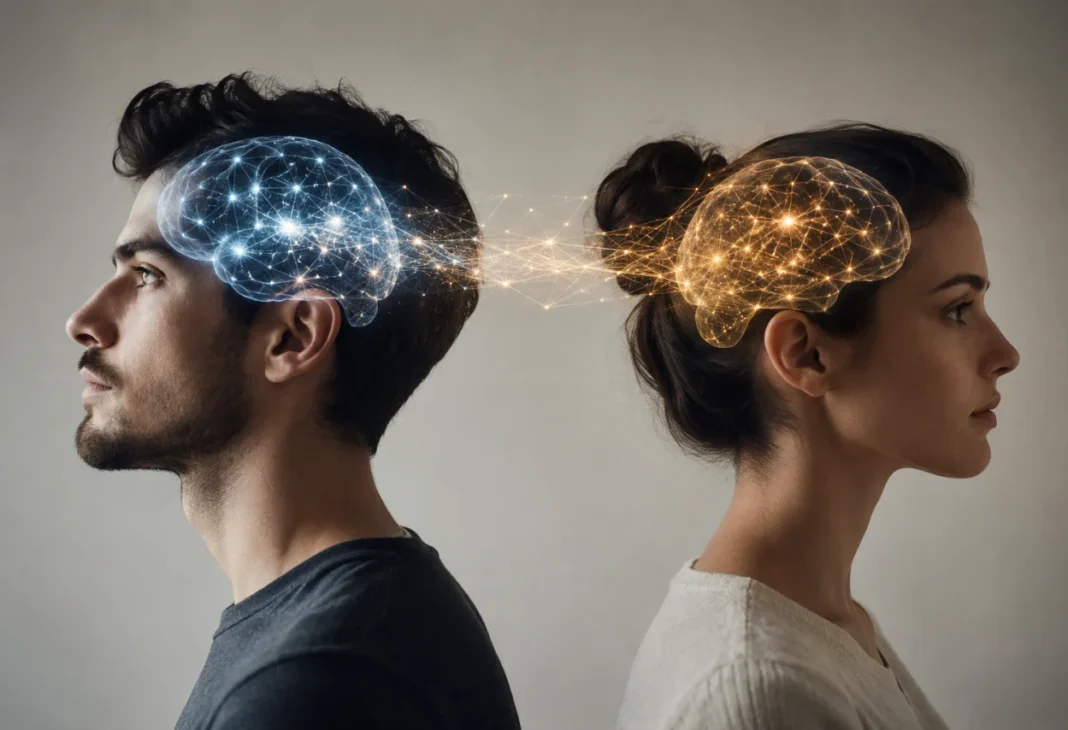

People often hear statements such as “men are naturally better at math,” “women are more emotional,” or “men’s and women’s brains are wired differently.” These ideas have been repeated in popular culture for decades and have influenced how society views gender differences. Books, television shows, movies, and even social media frequently suggest that men and women think in completely different ways because of their brains. However, modern neuroscience paints a much more complex picture. While biological sex can influence brain development in certain ways, researchers have found that the similarities between male and female brains are much greater than the differences. In fact, many neuroscientists argue that there is no such thing as a strictly “male brain” or “female brain.”
The idea that men and women have fundamentally different brains has existed for
centuries. Early scientists believed that differences in brain size explained intelligence, emotions, and behavior. Because men generally have larger bodies, they also tend to have slightly larger brains. However, scientists now understand that brain size does not determine intelligence. Instead, intelligence depends on many factors, including the efficiency of neural connections, life experiences, education, and the brain’s ability to adapt over time. Therefore, using brain size alone to explain differences between men and women is scientifically inaccurate (Rippon, 2019).
One of the most important discoveries in modern neuroscience is the concept of brain mosaics. Rather than having brains that are entirely male or entirely female, most individuals possess a unique combination of characteristics traditionally associated with both sexes. This idea was supported by a landmark study conducted by Daphna Joel and colleagues (2015). After analyzing more than 1,400 brain scans, the researchers found that very few brains contained only characteristics commonly associated with one sex. Instead, most brains were made up of a mixture, or mosaic, of features. These findings challenged the long-held belief that brains can be clearly divided into “male” and “female” categories.
Another reason why the “male brain versus female brain” debate is more complicated than many people think is because of neuroplasticity. Neuroplasticity refers to the brain’s ability to change and reorganize itself throughout life. Every experience, whether learning a new language, playing a musical instrument, participating in sports, or developing friendships, shapes the brain’s neural pathways. This means that many differences observed between men and women may result not only from biology but also from differences in experiences, education, culture, and expectations (Rippon, 2019).
Society often encourages boys and girls to engage in different activities from a young age. Boys may receive more encouragement to play with construction toys, solve spatial puzzles, or participate in competitive sports. Girls may be encouraged to engage in activities involving communication, caregiving, or artistic expression. These repeated experiences strengthen different neural networks through practice rather than biology alone. Over time, these environmental influences can contribute to differences in certain skills, but they do not mean that one sex is naturally incapable of developing the same abilities.
Hormones also play an important role in brain development and behavior. Testosterone, estrogen, and progesterone influence brain function throughout life, affecting areas such as mood, stress responses, and certain cognitive processes. For example, hormonal changes during puberty, pregnancy, or menopause can influence emotions and memory. However, hormones do not determine personality or intelligence. Instead, they interact with genetics, environment, and personal experiences to shape how individuals think and behave (Fine, 2010).
Many studies have investigated whether men and women perform differently on cognitive tasks. Some research has found small average differences. For example, men sometimes perform slightly better on certain spatial rotation tasks, while women may score slightly higher on some verbal fluency tests. However, psychologists emphasize that these differences are generally small and that there is substantial overlap between the two groups. In other words, many women outperform most men on spatial tasks, and many men outperform most women on verbal tasks. Individual differences are much greater than average group differences (Joel et al., 2015).
Unfortunately, stereotypes about the brain can influence performance through a phenomenon known as stereotype threat. Stereotype threat occurs when people fear confirming a negative stereotype about their group. For example, if women are reminded that “women are worse at math” before taking a mathematics test, they may experience increased anxiety, which can reduce their performance. This does not mean they lack ability; rather, the stress of the stereotype affects their confidence and concentration (Fine, 2010). This demonstrates how psychological and social factors can influence outcomes that people sometimes mistakenly attribute to biology.
The media often oversimplifies neuroscience findings by presenting headlines that exaggerate small differences. Statements such as “Scientists discover why women gossip more” or “Men’s brains are built for leadership” attract attention but rarely reflect the actual research. Neuroscientists caution against interpreting minor statistical differences as evidence that all men and all women think differently. Scientific studies usually report averages, and averages cannot accurately describe every individual.
Understanding these misconceptions is important because beliefs about gender and the brain influence education, employment, and social expectations. If teachers assume boys are naturally better at science or girls are naturally better at language, they may unintentionally encourage different opportunities. Similarly, employers may make unconscious assumptions about leadership, communication, or technical skills based on gender stereotypes rather than individual qualifications. These biases can limit people’s opportunities and reinforce stereotypes that neuroscience does not support.
Modern neuroscience encourages people to focus on individual strengths rather than assumptions based on gender. Every person’s brain develops through a unique combination of genetics, hormones, education, experiences, and culture. Some people excel in mathematics, others in creativity, communication, music, or problem-solving, regardless of whether they are male or female. Recognizing this diversity allows society to support individuals based on their abilities rather than stereotypes.
In conclusion, the belief that there are distinct “male brains” and “female brains” is largely a myth that oversimplifies human neuroscience. While biological sex influences certain aspects of brain development, research shows that the similarities between male and female brains far outweigh the differences. Concepts such as brain mosaics and neuroplasticity demonstrate that the brain is flexible and shaped by both biology and experience. Instead of viewing intelligence, emotions, or abilities through the lens of gender, neuroscience encourages us to appreciate the complexity and uniqueness of every individual brain. As scientific research continues to advance, it reminds us that people are far more alike than different, and that our potential is determined by much more than our sex.
Kaynakça
- Fine, C. (2010). Delusions of gender: How our minds, society, and neurosexism create difference. W. W. Norton & Company. Joel, D., Berman, Z., Tavor, I., Wexler, N., Gaber, O., Stein, Y., Shefi, N., Pool, J., Urchs, S.,
- Margulies, D. S., Liem, F., Hänggi, J., Jäncke, L., & Assaf, Y. (2015). Sex beyond the genitalia: The human brain mosaic. Proceedings of the National Academy of Sciences, 112(50), 15468-15473
- Rippon, G. (2019). The gendered brain: The new neuroscience that shatters the myth of the female brain. Beacon Press.