


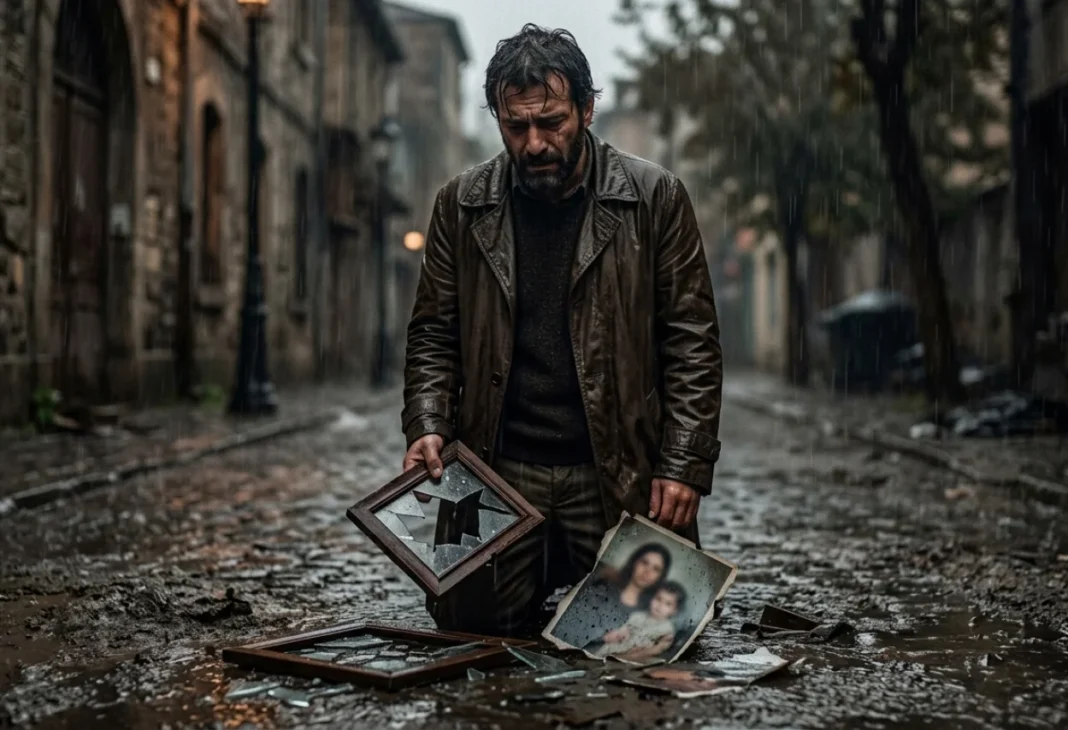

Grief is one of the emotions I encounter most frequently in the therapy room, one that leaves a person in their most raw state. The door opens, the client steps in, and you see that deep, indescribable exhaustion in their eyes. Usually, one of the first sentences uttered is: “When will this pass?” or “It feels like it will never end; am I doing something wrong?”
I know the invisible pressure behind these questions all too well. The modern world we live in creates an illusion where everything is consumed rapidly, problems are instantly “fixed” with practical solutions, and pain must be swiftly put aside. Yet, in psychological practice and the nature of the human psyche, grief is not a problem to be solved or an illness to be cured. Grief is a natural extension of the love, attachment, and value we felt for a person, a relationship, a dream, or a period of our lives that we have lost.
A Non-Linear Journey
In societal acceptance, grief often brings to mind a sequential process: denial, anger, bargaining, depression, and acceptance. Although these stages introduced by Elisabeth Kübler-Ross offer a valuable map for understanding the grieving process, in practice, life does not unfold so neatly. Grief is not a ladder where you climb the steps one by one.
Grief is more like washing ashore intermittently in a stormy sea. One day you may feel you have accepted the situation and adapted to the flow of life; the next day, a random melody, a scent, or a detail seen on the street can hurl you back into the heart of that initial pain. This backsliding is neither a regression nor a failure. It is the mind and soul’s way of digesting the pain. Accepting that grief is non-linear is the first step toward showing compassion to one’s own process.
Accumulated Pain in the Body and Invisible Burdens
Grief is not merely a mental or emotional state; it is experienced directly in the body. In therapy sessions, clients frequently speak of an unrelenting heaviness in their chest, a knot in their throat, chronic fatigue, or physical aches that seem to have no cause. The body expresses in its own language what the mind has not yet put into words.
Experiencing intense numbness during the initial period following a loss is entirely natural. This is a defense mechanism activated by the mind to protect us from overload. However, as this numbness dissipates, it can leave behind a deep void, anger, or guilt. Thoughts such as “I wish I had acted differently” or “I wish I had said those words that day” constantly occupy the mind. This sense of guilt is the mind’s attempt to regain control in an uncontrollable world; because believing that we could go back and change something sometimes feels easier than accepting the finality of the loss.
The “You Must Be Strong” Trap
Even with the best intentions, people around us often offer advice like “You need to stay strong,” “Life goes on,” or “You have to pull yourself together.” Yet, these words place a crushing pressure on the grieving individual. Being strong does not mean suppressing emotions or carrying on as if nothing happened. True strength lies in making honest space for the helplessness, pain, and sorrow you feel.
When we try to push pain down, it does not disappear; instead, it buries itself deep, resurfacing later as anxiety disorders, psychosomatic ailments, or chronic grief. Grief must be allowed to be felt. Crying, feeling angry, doing nothing for days, or simply standing still are all healthy parts of this process.
Does Grief End, or Does It Transform?
The answer in psychology to the frequently asked question “When does grief end?” might surprise many: Grief is not something that truly “ends.” We do not return entirely to our former selves after a loss, because that loss has transformed us.
So, where does healing begin? Healing occurs not when the pain completely disappears, but when life grows around the pain. In the beginning, the loss is like a massive weight occupying your entire life. Over time, that weight might not shrink, but you learn to live around it, gather new experiences, and expand your life. Even if the pain remains the same, your capacity to carry it grows.
A day comes when you begin to remember the person or situation you lost not only with heartache, but with love and longing. Remembering starts to bring not just tears, but a soft smile alongside them. That is precisely where the transformation of grief resides.
Make Space for Yourself
If you are currently walking in the shadow of a loss, be patient with yourself. Every emotion you experience—no matter how complex, irrational, or intense it may seem—is valid. There is no single “correct” way to grieve. Honor your own pace.
Connecting with people you trust and sharing what you feel is just as helpful as being alone when needed. And remember, seeking professional support is the healthiest way to remind yourself that you do not have to walk through this dark tunnel alone.
Direct In-Text Quotes
“Grief is the price we pay for love.”
— Colin Murray Parkes
“Loss is inevitable, but suffering and grieving is a process; it is the mind’s attempt to heal itself.”
— Worden, J. W.
“We must experience pain; for unless we experience it, we cannot transform it.”
— Elisabeth Kübler-Ross
Kaynakça
- References Kübler-Ross, E. (1969). On Death and Dying. Macmillan Publishing Co. (Foundational theoretical framework on the stages of grief and psychological responses during terminal illness.) Worden, J. W. (2009). Grief Counseling and Grief Therapy: A Handbook for the Mental Health Practitioner (4th ed.). Springer Publishing Company. (A clinical handbook addressing the non-linear nature of grief and the "grief tasks" model.) Stroebe, M., & Schut, H. (1999). The Dual Process Model of Coping with Bereavement: Rationale and Description. Death Studies, 23(3), 197-224. (The Dual Process Model explaining the oscillation between loss-oriented and restoration-oriented coping.) Parkes, C. M. (1998). Bereavement: Studies of Grief in Adult Life (3rd ed.). Routledge. (A classic study examining the physical, emotional, and social dimensions of grief in adulthood.) Bonanno, G. A. (2004). Loss, Trauma, and Human Resilience: Have We Underestimated the Human Capacity to Thrive After Extremely Aversive Events?. American Psychologist, 59(1), 20-28. (Empirical research on psychological resilience and individual differences during the grieving process.)