


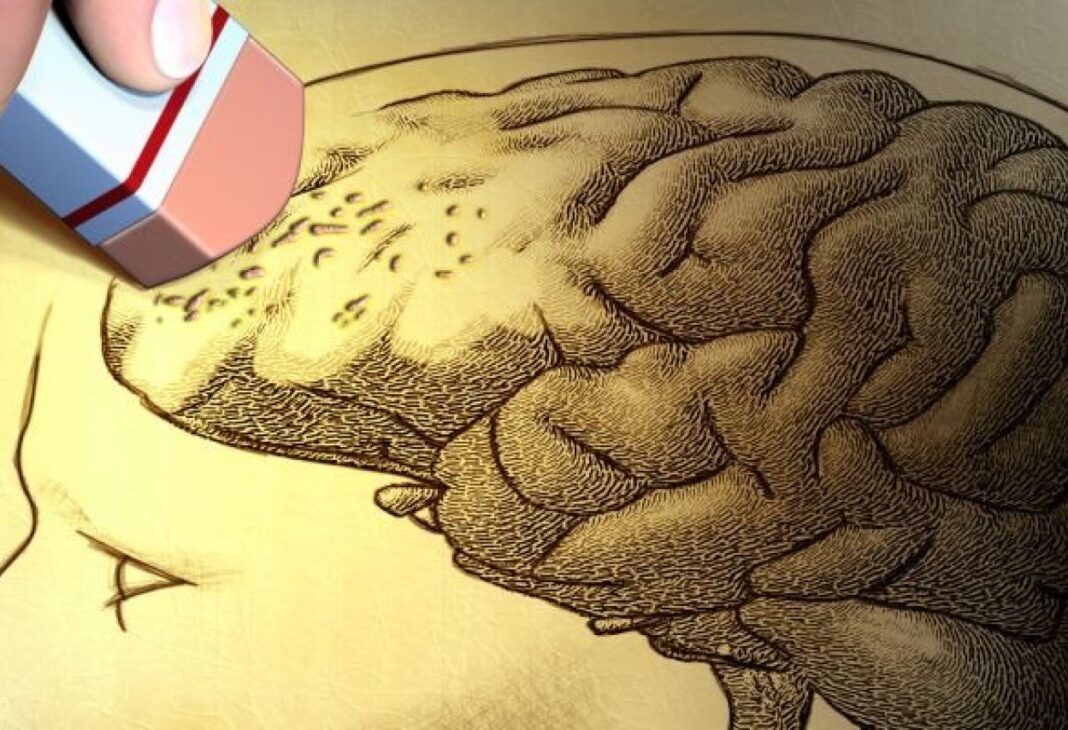

Have you ever walked into a room and completely forgotten why you went there? Or struggled to remember the name of someone you have known for years, even though it feels as though it is right on the tip of your tongue? Perhaps you have even discovered that a childhood memory you were certain was real never actually happened.
In moments like these, most of us reach the same conclusion:
“My memory is terrible.”
But what if the problem is not our memory at all?
We often imagine memory as though it were the storage system of a smartphone. We expect it to preserve every experience perfectly and retrieve it whenever we need it. Yet the human mind was never designed to function that way. In fact, perhaps it should not.
Life is simply too complex for a system that stores every detail indefinitely.
The Seven Sins of Memory
Psychologist Daniel Schacter introduced the concept known as The Seven Sins of Memory, describing seven common ways in which memory appears to fail: transience (forgetting), absent-mindedness, blocking, misattribution, suggestibility, bias, and persistence.
At first glance, these seem like flaws—evidence that our memory is unreliable.
Yet calling them “sins” may be somewhat unfair.
What if these apparent imperfections are actually features of a system that has evolved to help us survive?
Why Forgetting May Be Useful
Consider forgetting.
Most of us see forgetting as the enemy. We become frustrated when we forget material for an examination or embarrassed when we miss a friend’s birthday.
But imagine never forgetting anything.
Every face you have ever seen.
Every street sign you have ever passed.
Every conversation you have ever overheard.
Every insignificant detail preserved with perfect accuracy.
At first, that may sound extraordinary.
In reality, however, it would likely become overwhelming. The mind would be flooded with information, making it increasingly difficult to distinguish what truly matters from what does not.
Perhaps forgetting is simply the brain’s way of clearing away unnecessary cognitive clutter.
Adaptive Memory: Designed for Survival, Not Perfection
This perspective aligns remarkably well with the concept of adaptive memory, an evolutionary theory proposing that memory did not evolve to record information perfectly.
Instead, it evolved to prioritise information that improves survival and helps individuals adapt successfully to their environments.
In other words, memory was never designed to be perfect.
It was designed to be useful.
This principle is easy to recognise in everyday life.
If you burned your hand on a hot stove as a child, you will probably still remember the experience years later.
By contrast, you are unlikely to remember what you ate for lunch three weeks ago.
Your brain does not assign equal importance to these two experiences.
One memory may help you avoid danger in the future.
The other is unlikely to influence your survival or behaviour in any meaningful way.
From this perspective, the selective nature of memory appears remarkably efficient.
When Inaccurate Memories Still Serve a Purpose
Even our tendency to remember events inaccurately may have adaptive value.
Human beings frequently reinterpret the past through the perspective of their present selves. A childhood experience can acquire an entirely different meaning when viewed through the knowledge, maturity, and emotional understanding of adulthood.
This means that our memories are not always historically precise.
Yet perhaps memory was never intended to function as a perfect recording device.
Perhaps one of its most important purposes is helping us construct meaning from experience while continuously shaping our identity.
Memory Is Not Always on Our Side
Of course, memory does not always work in our favour.
False memories may mislead us.
Important information may disappear when we need it most.
Painful experiences may remain vivid long after we wish they had faded.
These are genuine limitations, and in certain circumstances they can produce significant personal, legal, and psychological consequences.
However, if we evaluate memory only by the mistakes it makes, we risk overlooking its broader purpose.
Perhaps memory was never trying to be flawless.
The Hidden Wisdom of an Imperfect Mind
In nature, survival has never depended upon perfection.
It depends upon adaptation.
Our memory reflects exactly that principle.
It filters information.
It updates it.
It reshapes it.
It prioritises it according to what is most likely to help us navigate an ever-changing world.
What often appears to be weakness may actually represent millions of years of evolutionary refinement.
Perhaps the greatest achievement of memory is not its ability to remember everything.
Perhaps its greatest achievement is knowing what deserves to be remembered.
References
Schacter, D. L. (1999). The Seven Sins of Memory: Insights from Psychology and Cognitive Neuroscience. American Psychologist, 54(3), 182–203.
Schacter, D. L. (2001). The Seven Sins of Memory: How the Mind Forgets and Remembers. Houghton Mifflin.
Nairne, J. S. (2010). Adaptive Memory: Evolutionary Constraints on Remembering. Psychology of Learning and Motivation, 53, 1–32.
Nairne, J. S., Thompson, S. R., & Pandeirada, J. N. S. (2007). Adaptive Memory: Survival Processing Enhances Retention. Journal of Experimental Psychology: Learning, Memory, and Cognition, 33(2), 263–273.