


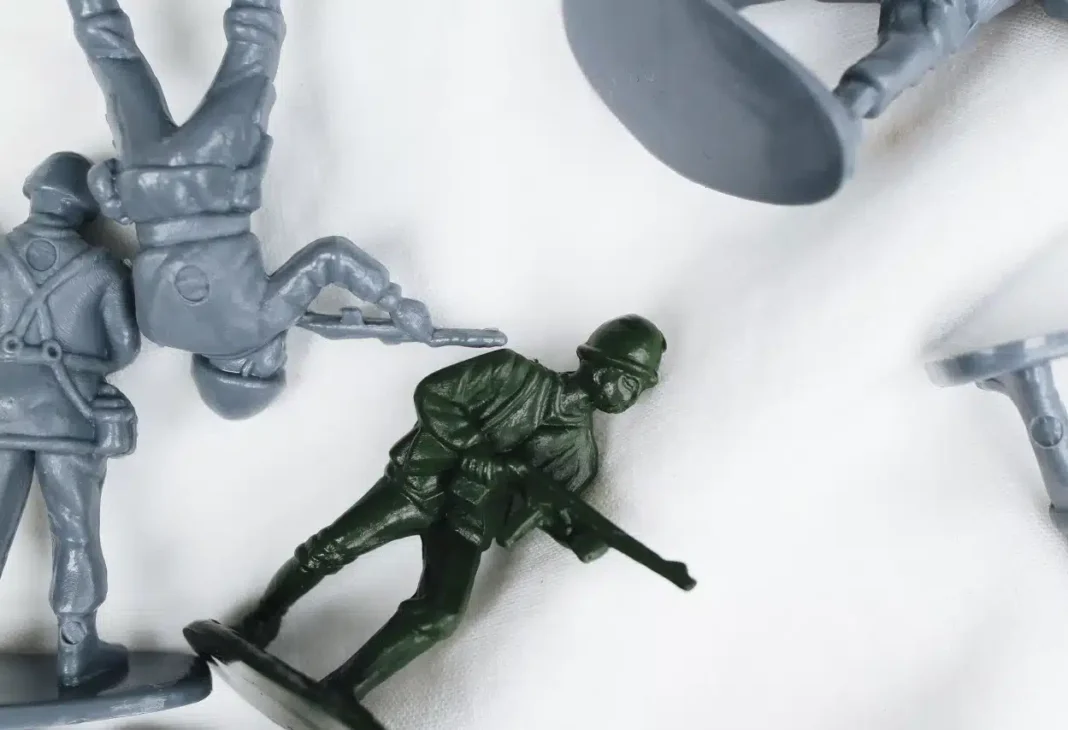

War is not merely a struggle for land, resources, or political goals; it is also a profound test of one’s mental resilience, emotional endurance, and human values. Beyond cannons, guns, and military strategies lies the unseen—yet perhaps the most influential—front of all: the human mind. For a soldier, war is not only a physical confrontation but also a process of redefining the self, confronting fear, and questioning one’s own humanity.
The human psyche develops various defense mechanisms to survive the chaos of war. Chief among these is adaptation. Faced with overwhelming stress, constant danger, and uncertainty, individuals either adapt psychologically or collapse under the weight of destruction. This is where psychological resilience becomes essential. Some individuals manage to preserve emotional balance despite extreme adversity, while for others, the same experiences mark the beginning of long-term trauma and psychological distress.
War and Trauma
One of the most common psychological consequences of war is Post-Traumatic Stress Disorder (PTSD). The intense fear, helplessness, and horror experienced on the battlefield can leave lasting imprints on the human mind. Sleep disturbances, recurring nightmares, anxiety attacks, sudden emotional outbursts, hypervigilance, and social withdrawal are among its most frequently observed symptoms. Moreover, PTSD is not limited to soldiers; it also affects civilians, particularly women, children, and older adults living in conflict zones.
Beyond PTSD, guilt emerges as one of war’s darkest emotional consequences. Soldiers may experience survivor’s guilt—the haunting question of why they survived while others did not—creating a lifelong sense of emotional debt toward fallen comrades. Likewise, the moral reckoning that follows taking another person’s life can profoundly fracture one’s sense of identity, morality, and humanity.
The Psychology of Victory
When a war is won, it may appear that everything has finally come to an end. Psychologically, however, the story is far more complex. Victory is often an external achievement, but it does not always resonate as emotional well-being within the human spirit. For many survivors, being on the winning side brings not happiness but emptiness, grief, and an ongoing search for meaning. The burden of loss frequently overshadows the glory of triumph.
Even collective victories can leave enduring psychological scars on societies. The rise of nationalism, the normalization of hostility toward “the other,” and the gradual development of moral numbness can spread rapidly throughout post-war cultures. Therefore, there is a crucial distinction between winning a war and building peace: one ends the physical battle, while the other heals the psychological one.
The Psychology of Defeat
Losing a war can create profound psychological ruptures within both individuals and entire nations. Defeat is not merely a military outcome; it is also a blow to identity, collective pride, and the sense of belonging. The consequences often include collective trauma, social depression, diminished trust, and fear of the future—effects that may persist for generations.
Some societies respond to defeat through reconstruction, resilience, and renewal, while others suppress their pain, carrying unresolved grief across decades or even centuries. The psychological memory of a lost war frequently becomes intergenerational, transmitted through family stories, cultural narratives, and collective remembrance.
A child who grows up listening to a grandparent’s stories of war may internalize that trauma without ever experiencing combat firsthand. This illustrates that war is not confined to a single historical moment or generation; rather, it becomes a long-term psychological process capable of extending across centuries.
War and Human Nature
Perhaps the most compelling aspect of the psychology of war lies in what it reveals about human nature itself. If we imagine human nature as a house, then war opens one of its darkest windows—a window through which the aspects of ourselves that normally remain hidden suddenly become visible.
War pushes human beings to their psychological limits, awakening primal instincts related to survival, aggression, and self-preservation. Under such conditions, impulses long restrained during times of peace may resurface. At the same time, empathy, compassion, and morality are placed under extraordinary pressure. For some, these qualities diminish; for others, they become even stronger, shining brightest amid the surrounding darkness.
From a psychological perspective, this raises one of humanity’s oldest questions: Is human nature fundamentally peaceful, or is war an inevitable part of our existence? Although no definitive answer exists, the ways individuals and societies respond to conflict continue to inspire enduring philosophical and scientific debate.
Conclusion: Winning on the Mental Front
Viewed through the lens of the psychological battlefield, war represents an immense inner struggle, and for many, the real battle begins only after the soldier returns home. For this reason, psychological intervention, rehabilitation, and community healing are essential components of post-war recovery.
It should never be forgotten that true victory is not measured by territorial conquest but by the ability to restore inner peace. Healing the invisible wounds left by war is often far more difficult than fighting the war itself. Ultimately, the greatest victory is not one nation’s triumph over another, but the triumph of peace—when humanity as a whole emerges as the true victor.