


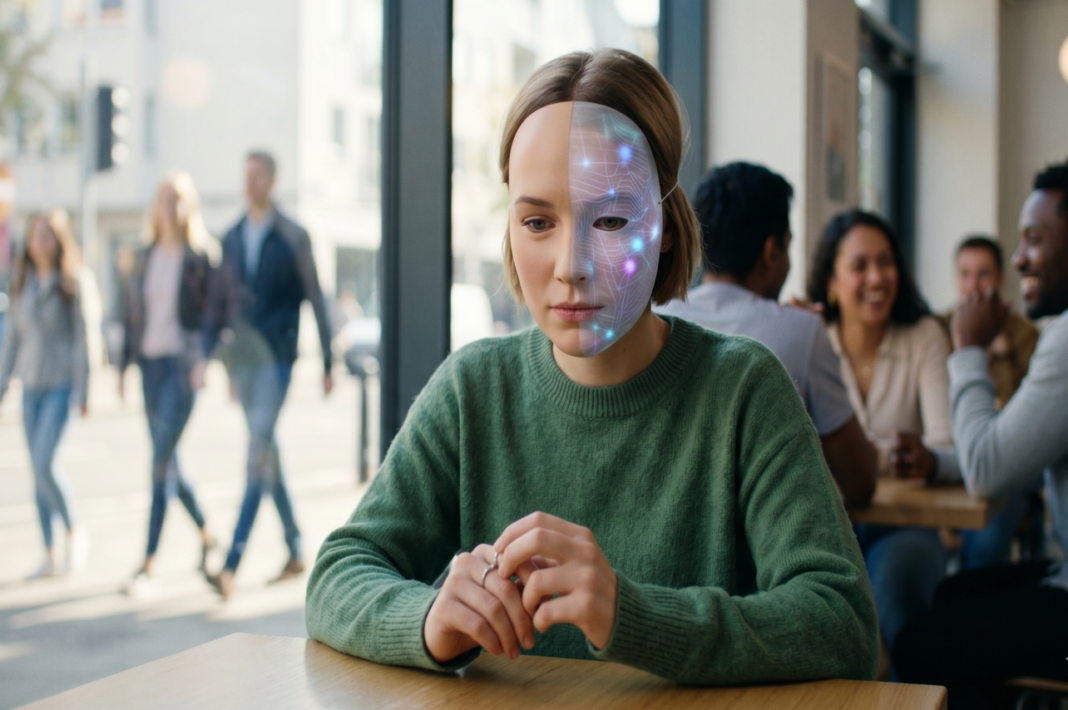

April is recognized globally as Autism Awareness and Acceptance Month. Today, the psychology and psychiatry communities are experiencing a significant paradigm shift in how autism is viewed. For many years, autism was seen solely as a clinical condition that needed to be repaired and treated; today, it is being discussed on a much newer and more inclusive ground through the concept of neurodiversity. As clinical psychology stands at the intersection of the medical and social models, understanding the inner worlds of autistic individuals and the coping strategies they develop to adapt to society is becoming increasingly important for professionals in the field. One of the most striking of these strategies, social camouflaging, offers crucial insights into the autistic experience.
The Medical Model’s Approach To Autism
The traditional medical model primarily approaches autism as a deviation from typical neurological development and a pathological condition. According to this approach, autism is a condition in which the social and emotional areas of the brain fail to work in harmony with the frontal regions that govern decision-making processes. Classic underconnectivity theories in the literature suggest that the connections and synchronization between the frontal lobe and other regions of the brain function atypically in autism (Just et al., 2004). Due to this different neurological functioning and differences in Theory of Mind, autistic individuals perceive events differently and experience a unique process in reading social cues and others’ intentions (Baron-Cohen et al., 1985). The medical model defines this presentation as a disorder where only basic human traits are preserved, focusing on treatment-oriented, normalizing interventions.
Neurodiversity: Disease Or Natural Variation?
Positioned against the medical model, the concept of neurodiversity was first introduced by sociologist Judy Singer in the 1990s. It recognizes atypical neurological development not as an error to be fixed, but as a normal variation of human nature and biodiversity (Jaarsma & Welin, 2012). The literature argues that a significant portion of the psychiatric and psychological difficulties experienced by autistic individuals stems not directly from their own internal traits, but from living in a judgmental society designed for the neurotypical majority, rather than one built to accommodate differences (Kapp et al., 2013).
The social model of disability, which stands out in this context, does not deny the biological infrastructure of autism; however, it argues that the main goal is not to “fix” the person, but to make environmental adjustments that support them. It is emphasized that society, by failing to provide suitable living spaces, is equally responsible for individuals existing as disabled.
Social Camouflaging In A Neurotypical World
One of the most common methods autistic individuals resort to in order to adapt to a social environment not designed for their neurological differences is “social camouflaging.” Research on autistic adults shows that this behavior is fundamentally driven by two strong motivations: avoiding exclusion by assimilating into society, and building healthy social connections with others (Hull et al., 2017).
When examined at a clinical level, this camouflaging process occurs on two main axes:
-
Masking: The suppression of the individual’s natural autistic traits (such as self-soothing rituals that balance sensory needs) and the adoption of a different identity suitable for social situations. Individuals often observe and imitate successful people around them, presenting a constructed profile to the outside world.
-
Compensation: The application of social rules that do not come naturally through a conscious and cognitive effort. Strategies include trying to make eye contact even when uncomfortable, displaying situationally appropriate facial expressions, extensively rehearsing conversation scripts in one’s mind before entering a chat, or constantly asking the other person questions to shift the focus away from oneself.
Psychological Consequences Of Camouflaging and Diagnostic Difficulties
Existing with camouflage in social life may provide individuals with short-term social acceptance, but it brings very heavy psychological costs in the long run. Because the camouflaging process requires an extremely intense mental, physical, and emotional effort, individuals may experience severe burnout following social interactions. Furthermore, constantly suppressing their natural reactions can lead to a deep anxiety that they have lost their “true selves” and severe identity crises over the inauthenticity of the relationships they have built (Hull et al., 2017).
From a clinical perspective, one of the most critical consequences of camouflaging is the difficulty it creates for professionals during the diagnostic process. The literature shows that autistic women, in particular, use these social imitation and hiding strategies much more intensely than men. This results in symptoms being overlooked in psychiatric and psychological evaluations, years of delay in women receiving the correct diagnosis, and their inability to access essential support mechanisms.
Building True Acceptance
Modern psychology tends to evaluate the individual alongside their environment, moving beyond classifying autism merely as a disorder to be repaired. When discussing autism on the occasion of April, the goal should be to transform clinical awareness into a genuine, action-oriented process of “acceptance.” It is of great importance to build a living space where autistic individuals do not have to camouflage in order to exist in social environments. A social model where individuals can participate in social life with their own neurological realities rather than putting on their “best normal,” and where supportive environmental accommodations are fully provided, must be the common goal of mental health professionals and society alike.
References
Baron-Cohen, S., Leslie, A. M., & Frith, U. (1985). Does the autistic child have a “theory of mind”?. Cognition, 21(1), 37-46. https://doi.org/10.1016/0010-0277(85)90022-8
Hull, L., Petrides, K. V., Allison, C., Smith, P., Baron-Cohen, S., Lai, M.-C., & Mandy, W. (2017). “Putting on my best normal”: Social camouflaging in adults with autism spectrum conditions. Journal of Autism and Developmental Disorders, 47(8), 2519–2534. https://doi.org/10.1007/s10803-017-3166-5
Jaarsma, P., & Welin, S. (2012). Autism as a natural human variation: Reflections on the claims of the neurodiversity movement. Health Care Analysis, 20(1), 20–30. https://doi.org/10.1007/s10728-011-0169-9
Just, M. A., Cherkassky, V. L., Keller, T. A., & Minshew, N. J. (2004). Cortical activation and synchronization during sentence comprehension in high-functioning autism: evidence of underconnectivity. Brain, 127(8), 1811-1821. https://doi.org/10.1093/brain/awh199
Kapp, S. K., Gillespie-Lynch, K., Sherman, L. E., & Hutman, T. (2013). Deficit, difference, or both? Autism and neurodiversity. Developmental Psychology, 49(1), 59–71. https://doi.org/10.1037/a0028353