


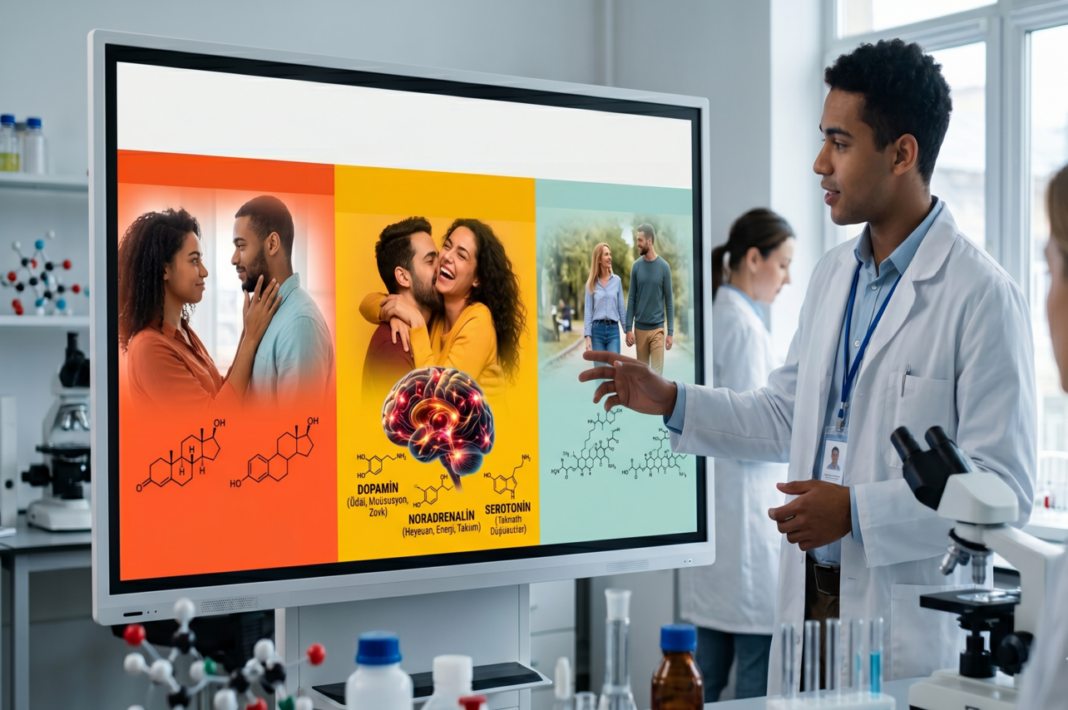

Love has been regarded throughout history as one of the most mysterious and powerful emotions of human experience, inspiring art and philosophy. However, modern science has revealed that this complex emotion is not merely an abstract feeling experienced in the heart, but also the result of a predictable and measurable series of chemical reactions occurring in our brains. The purpose of this article is to examine the neurochemical foundations of love and explain, from a scientific perspective, how the process of “falling in love” is shaped through biological stages governed by different hormones.
The Three Stages Of Love
According to studies pioneered by some researchers, romantic love is generally divided into three main biological stages. Each stage is governed by its own unique cocktail of hormones, and these hormones directly influence the intense emotions we feel and the behaviors we exhibit.
Act 1: Desire (Lust) – The Initial Spark
The first stage of love is characterized by sexual desire and the desire for satisfaction. This basic instinct, which stems from the evolutionary drive to ensure the continuation of the species, is primarily driven by two sex hormones: testosterone and estrogen. Present in both sexes, these hormones increase libido, or sexual desire, causing physical attraction to a potential partner. This stage functions as a purely biological attraction mechanism before any emotional bond is formed.
Act 2: Attraction (Passion) – The “Head Over Heels In Love” Phase
This phase is the period when intense, passionate, and sometimes irrational feelings associated with “falling in love” are experienced. Three main neurotransmitters (nerve transmitters) play a leading role in this process:
-
Dopamine: This “feel-good” hormone activates the brain’s reward and pleasure centers, creating intense focus, motivation, and excitement toward the person we are in love with. High dopamine levels explain why even seeing or thinking about the person we love is so pleasurable and why this experience has an addictive-like nature.
-
Noradrenaline (Norepinephrine): Similar to adrenaline, this hormone is released in response to excitement and stress. It is the chemical behind physical symptoms such as a faster heartbeat, sweaty palms, loss of appetite, and insomnia. This hormone directs attention entirely toward the person we are in love with and gives a feeling of bursting energy.
-
Serotonin: Interestingly, serotonin levels decrease during this passionate phase of love. Low serotonin levels are associated with obsessive thought patterns seen in obsessive-compulsive disorder (OCD). This scientifically explains why someone in love constantly thinks about their partner and becomes somewhat “obsessed.”
Act 3: Attachment – Safe Harbor
The initial excitement of passionate love gradually gives way to a calmer, more secure, and long-lasting bond. This stage is critical for the continuity of the relationship and is governed by two key hormones:
-
Oxytocin: Also known as the “cuddle” or “bonding hormone,” oxytocin is released during physical contact, such as hugging and kissing. This hormone fosters trust, intimacy, and a strong emotional bond between partners. It is also released during childbirth and breastfeeding, strengthening the bond between mother and baby, highlighting this hormone’s fundamental role in bonding.
-
Vasopressin: Chemically similar to oxytocin, this hormone is associated with long-term commitment, fidelity, and protective behaviour toward a partner, particularly in males. Studies indicate that vasopressin plays a significant role in maintaining monogamous relationships and strengthening social bonds.
Conclusion
In summary, the experience we call love is a complex biochemical process managed by a delicate balance in our brains. From testosterone and oestrogen in the desire phase, to the trio of dopamine, norepinephrine, and serotonin in the passionate attraction phase, and finally to oxytocin and vasopressin, which solidify the commitment phase, each stage carries a distinct hormonal signature. This chemical process explains why love can be exhilarating, obsessive, and peaceful all at once. Therefore, love is not only a source of poetic inspiration but also one of the most fascinating and programmed processes in human biology.
References
Acevedo, B. P., Aron, A., Fisher, H. E., & Brown, L. L. (2012). Neural correlates of long-term intense romantic love. Social Cognitive and Affective Neuroscience, 7(2), 145–159.
Esch, T., & Stefano, G. B. (2005). The Neurobiology of Love. Neuroendocrinology Letters, 26(3), 175-192.
Fisher, H. E., Aron, A., & Brown, L. L. (2006). Romantic love: A mammalian brain system for mate choice. Philosophical Transactions of the Royal Society B: Biological Sciences, 361(1476), 2173-2186.
Fisher, H. (2016). Anatomy of Love: A Natural History of Mating, Marriage, and Why We Stray. W. W. Norton & Company.
Marazziti, D., & Canale, D. (2004). Hormonal changes when falling in love. Psychoneuroendocrinology, 29(7), 931-936.
Zeki, S. (2007). The neurobiology of love. FEBS Letters, 581(14), 2575-2579.