


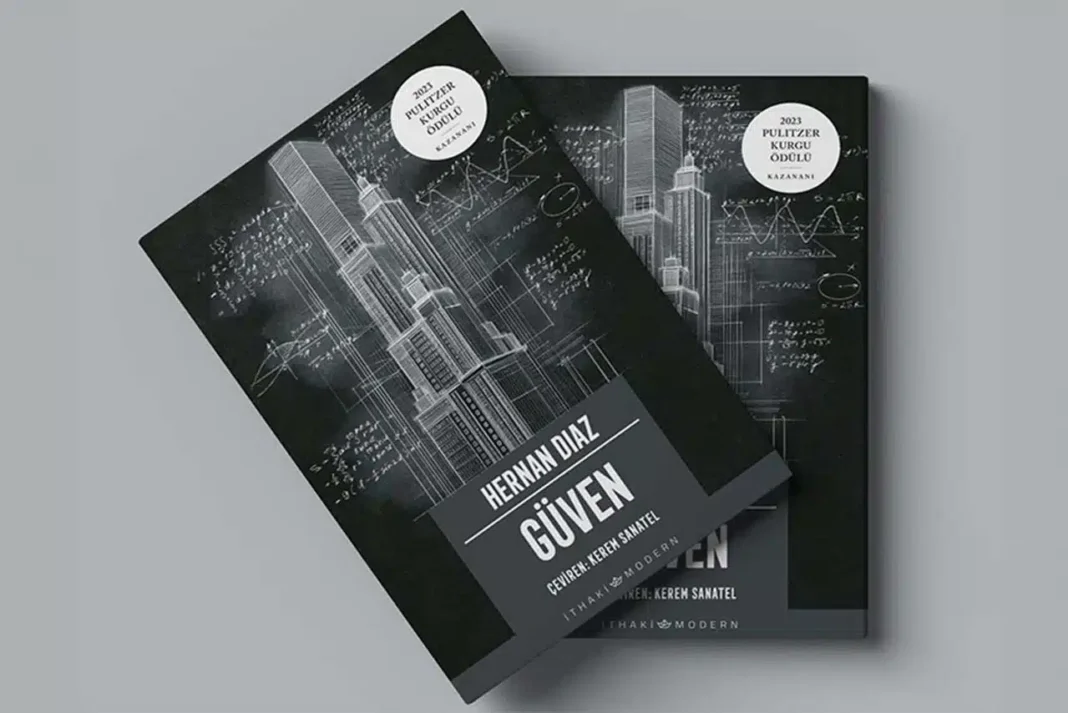

Hernan Diaz’s “Trust” – A Deep Dive
Hernan Diaz’s novel Trust is not merely a tale of the financial world; it is also a psychological labyrinth built around power, identity, emotional reality, and perception management. The novel’s 2023 Pulitzer Prize for Fiction is a testament not only to its literary mastery but also to the profound psychological resonance it creates on both a societal and individual level. For Trust tells us much more than the mechanics of wealth: it tells us about the voids money creates in the human mind, the anxieties it fills, and sometimes the wounds it tries to conceal…
Why Is It So Difficult To Trust?
The Psychological Face Of Money: Power That Does Not Bring Power
The novel’s main axis revolves around the question of whether money is a goal or a defence mechanism. In the characters Diaz portrays, money is not merely a status symbol; it is a shield used to manage emotions, even a personal armour in some scenes. As wealth increases, insecurity does not diminish; on the contrary, it becomes more invisible, buried deeper.
Wealthy characters attempt to conceal their vulnerabilities by linking their successes and values to economic power. These individuals, who fill their emotional voids with investment portfolios and try to forget their insecurities about the past through financial manoeuvres, find themselves, along with the reader, grappling with the following question:
Who is truly powerful? The one who controls money, or the one controlled by money?
The Novel’s Hidden Power: The Silent Psychology Of The Wife Character
One of the quietest characters in the story, this woman actually carries the emotional and mental burden of the entire narrative on her shoulders. Her silence is not passivity, but a kind of invisibility taught by social conditions. The systematic diminishment of women’s place in the financial world makes her existence more dependent and shadowy.
However, the psychological details of her perspective — the woman’s view of the world, her husband, and power — contrast sharply with the male character’s obsession with dominance and control-oriented psychology. The novel also shows how fragile the balance of power in relationships can be. As the woman’s role progresses, the message becomes clear:
Real accounts are kept not in banks, but in the silent spaces of human relationships.
Invisible Emotions, Visible Bodies: The Psychological Observation Layer
Trust does not merely describe human behaviour; it also analyzes it meticulously. At this point, Diaz’s approach is surprisingly consistent with psychological science, particularly recent findings. Body language, silent clues, and emotional slips form the emotional map of the novel.
The Fear Of Losing Control: The Psychological Entrapment Of The Characters
The atmosphere created in the novel while describing the financial world reveals not only the external world but also the inner world of the individual. It shows how fragile the security provided by money actually is and how everyone may not get a return on the investments they make in their own minds at some point.
Characters find themselves caught between the fear of losing power and the fear of losing relationships. As power increases, loneliness deepens; because power creates an invisible distance and weakens emotional bonds. As loneliness increases, so does the need for control — the individual attempts to manage those around them and tightly regulate relationships to feel secure.
However, the more control increases, the more trust erodes. Because the need for control is itself a sign of distrust. Thus, the characters are trapped in a vicious cycle created by the internal conflict between power and closeness, control and trust.
Who Writes The Truth? The Greatest Crack In Trust
The novel’s layered structure constantly prompts the reader to consider the question: “Who is telling the truth?”
The presence of different narrators shows how easily truth can be bent and reshaped. Human psychology works similarly: everyone becomes the author of their own story, sometimes consciously altering reality.
How much do we truly know about the truth — or are we merely selecting what we need to believe?
Why Should We Read Novels? Their Emotional And Psychological Impact
Trust does not merely present a story of wealth; it reveals the emotional tension behind the modern individual’s obsession with success. The novel opens a space for both mental and emotional confrontation. Diaz forces the reader, in a society that expertly masks emotions, to pause and reflect.
It makes us question:
-
What trust is based on
-
How important success truly is
-
How real the power created by money is
-
What we see in relationships
-
And what we consciously ignore
There Is Something Money Cannot Buy: Reality
Money can give power, yes — but it does not give security.
Success can bring status — but it does not guarantee emotional integrity.
And reality is more valuable than any fortune can buy.
Diaz confronts the reader with this truth, revealing the fragility hidden beneath wealth and power. The novel thus becomes not just a narrative of finance but a profound psychological text that touches on humanity’s deepest need:
The desire to feel secure.
We want to trust — but we also fear.