


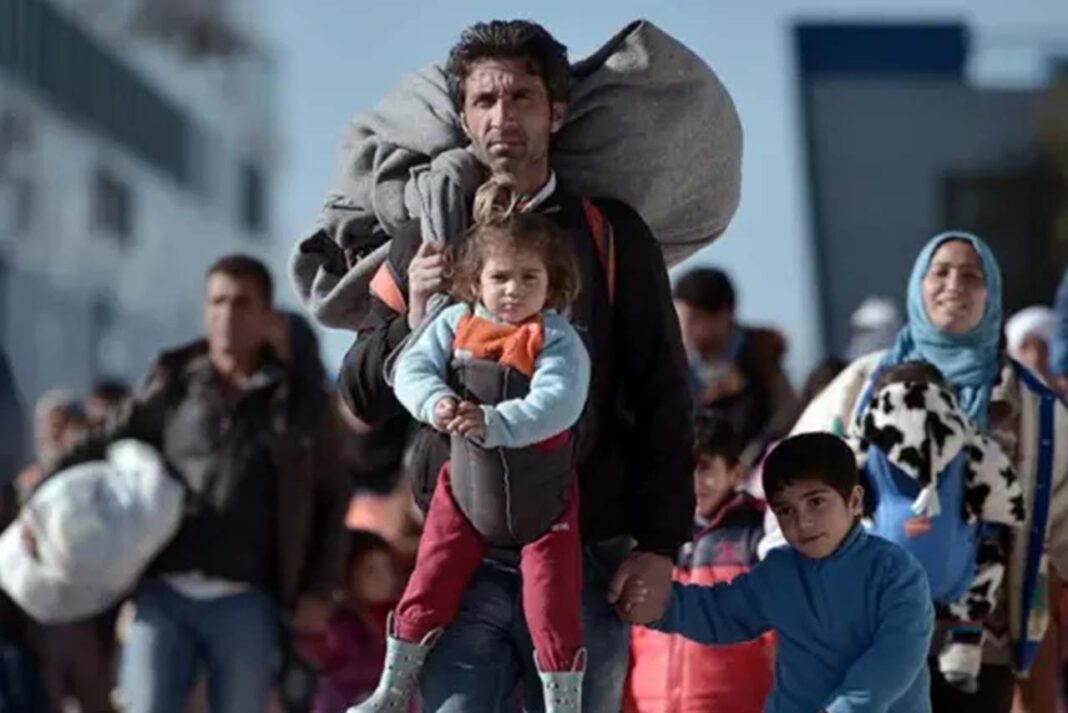

The Syrian conflict, which began in 2011, has resulted in what is widely described as the “most daunting humanitarian crisis of our time” (Ferris & Kirişci, 2016, p. 1). While the statistics of displacement, totaling nearly 13 million people, half the country’s population, by 2016 (Ferris & Kirişci, 2016) are well-documented, the humanitarian catastrophe masks a coexisting psychological one. The experience of the Syrian Refugees is a study in cumulative Trauma, characterized not only by the violence of war but also by a deep and persistent Identity Crisis. As one analysis of the refugee condition notes, being displaced is “to experience the deepest form of poverty and human suffering” (Doheny, 1988, p. 787).
The Trauma Of Displacing And The Erosion Of Self
The psychological trauma for Syrian refugees begins with the catastrophic loss of safety and the agonizing “tortuous process” (Doheny, 1988, p. 788) of deciding to flee. This decision is rarely rational, but one born of “panic” and “sudden uncontrollable fear” (Doheny, 1988, p. 788), followed by an “awful remorse” for abandoning one’s home.
The drivers of this fear are mainly from violence by both the Assad regime, including barrel bombs, sieges, and chemical weapons attacks (Ferris & Kirişci, 2016) and various rebel groups (Ferris & Kirişci, 2016). This violence was not just a byproduct of war; it was a “deliberate strategy” of displacement (Ferris & Kirişci, 2016, p. 25). The conflict’s transformation “from a rebellion against an oppressive regime into a sectarian civil war” (Ferris & Kirişci, 2016, p. 17) was a direct assault on the Syrian identity. Displacement became a tool of “sectarian cleansing” (Ferris & Kirişci, 2016, p. 25), targeting communities based on their religious or ethnic backgrounds.
Gender became a specific direction of trauma. The “fear of rape” was cited as a “driving motivation for families fleeing the violence” (Ferris & Kirişci, 2016, p. 26). Government forces reportedly used rape and sexual violence to “humiliate… male relatives” (Ferris & Kirişci, 2016, p. 27). Simultaneously, men of fighting age were targeted for arrest, disappearance, and conscription (Ferris & Kirişci, 2016). This gendered violence dissolved familial and communal identity. This reduced individuals to their perceived efficacy or threat.
The progression of the refugee “waves” documents the corresponding erosion of hope and identity (Davis, 2015). The first wave of refugees in 2011 often viewed their move as “temporary” and political (Davis, 2015); many were defectors who made a choice based on principle (Davis, 2015). By the third wave in 2013, refugees’ “resilience [was] useless by hardship and fear,” with many having been internally displaced three to five times before crossing a border (Davis, 2015). By 2014, the psychology had shifted entirely. The usual attitude became that they “cannot return to Syria and their lives there have been lost” (Davis, 2015, p. 70). This marked the transition from “we will return” to “we have to make our lives somewhere else” (Davis, 2015, p. 70), strengthening the “desolation of mind and spirit” (Doheny, 1988, p. 788) that comes from permanent displacing.
The Liminal State: Deconstructing Identity In Exile
Once in host countries, the acute trauma of war is replaced by the chronic trauma of exile. This new psychological burden is defined by what Doheny (1988) calls the “acute feelings of loneliness and of being lost in a hostile world” (p. 789). This “hostile world” actively deconstructs a refugee’s identity through legal, social, and economic mechanisms.
A primary psychological blow is the loss of professional and social identity. A “highly educated person with professional competence becomes a nonentity overnight” (Doheny, 1988, p. 788), unable to prove their qualifications or practice their trade. This loss of purpose and status is a deep psychological stressor.
This social “nonentity” status is reinforced by a deliberate “legal liminality.” In Turkiye, for example, Syrians were long classified as “guests” rather than “refugees” (Oktav & Çelikaksoy, 2015). This classification, based on a “discourse of ‘generosity’ rather than one based on rights” (Oktav & Çelikaksoy, 2015, p. 416), leaves them outside the protections of international law and subject to “arbitrary practices that have increased the vulnerability of the Syrians” (Oktav & Çelikaksoy, 2015, p. 416).
In Lebanon, the situation is more punitive. The government has mandated “historically record annual US$ 200 residency permits” (Yasmine & Moughalian, 2016, p. 31), a sum impossible for most to pay. This policy effectively criminalizes their existence and puts them at constant risk of arrest and exile.
This legal ambiguity is often intentional. Host countries like Jordan and Lebanon—which are the countries that have the burdens of the decades-long presence of Palestinian refugees—are determined to prevent Syrians from assimilating (Ferris & Kirişci, 2016). Lebanese officials explicitly state they “won’t make that mistake again” (Ferris & Kirişci, 2016, p. 10). The result is that Syrian refugees are intentionally kept in a state of uncertainty, unable to build a new life, which exacerbates the identity crisis.
Gender, Systemic Violence, And The Collapse Of The Microsystem
The psychological burdens of displacement are not evenly distributed. For Syrian women, the “social ecological model” (Yasmine & Moughalian, 2016, p. 28) reveals that trauma is an active, ongoing product of the host environment. Interventions that focus on the “intrapersonal” (e.g., mental health counseling) miss the point that the primary stressors are systemic (Yasmine & Moughalian, 2016).
In exile, the “microsystem” (the immediate family) collapses as a source of support and becomes a source of stress (Yasmine & Moughalian, 2016). Men, often unable to work legally and fearing deportation, lose their traditional role as breadwinners. This frustration can manifest as “hyper-masculinity” and an “increase in Intimate Partner Violence (IPV)” (Yasmine & Moughalian, 2016, p. 29).
Women are then pushed into the “exosystem” (institutions) and “macrosystem” (culture), where they face immense violence. Female-headed households are especially “vulnerable to inappropriate sexual advances from men offering financial and material assistance in exchange for sex” (Yasmine & Moughalian, 2016, p. 30). They face abuse from landlords, employers (Yasmine & Moughalian, 2016), and even police if they attempt to report harassment. This is compounded by “blatant racism” from healthcare providers (Yasmine & Moughalian, 2016, p. 30), who may criticize them for having children or perform forced C-sections because doctors “did not want to wait on them in labor” (Yasmine & Moughalian, 2016, p. 31).
This systemic oppression creates an impossible psychological trap. When women do report sexual violence, they face “severe social stigma” and the risk of honor crimes (Yasmine & Moughalian, 2016, p. 31). They are thus silenced by both their host culture and their own. The psychological impact is one of complete isolation, where even “mental health programs become ready to receive women after the fact” (Yasmine & Moughalian, 2016, p. 32) instead of preventing the systemic abuse that causes the trauma.
Conclusion
In conclusion, the psychological crisis of Syrian refugees is not just past trauma; it is an active, ongoing injury. Trapped by systemic violence, legal ambiguity, and social alienation in host countries, their identities are actively deconstructed. This situation leaves them in a state of psychological isolation.
References
Davis, R. (2015). Syria’s refugee crisis. Great Decisions, 65–76.
Doheny, K. (1988). Refugees: A world crisis. The Furrow, 39(12), 787–790.
Ferris, E., & Kirişci, K. (2016). The context, causes, and consequences of Syrian displacement. In The consequences of chaos: Syria’s humanitarian crisis and the failure to protect (pp. 1–32). Brookings Institution Press.
Oktav, Ö. Z., & Çelikaksoy, A. (2015). The Syrian refugee challenge and Turkey’s quest for normative power in the Middle East. International Journal, 70(3), 408–420.
Yasmine, R., & Moughalian, C. (2016). Systemic violence against Syrian refugee women and the myth of effective intrapersonal interventions. Reproductive Health Matters, 24(47), 27–35.