


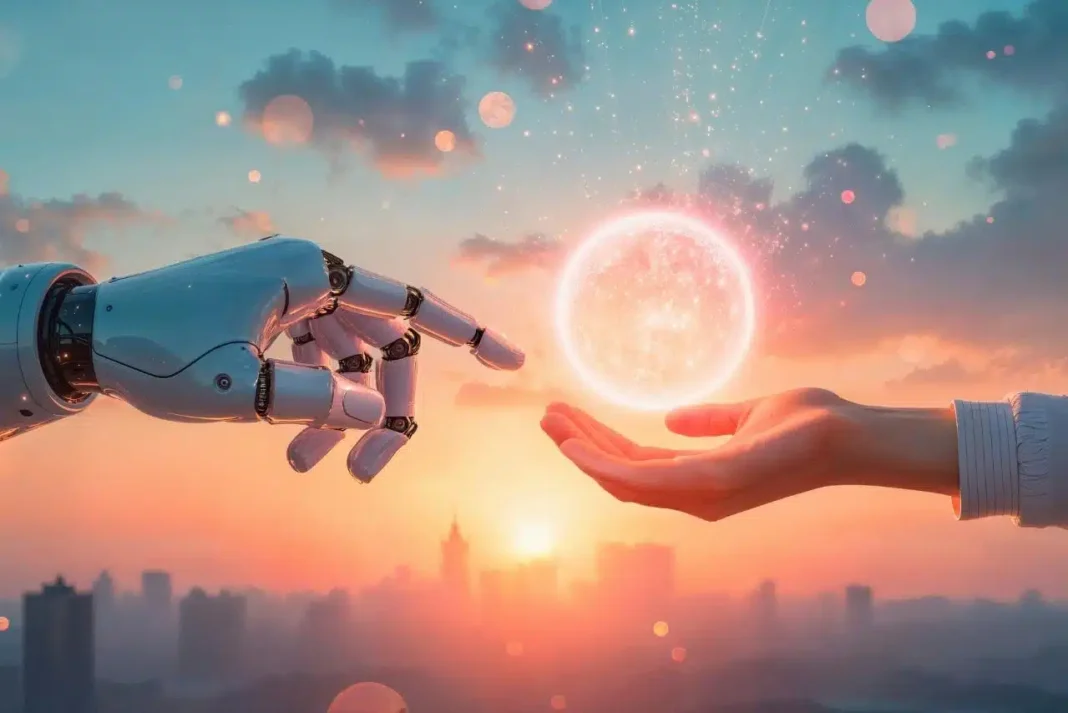

The interaction between humans and machines in the digital age of the 21st century is not merely a technological phenomenon; it symbolizes the construction of a new frontier of human experience. This digital universe, which we encounter at every step, demonstrates that robots are no longer confined to factory floors as metal arms; they now find their place in classrooms, hospital corridors, our homes, and even in our personal decision-making processes. Imagine a robot that brings you your morning coffee, senses your mood, and motivates you; this is precisely the moment where robopsychology steps in, studying the human mind’s response to such experiences. How does the human mind react to this new stakeholder, this new “co-worker”? This is exactly where robopsychology, named after Isaac Asimov’s science fiction universe but now becoming a real scientific discipline, comes into play (Krägeloh et al., 2023). This field seeks to understand the orchestration between the human mind and machines.
The Scope and Visionary Outlook of Robopsychology
Robopsychology is a field that analyzes human-robot interaction at a psychological level. It studies human perception, attitudes, levels of trust, and emotional responses. This is not merely a matter of optimizing technology; it is also about rediscovering human limits, fears, and potential. Robopsychology does not view technology solely as a “tool for efficiency”; rather, it frames human-machine interaction as a form of co-evolutionary process. The visionary insight here is that, in the future, robots will not merely serve us but will also become stakeholders in our decision-making processes.
This process profoundly reshapes humanity’s approach to technology, revealing that the relationship with machines is not only functional but also emotional and cognitive. Thus, robopsychology maps out the new mental universe discovered jointly by humans and machines.
Johannes Kepler University and Human-Centered Design
One of the strongest representatives of this vision is the LIT Robopsychology Lab in Austria. Here, researchers systematically investigate how humans perceive robots, experimentally identifying the role of factors such as trust, comprehensibility, sense of control, and anthropomorphic design in shaping interaction (LIT Robopsychology Lab, 2024). For example, it has been shown that a robot’s facial expression or tone of voice directly influences the user’s trust and willingness to cooperate. This reminds us of a fundamental truth: no matter how advanced technology becomes, the sense of trust and meaning experienced by humans remains the cornerstone of this relationship.
The lab’s work stands out for its focus not on how robots function, but on how humans experience them. This approach highlights the innovative dimension of robopsychology: it places human perception and emotion at the center, adding a human dimension to technology. In doing so, it complements the technical perspective of engineering with the deep, human-oriented insights of psychology.
Acceptance, Perception, and Psychological Barriers
Research identifies four main factors that shape people’s attitudes toward robots: utility, social norms, pleasure/enjoyment, and control beliefs (Chatzoglou, 2024). People tend to adopt robots more quickly when they believe the technology will make their lives easier and when they perceive its use to be socially accepted. However, concerns such as safety, privacy, or loss of control can slow this process.
Here lies the critical role of robopsychology: to understand these concerns and optimize technology design to address them. Otherwise, no matter how advanced the technology, without user acceptance, these systems cannot be integrated into daily life.
Applications: From Education to Therapeutic Processes
Robopsychology is not merely a theoretical discussion; it has tangible real-world applications. Studies in the field of neurodevelopmental disorders reveal that robots can be effective in supporting the development of social skills in children, particularly those on the autism spectrum (Krägeloh et al., 2023). Educational robots have also been shown to help students concentrate and increase classroom engagement (Fung et al., 2025).
These findings show us that robopsychology is not only about making technology “smarter,” but also about unlocking human potential. From robots that provide emotional support in therapy rooms to social robots that reduce loneliness in elder care, this field enriches human life in a wide range of ways.
Conclusion and Future Perspective: Building the Human-Machine Bridge
Robopsychology is drawing a new frontier for humanity. This field positions technology not merely as a tool, but as a partner in the emotional, cognitive, and social evolution of humankind. The pioneering work at Johannes Kepler University demonstrates that without understanding the psychological dimensions of design, robots cannot be successfully integrated into society (LIT Robopsychology Lab, 2024).
The vision for the future is clear: robopsychology will become a scientific discipline in which ethical standards are clearly defined, human-centered design is prioritized, and interdisciplinary collaboration is strengthened. Perhaps this field will prove to be as thrilling as a new “space journey” in human history—only this time, the journey is not outward, but inward. As we build this bridge between humans and machines, what we may ultimately discover is the meaning of being human itself.
References
Chatzoglou, P. (2024). Understanding human-robot interaction: Acceptance, perception, and psychological barriers. Journal of Robotics and Cognitive Science, 12(3), 45–61.
Fung, K. Y., et al. (2025). Exploring the impact of robot interaction on learning engagement and outcomes in students with and without dyslexia. Smart Learning Environments.
Krägeloh, C., et al. (2023). Robopsychology: Exploring the human mind in human-robot interaction. International Journal of Human-Robot Studies, 18(2), 101–120.
LIT Robopsychology Lab. (2024). Human-centered design and robot perception studies. Johannes Kepler University Press.