


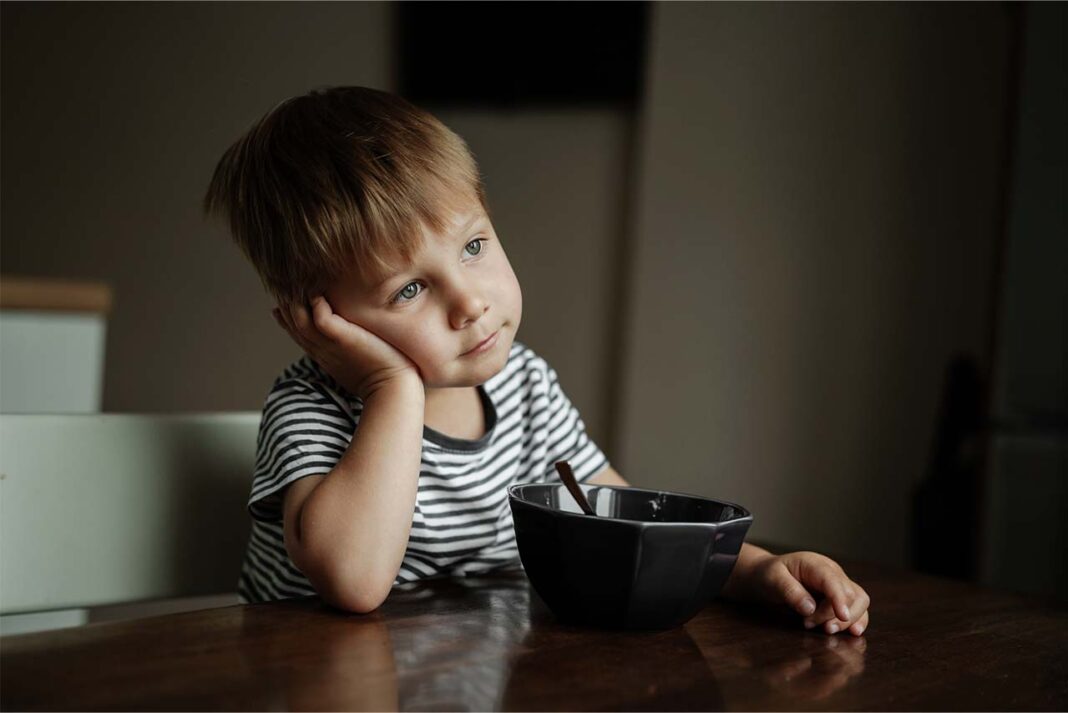

In early childhood, children’s interactions with the world cast the shadows of their adulthood. The traces of these interactions are present in their unconscious behaviors and preferences; however, when awareness shines on them like the sun, they become visible. That is why the reflections of childhood interactions on the individual can be observed from many perspectives. Undoubtedly, the person a child interacts with the most is their primary caregiver, and their relationship with this person will leave traces on the child’s behavior in adulthood. Although this perspective is not commonly emphasized, how visible are these traces in the most frequently repeated behaviors necessary for survival namely, eating behaviors?
Studies show that there is a correlation between a child’s attachment style and their eating behaviors, and even their weight. Attachment styles have become quite popular in recent years. To briefly summarize, the relationships children form with their primary caregivers are categorized as dependent, avoidant, and secure. Recent studies reveal that these attachment styles are variables that can even predict a child’s weight.
In a study conducted in 2012 with 601 children aged 8–11, the effects of attachment styles formed with mothers and fathers before adolescence on children’s eating behaviors and weight gain were examined. The study was carried out with two measurements taken one year apart. According to the initial findings, insecure attachment to the mother was found to be significantly related to tendencies toward eating disorders. Children who did not form a secure attachment with their mothers exhibited higher levels of dietary restriction, and more concerns about eating, weight, and body shape. (Goossens et al., 2012)
Insecure attachment with the father, on the other hand, had a different effect. This type of attachment was associated with concerns about eating and binge eating behaviors in children. In this longitudinal study, when data from the following year was analyzed, insecure attachment with the mother was found to significantly predict both disordered eating attitudes and weight gain in children. Another striking finding of the study was that gender was not a significant predictor. In other words, these effects were observed similarly in both girls and boys.
This study also highlighted an important point: the mother-child relationship predicted the risk of eating disorders more strongly than the father-child relationship. Particularly, it was understood that the mother, as the primary caregiver, had a more pronounced impact on the child’s eating behaviors.
Another study conducted in 2019 examined the relationship between mothers’ eating styles and children’s eating behaviors. The research evaluated whether mothers’ eating styles could predict their children’s eating behaviors, especially in adulthood. Within this context, it also explored whether there were significant differences between mother–daughter and mother–son pairs. The findings were noteworthy. Mothers’ eating styles were found to affect children’s eating behaviors differently depending on the child’s gender. For example, if the mother had an emotional eating style, the children also tended to develop emotional eating habits. However, if the mother had a restrictive eating style, a similar eating style developed only in daughters; this effect was not observed in sons. This suggests that gender roles, especially the media and social pressures on girls’ body image, may interact with eating behavior models learned from the mother, making girls more sensitive to them. (Zarychta et al., 2019)
On the other hand, if mothers had an external eating style, eating in response to environmental cues without feeling hunger, this predicted the development of similar external eating behaviors in sons; but this relationship was not observed in daughters. All these findings reveal that the impact of a mother’s eating style on the child differs significantly depending on the child’s gender. In this context, it may be more meaningful to consider mother-son and mother-daughter relationships separately.
It is also among the prominent findings that the relationship established through food between the family especially the mother and the child is not solely based on attachment styles or eating patterns; the verbal communication they develop together also plays an important role in this relationship. For example, in a study by Roach and colleagues in 2017, conversations within the family outside of mealtimes were observed, and how children’s chats with their mothers reflected on their eating behaviors was examined. (Roach et al., 2017)
In observations with 61 mother-child pairs participating in the study for the first time, it was found that the way food was discussed during non-mealtime conversations at home also influenced children’s eating attitudes. Especially, changes in the content of conversations around meal preparation, planning, or mothers’ restrictive practices regarding food revealed changes in the child’s sensitivity to food.
When mothers used positive expressions about meal preparation or eating behavior outside of mealtimes, it increased the child’s enjoyment of food. On the other hand, when the mother spoke in a restrictive manner or used controlling statements about how much the child ate, it triggered emotional eating behaviors in the child and was found to be associated with the mother’s restrictive practices.
All these findings show us that children’s eating behaviors are not influenced only by attachment styles or the eating styles observed in the family. The verbal interactions they develop with their family especially with their mother also play a significant role in shaping these behaviors. Every sentence built together, in a way, shapes the child’s approach to food. These interactions shaped by the mother’s voice often become ingrained unnoticed. And these ingrained traces continue to manifest not only in childhood but also on the path to adulthood.
References
Goossens, L., Braet, C., Van Durme, K., Decaluwé, V., & Bosmans, G. (2012). The parent–child relationship as predictor of eating pathology and weight gain in Preadolescents. Journal of Clinical Child & Adolescent Psychology, 41(4), 445–457. https://doi.org/10.1080/15374416.2012.660690
Roach, E., Viechnicki, G. B., Retzloff, L. B., Davis-Kean, P., Lumeng, J. C., & Miller, A. L. (2017). Family Food Talk, child eating behavior, and maternal feeding practices. Appetite, 117, 40–50. https://doi.org/10.1016/j.appet.2017.06.001
Zarychta, K., Kulis, E., Gan, Y., Chan, C. K. Y., Horodyska, K., & Luszczynska, A. (2019). Why are you eating, mom? maternal emotional, restrained, and external eating explaining children’s eating styles. Appetite, 141, 104335. https://doi.org/10.1016/j.appet.2019.104335