


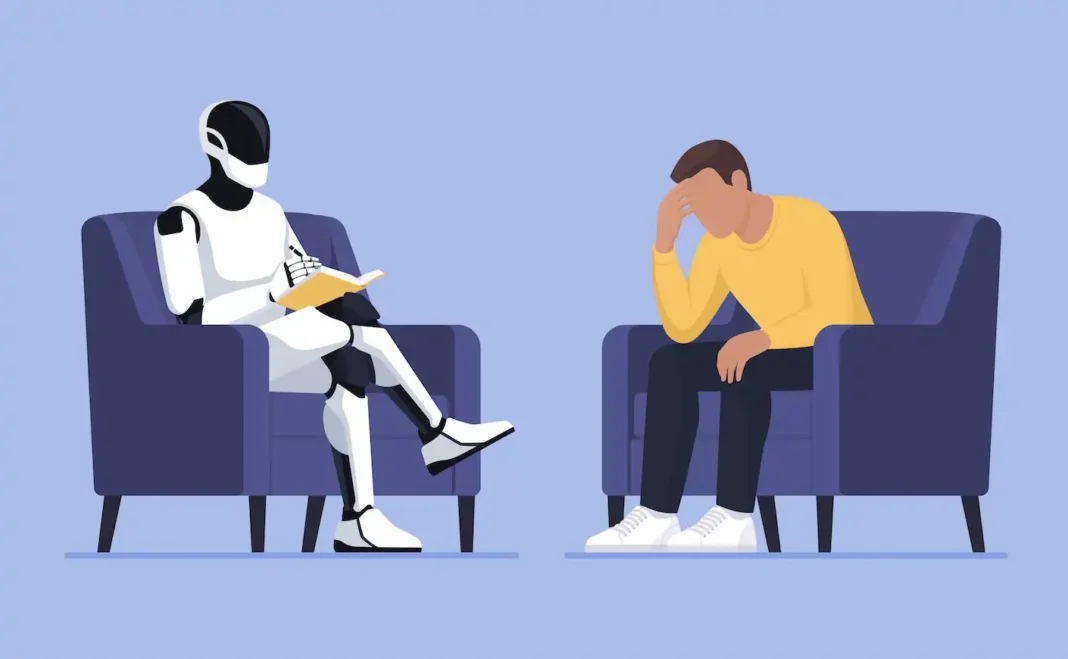

Nowadays, due to digital developments, there are many new technologies such as artificial intelligence, that have been affecting human life across various sectors. Therapy and mental health are no exception to these advancements. AI chatbots and teletherapy are emerging therapeutic modalities that have a significant impact on society and the field of psychology. Chatbots are computer programs that can communicate and interact with users in a wide range of contexts. AI chatbots aim to be socially friendly and empathetic in their interactions with users (Kuhail et al., 2025). In this article, we examine the potential of AI to function as a counselor or therapist in the future.
Ai and Mental Health
The use of artificial intelligence in medical and mental health fields has witnessed a significant increase (Kuhail et al., 2025). There have been many improvements in mental health diagnosis and treatment, enabling individuals to address their problems with the support of AI-based tools (Bendig et al., 2019). Researchers have explored the use of AI in evaluating psychological assessments and, in some cases, providing psychological support without in-person interaction (Kuhail et al., 2025).
Research indicates that chatbots can monitor and assess certain psychological symptoms, such as depression and anxiety, by employing cognitive behavioral techniques and problem-solving strategies. Some chatbots, such as Woebot and SABORI, aim to promote self-help through scripted interactions grounded in the principles of human psychotherapy (Bendig et al., 2019). As research indicates, artificial intelligence may help improve mental health; however, the most important question we should ask is how effective AI can truly be. Will AI become a better therapist than humans in the future?
Ai as a Therapist
Many different factors influence the therapeutic relationship between therapists and their clients. These factors may vary depending on the therapeutic approach. In a research study, researchers used appropriate AI chatbots to create AI–human therapy scenarios and asked therapist participants to distinguish between human–human and AI–human therapy interactions. The results were striking: most therapists were unable to identify whether the therapist in the scenario was human or AI (Kuhail et al., 2025).
In another study, researchers compared different mental health chatbots that were developed using various therapeutic approaches, such as third-wave behavioral therapies, cognitive behavioral therapy, and problem-solving strategies. Participants who used these chatbots reported benefits, including reductions in psychological distress symptoms, as well as improvements in overall mental health (Bendig et al., 2019). Another study reported a significant reduction in depression and anxiety symptoms among chatbot users. These chatbots employed various cognitive behavioral techniques, such as mindfulness and reinforcement, to alleviate symptoms and enhance psychological well-being (D’Alfonso, 2019).
Artificial intelligence can be a useful tool in mental health care; however, several important considerations must be taken into account. First, the existing research on the effects of AI and chatbots in mental health is still limited, making it difficult to draw firm and reliable conclusions. In addition, most current studies and chatbot interventions rely primarily on cognitive behavioral therapy as their main therapeutic approach. This suggests that AI-based interventions have yet to be sufficiently developed and evaluated within other psychological frameworks, such as schema therapy, psychodynamic therapy, or existential therapy.
Although AI has demonstrated significant effects in reducing symptoms of depression and anxiety, there are still many mental health conditions that require further attention and investigation. Overall, AI appears to be particularly useful in areas such as therapeutic alliance, problem-solving, and the enhancement of psychological well-being; however, it is not yet capable of functioning as a comprehensive or autonomous therapist. Nevertheless, an optimistic perspective can be adopted regarding the use of AI as a supportive tool in enhancing therapeutic communication between therapists and clients. In the future, more psychologically scripted chatbots may be developed for purposes such as evaluating psychological assessments and reinforcing adaptive behaviors, thereby enabling human therapists to integrate AI into their practice in a responsible and effective manner.
References
Bendig, E., Erb, B., Schulze-Thuesing, L., & Baumeister, H. (2019). The next generation: Chatbots in clinical psychology and psychotherapy to foster mental health – A scoping review. Verhaltenstherapie, 32(Suppl. 1), 64–76. https://doi.org/10.1159/000501812
D’Alfonso, S. (2020). AI in mental health. Current Opinion in Psychology, 36, 112–117. https://doi.org/10.1016/j.copsyc.2020.04.005
Kuhail, M. A., Alturki, N., Thomas, J., Alkhalifa, A. K., & Alshardan, A. (2025). Human-human vs human-AI therapy: An empirical study. International Journal of Human–Computer Interaction, 41(11), 6841–6852. https://doi.org/10.1080/10447318.2024.2385001