


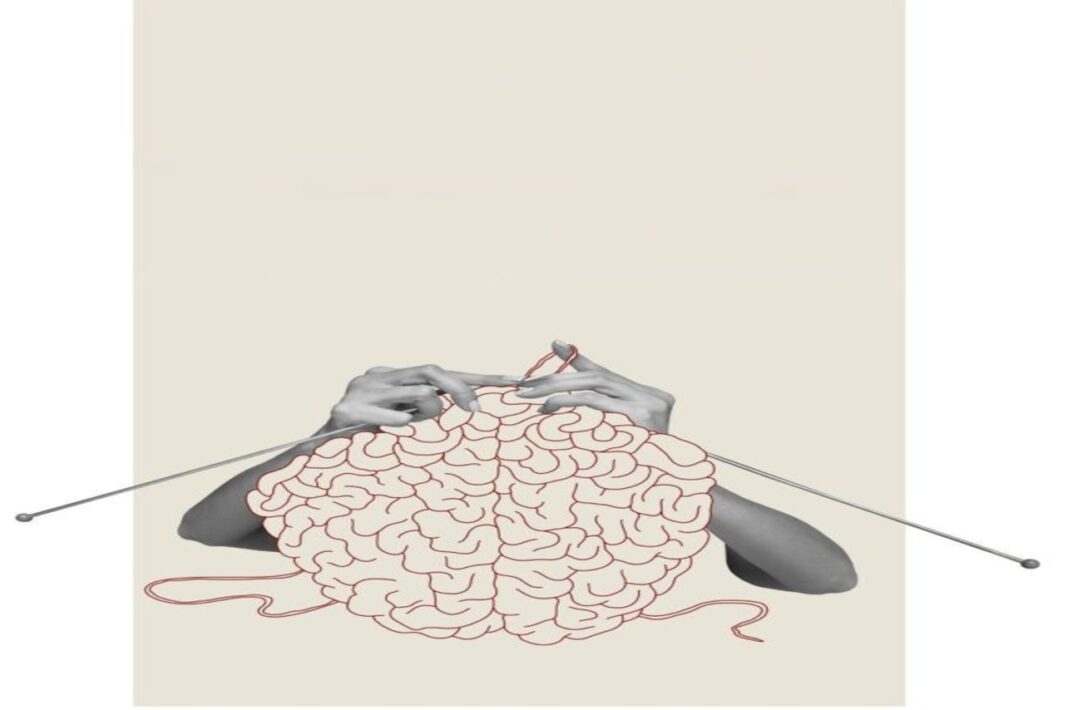

Have you ever asked yourself, “Why did I react like that?” In fact, all of my research began with this question getting stuck in my mind. Healing is often misunderstood. Most of us think of it as feeling less, being less affected, or reaching a point where we simply “don’t care as much.” This perspective assumes that as emotions decrease, we become stronger. However, true healing is not about feeling less; it is about being able to stay present without getting lost in what we feel. Healing is not numbness; on the contrary, it is the ability to feel deeply without falling apart.
When faced with intense emotions, the human mind tends to move toward one of two extremes: suppression or overwhelm. Suppression creates a temporary sense of control, but the emotion does not disappear; it is merely postponed. Overwhelm, on the other hand, is the opposite. The emotion becomes so intense that the individual loses themselves, and the system is completely taken over by the reaction. True healing lies between these two extremes: being able to feel while still remaining grounded in oneself.
Why Do We React So Strongly?
To understand why this process becomes more difficult over time, we need to look at the concept of Sensitization (Duyarlılaşma). Sensitization refers to the brain becoming increasingly sensitive to certain stimuli over time, leading to stronger reactions to smaller triggers. As this process continues, the system’s threshold decreases, meaning that intense reactions no longer require intense triggers.
The issue, therefore, is not the magnitude of the external world, but how easily the system is triggered. Reactions that may appear “exaggerated” from the outside are actually the natural result of a low-threshold system. What is often perceived as a lack of control is, in reality, a learned protective response. The brain’s primary goal is not accuracy, but survival.
At the center of this response is the amygdala. When the amygdala detects potential threats, it rapidly activates the body’s alarm system, even in response to very small possibilities. During this process, the prefrontal cortex, responsible for reasoning, evaluation, and decision-making, moves into the background. As a result, the brain reacts first and only afterward makes sense of that reaction.
This mechanism can also be explained by the All-or-None Law. According to this principle, neurons either fire completely or not at all; there is no partial activation. In other words, the system does not operate gradually.
A simple way to understand this is by thinking of a light switch. It is either on or off. There is no half-on state. Neurons function in a similar way. Once the threshold is crossed, the signal is transmitted at full capacity. This is why reactions that seem “over the top” are actually the system functioning exactly as it is designed to. The problem is not the size of the reaction, but the threshold that triggered it.
Have you ever heard of something like a “half panic”?
I can almost hear your answer: no. Because the nervous system does not operate halfway. Once the threshold is crossed, the response is fully activated. This is precisely why, as sensitization increases, the threshold continues to drop.
As sensitization increases, the system becomes easier to trigger. Even small stimuli can activate a full response. However, while triggering becomes easier, the nature of the response does not change. It still appears at full intensity. This is why individuals often question the size of their reactions, even though the real change lies in the sensitivity of the system, not the reaction itself.
This sensitivity is often shaped by past experiences. Intense and repeated experiences condition the nervous system to react more quickly and at lower thresholds. In such cases, the amygdala becomes activated earlier, producing alarm signals even before a real threat exists.
Over time, the world itself does not change, but the way it is perceived does. Small uncertainties begin to feel threatening, and ordinary situations become increasingly overwhelming and exhausting. The system remains in a constant state of alertness.
At this point, a cycle begins to form. Any response that is not fully processed remains incomplete within the nervous system. In an attempt to complete that experience, the system reproduces the same reaction in similar situations. However, this repetition often occurs more quickly and more intensely, reinforcing the cycle.
Healing Is Not About Less Reaction, But A Higher Threshold
One of the most common mistakes at this stage is trying to react less. However, the issue is not about reducing the reaction, but about changing the threshold that triggers it. The real question, therefore, is not “How can I react less?” but “How can I raise my threshold?”
Healing is not about suppressing emotions. It is about recalibrating the thresholds of the amygdala. This process begins with awareness of the body. Changes in heart rate, breathing, and muscle tension are not problems. They are signals that the system is functioning.
Change does not occur through large, sudden shifts. It happens through small and consistent moments of contact. This is where micro-regulation comes in.
Micro-regulation means engaging with the system gently rather than forcing it. Noticing the breath, observing bodily tension, and simply witnessing these experiences without trying to change them allows the nervous system to experience safety.
At the core of this process is a simple but powerful message:
“A threat was perceived, but I survived.”
As this message is repeated, the system begins to reorganize itself. This is possible because the brain is capable of change. Through neuroplasticity, old reactive pathways weaken, and more balanced responses emerge.
When this shift occurs, the emotion itself may remain the same, but the response changes. The individual still feels, but no longer falls apart.
In conclusion, healing is not about feeling less. It is about learning to remain grounded while continuing to feel.