


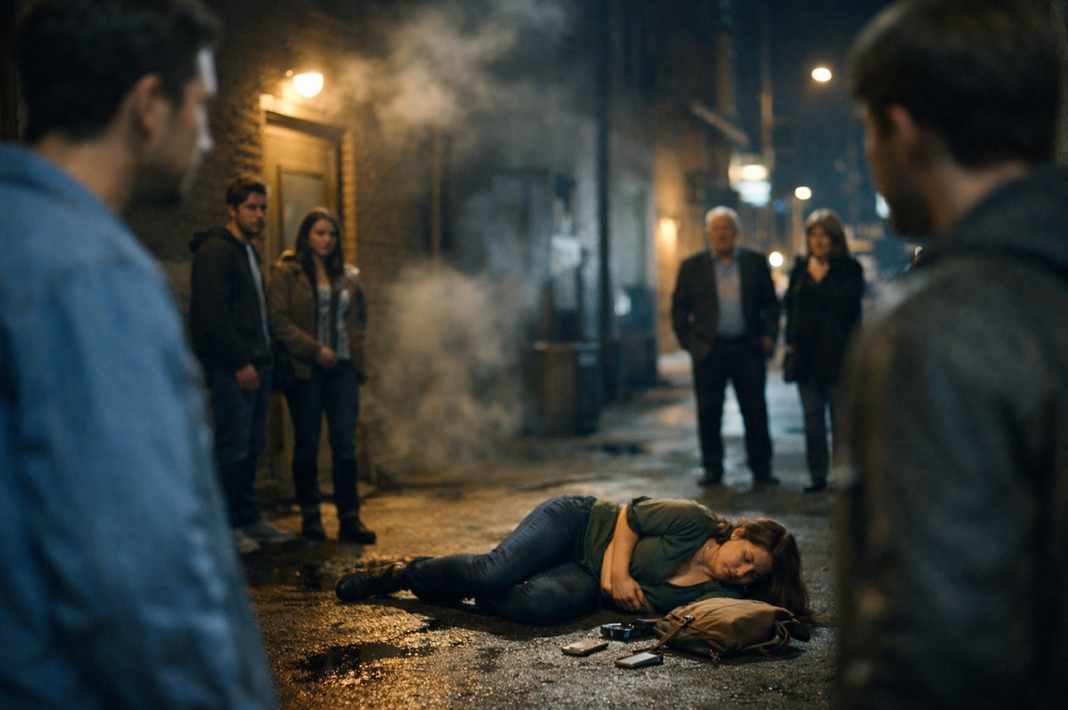

Humans being the social animals, there is a lot to explore about the social interactions. With the societal expectations, we might feel watched and judged at all times. We can feel the need to play along with the community to fit in, to feel accepted. In a crowded place, what it takes to help someone who is struggling? Psychologists, John Darley and Bib Latene took interest in this subject after the terrifying murder of Kitty Genovese. She was assaulted and murdered outside her apartment in Queens, New York. Even though nearly thirty-eight neighbors reportedly witnessed, none of them took action to help (Rosenthal, 1964). After the incident, many people tried to point out the emerging indifference among the society, they tried to call the situation a result of “apathy” or “dehuminization”, but some researchers disagreed. Barley and Latane created a psychological model that explains why people don’t always help in emergency situations. According to them, the main cause of Genovese’s case’s inaction was the large number of bystanders, which led to a diffusion of responsibility. In other words, the more people there are, the less likely it is that someone will step in to help and they called it the Bystander Effect.
There are many other factors that should be considered to understand the motivation of the bystanders lack of action (Latané & Darley, 1969). The situation that contains threat and danger might enable them to hold back. Even though they might have witness to those kind of cases through the news, it is not common to witness that kind of an incident first hand, which puts them in a position where they are inexperienced to handle. Due to these and many other factors, when there are more bystanders people tend to rely on them to intervene with the scene. The Model of Helping, created by Latane and Darley, explains the step one must take to help. In a case of emergency, first one should notice the event and then interpret it as an emergency. Later on, they should assume responsibility and also, they need to know the appropriate form of assistance. Any failure at any part of these five stages leads to no intervention.
Social Influence and Pluralistic Ignorance
During the second step of the model, some mechanisms come into the picture. Individuals rely on other people’s reactions and guidance to interpret the situation of a potential emergency. The Smoke-Filled Room experiment illustrates social influence (Latané & Darley, 1969). Male Columbia University students were filling out a questionnaire when smoke began entering the room. There were three conditions: the participant alone, with other real participants, or with passive (non-reacting) participants. Reporting time increased across these conditions, and when passive participants did nothing, the participant often failed to react as well.
The presence of others can be disruptive because people might want to appear as calm and collected (Latané & Rodin, 1969). The effort to suppress concern can cause others to misinterpret the situation and come up with non-emergency explanations, a process called pluralistic ignorance. In the Smoke-Filled Room experiment, the people labeled the smoke as steam, smoke, or even “truth-gas”. In the Lady in Distress experiment, a similar pattern was observed. A woman falling off and groaning was heard from the room, the response time of the students in the waiting room dropped significantly from 70% to 30% as the passive people amount increased. Even when the emergency is obvious, a lack of reaction from other people reduces individual response.
Diffusion Of Responsibility
When there is one person present, the cost of not acting weighs on a single person. The presence of other people reduces that responsibility, they each feel a little bit of obligation. The Seizure Experiment involves a group discussion on an intercom system, during which one participant appeared to have a seizure. When only two people were involved, the response rate was 85%, but as the number of other participants increased, the response rate dropped to 31%, showing a diffusion of responsibility.
Friends Vs. Strangers
Friends are better at conveying worry, which results in a quicker response to an incident and the probability of pluralistic ignorance is less likely. The Lady in Distress experiment also supports this effect. In the “alone” condition, the helping rate was 70%. When two strangers were present, it dropped to 30%, but in friend-group conditions, at least one person intervened and the helping rate rose again to 70%.
Conclusion
In the end, the Bystander Effect demonstrates how lack of action during emergencies is not always rooted in “apathy” or “indifference”, but in the presence of others. Latane and Darley’s model shows how the interference of social influence at any step can disrupt the process of taking action. Experimental studies reveal how people suppress their emotions, manage their perception towards an incident with the motivation to fit in. The contrast between friends and strangers highlights that social bonds and clear emotion expression can reverse these effects. Acknowledgeing these social mechanisms may help people recognize the emergency situations and react accordingly by resisting misleading cues.