


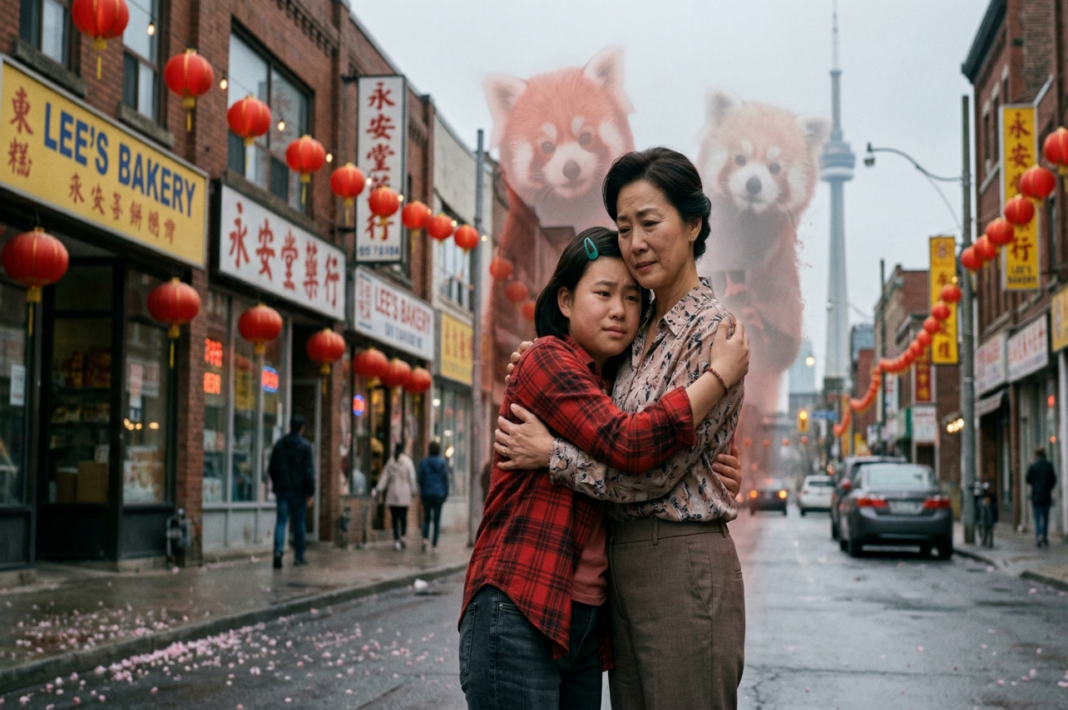

In this piece, I want to focus on what I found to be the most striking theme in Turning Red: breaking the cycle of trauma that has been built up over the years — and the immense courage it takes to transform that cycle. Because this is not just an individual decision. It carries meaning not only for the person who takes that step, but also for the generations that came before them. Sometimes healing is not only about yourself; it also means confronting the burdens that were carried long before you.
What Is The Trauma Cycle?
The trauma cycle refers to the way traumatic experiences are not limited to the individual who lived through them, but are instead passed down across generations. Parents who have experienced trauma may become controlling, struggle to express their emotions, and have difficulty providing a safe emotional environment for their children. As a result, children may develop similar emotional patterns, and trauma continues to be transmitted — often invisibly — from one generation to the next. Breaking this cycle is not only about understanding the past; it is also about refusing to let that past define the future.
The Return Of Suppressed Emotions
In the film, we see a powerful example of this through Mei Lee’s relationship with the panda inside her. Unlike the women in her family, Mei chooses not to suppress this part of herself, but to accept it. For the first time in years, someone chooses to embrace what has been passed down rather than reject it. However, for her mother, this becomes a threat.
Because her own “panda” once caused harm — both to herself and to her relationship with her own mother. This experience is not just a memory; it is a trauma she fears reliving. That is why she does not want Mei to follow the same path. Over time, this fear turns into control. In an effort to protect her daughter, Mei’s mother tries to control every aspect of her life. She expects perfection, demands the best grades, and leaves little room for mistakes. This is not just a parenting style — it is also a reflection of her own unresolved trauma.
Between Identity and Family: The Cost Of Individuation
Growing up within these expectations, Mei constantly tries to do “the right thing” in order to gain her mother’s approval. At some point, this stops being simple compliance and becomes a need to prove herself. She suppresses her own emotions and tries to maintain a certain identity to be accepted.
“I’m just so sick of being perfect! I’ll never be good enough for her… or anyone.”
But there is a truth that often goes unnoticed: Children do not become the people their families imagine them to be. They become themselves. Growing up and changing are, by nature, painful processes. Conflict, rupture, and disagreement are inevitable. What matters is not whether these conflicts exist, but how they are handled.
The film illustrates this powerfully. When the suppressed emotions of two generations collide, it does not remain a simple disagreement — it turns into something almost destructive. The clash between the two “pandas” is, in reality, the collision of unresolved traumas across generations. And perhaps this is where the real question emerges: Do you continue the cycle, or do you break it?
The film clearly presents the tension between personal identity and familial responsibility. It also highlights the importance of emotional regulation, self-acceptance, and questioning perfectionism. Because suppressed emotions do not disappear — they often return in more destructive ways. Instead of trying to be “perfect,” a person must learn to accept their messy, real self. Rather than hiding to meet others’ expectations, one must find the courage to exist as they are.
Growing Up Is Not Always About Adapting
Personally, I define growth from a more difficult place. Growing up often involves, to some extent, disappointing the previous generation — especially if you think differently from those who came before you. Because growing up is not just about doing what is right. It is about creating your own sense of what is right. It is about discovering not only the parts of yourself that are accepted, but all the parts that belong to you — and making space for them in your life.
And perhaps the hardest part is this: When you choose to be yourself, not everyone will understand you. But that is exactly what growth is.
“We choose every day who we want to be. With big decisions and little ones — and every one of them matters.”
The Fear Of Disappointing Others
There is also this side of it: When we choose what we truly want, we fear disappointing others. And this fear is stronger than we often realize. Because of this, we sometimes agree to decisions we know are not right for us — simply to avoid letting others down. Because the issue is not just making a decision. It is being able to carry the emotional consequences of that decision for others. And often, this is what people struggle with the most: Choosing your own life, while also accepting others’ disappointment. And perhaps growth begins exactly there.
What Lies Behind Control: Fear And Familiarity
In reality, parents do not resist your growth because they do not want you to grow. They do so because staying within what they know feels safer. Even if that space is shaped by trauma, it is still familiar. And for many people, what is familiar feels less threatening than the unknown. That is why they may want you to make similar choices. Because they know that path. They can predict what might happen, and in doing so, they believe they can protect you. The unknown, on the other hand, is often perceived as a threat. This is why conflict often stems not from a lack of love, but from fear. And perhaps understanding this softens the anger, even if only slightly. But still, it does not mean that you should not choose your own path.
“The farther you go, the prouder I’ll be.”
Healing: Breaking The Cycle
Because the final — and perhaps the most difficult — step is healing. Healing does not always mean leaving the past completely behind. It means understanding it, accepting it, and learning not to let it define you. Healing means choosing not to continue everything that was taught to you as it is. It means pausing, questioning, and — if necessary — choosing a different path. And most of the time, it is not comfortable.
It requires leaving what is familiar, stepping into the unknown, and truly facing your own emotions. Sometimes healing means putting your pride aside and being able to apologize. Sometimes it means forgiving — or even if you cannot forgive, slowly letting go of the anger you carry. But perhaps the most important thing is this: Healing is not always a path you choose only for yourself. Sometimes, it is a path you choose for those who were never able to heal before you.