


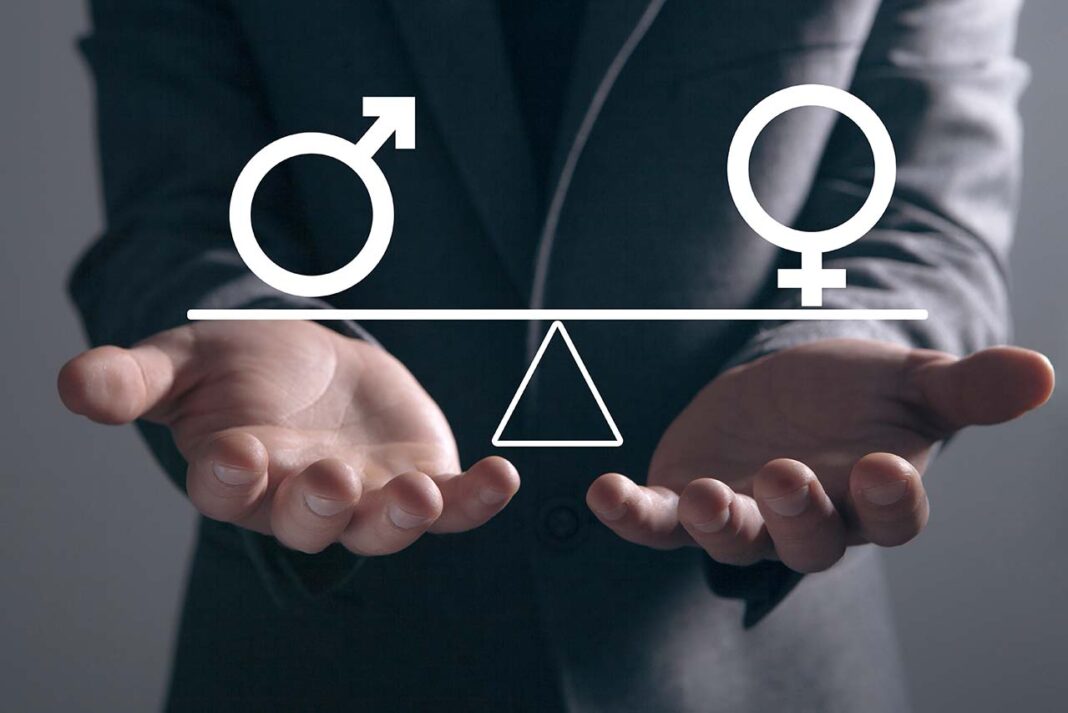

Gender is not only assigned to bodies, but also to behaviors. This article explores the possibility of constructing an identity beyond the roles imposed by social norms.
To be “feminine”… Graceful, emotional, caring.
To be “masculine”… Strong, logical, a leader.
At first glance, these adjectives may seem harmless, yet for centuries, they have paved the way for roles imposed on individuals through gender roles. However, the notion that a behavior is “feminine” or “masculine” is not a biological necessity, but rather a costume tailored by society (Butler, 1990; West & Zimmerman, 1987).
A Stage of Roles
Gender roles are a set of expectations individuals face from the moment they are born. These roles not only dictate what we should wear, say, or become, but also what we are allowed to feel (Bem, 1981; Davies, 2003). While boys are taught to suppress their emotional reactions with the advice “don’t cry,” girls are often more accepted when they are “modest” or “shy” (Kane, 2006; Martin & Ruble, 2004). Simone de Beauvoir’s famous quote, “One is not born, but rather becomes, a woman,” clearly emphasizes that these roles are not innate but socially constructed (de Beauvoir, 1949/2010, p. 13). However, this process of construction often prevents individuals from reaching their true potential.
What Does It Mean to Act “Like a Woman” or “Like a Man”?
What do we really mean by feminine and masculine behaviors? Beliefs that women should be more compassionate and men more analytical are grounded in rigid stereotypes (Hyde, 2005). Research provides no evidence that women are biologically more emotional (Kring & Gordon, 1998; Fischer & Manstead, 2000). On the contrary, the apparent difference stems from the fact that women are socially permitted to express emotions more freely (Brody & Hall, 2008).
Similarly, traits like leadership and competitiveness are often associated with “masculinity,” but the development of these traits is more heavily influenced by experience, encouragement, and equal opportunities (Eagly & Carli, 2007; Rudman & Phelan, 2008).
At this point, an important distinction must be made: the fact that a certain behavior is more commonly observed in one gender does not mean it is exclusive to that gender. Social norms promote certain behaviors in some groups while suppressing them in others, ultimately creating the illusion of a “natural tendency” (Fine, 2010; Hyde, 2005).
We Gender Not Just Behaviors, but People
Phrases like “don’t laugh like a girl,” “walk like a man,” or “don’t talk like a girl” do not merely assign gender to behaviors—they assign it to people themselves (Butler, 1990; Cameron, 2005). But why should acts as human as walking, laughing, or speaking be the domain of any particular gender?
These roles are reinforced not only at the individual level, but also structurally. From the toys chosen for children in the home, to examples used in school curricula; from character representations in TV series to promotion criteria in the workplace, numerous institutions actively participate in sustaining these roles (Connell, 2005; Ridgeway & Correll, 2004).
Gender roles do not only confine women—they also trap men within rigid molds. For men, expressing emotion is often seen as “weakness,” while for women, anger is deemed “inappropriate.” These double standards not only obstruct personal freedom, but also profoundly impact mental health (Mahalik et al., 2003; Jack & Ali, 2010). Over time, individuals may begin to suppress their true selves in pursuit of social approval.
What Can Be Done?
Combating gender roles goes far beyond saying “everyone can do anything.” True equality is only possible when people are provided with spaces where they can make free choices, independent of their gender. Women can be emotional, but not only women; men can be leaders, but not only men. These abilities are not innate qualities of any gender—they are part of the rich diversity of being human.
Society must be able to say to every individual: “You can express what you feel, and try what you wish” (Butler, 1990; Connell, 2005). This ethos should apply to everything from the toys children choose, to the careers young people pursue; from emotional intimacy in adult relationships, to advancement in the workplace.
There is a need for gender-equal approaches across all spheres from education policies to media content, from family communication to workplace leadership. School curricula should teach not only knowledge but also respect for differences. Advertisements and TV series should reflect the diversity and equality of real life, rather than reproducing gender roles. Families should raise children not with phrases like “don’t cry like a girl” or “real men don’t do that,” but as compassionate and free individuals.
What we need to discuss in society are not roles, but possibilities. The social structure must be transformed so that individuals are evaluated not based on the boundaries of femininity and masculinity, but according to their personal talents and desires.
Because the issue is not about being feminine or masculine, it’s about living like a human being: freely, authentically, and as yourself.