


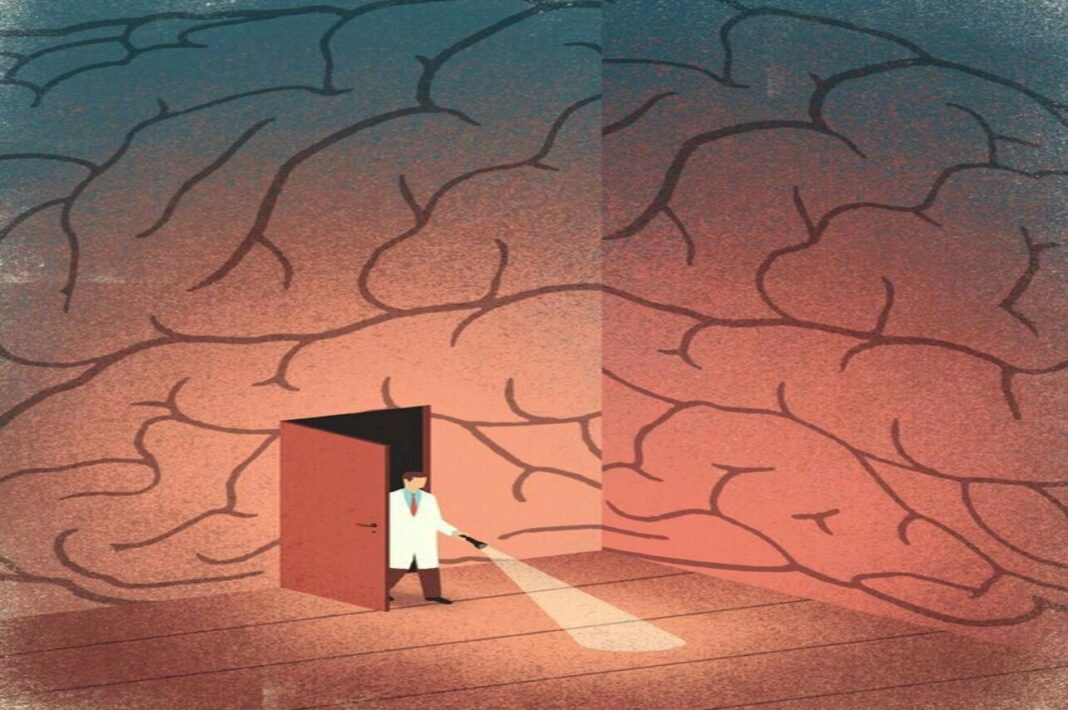

In daily life, individuals often struggle to translate what they know they should do into actual behavior. Procrastination of planned tasks, failure to complete activities due to distractibility, and subsequent reconsideration of impulsive decisions are common examples of this phenomenon. Although such experiences are frequently attributed to personality traits or lack of motivation, research in cognitive psychology and neuroscience indicates that these processes are closely associated with executive functions. Executive functions encompass higher-order cognitive processes such as planning, attentional control, working memory, and impulse regulation, and they play a central role in decision-making mechanisms (Diamond, 2013).
Decision-making is not merely the act of selecting an option; rather, it is a multidimensional cognitive process shaped by the interaction of attention, memory, emotions, and environmental factors. In this context, executive functions enable individuals to organize available information, evaluate alternatives, and generate goal-directed behaviors. The present study aims to examine the relationship between executive functions and decision-making processes within a neurocognitive framework and to explore their manifestations in everyday life.
Executive Functions and Their Core Components
Executive functions are higher-order cognitive mechanisms that include planning, working memory, cognitive flexibility, attentional control, and inhibitory control. These functions enable individuals to produce appropriate behaviors, particularly in novel, complex, or uncertain situations (Miyake & Friedman, 2012). Working memory provides the capacity to temporarily store and manipulate information, whereas attentional control allows individuals to focus on relevant stimuli while suppressing distractions. Cognitive flexibility refers to the ability to adapt to changing conditions.
The coordinated functioning of these components allows individuals not only to possess knowledge but also to use it effectively. Therefore, executive functions constitute the foundation of the cognitive control system.
Neurobiological Foundations Of Decision-Making
Decision-making processes are largely associated with the functioning of the prefrontal cortex. The prefrontal cortex plays a critical role in integrating information, evaluating alternatives, and anticipating potential outcomes (Fuster, 2015). Different subregions of this structure contribute uniquely to decision-making.
The dorsolateral prefrontal cortex is primarily involved in planning and problem-solving processes, whereas the orbitofrontal cortex regulates reward- and emotion-based evaluations. The ventromedial prefrontal cortex integrates cognitive and emotional information, facilitating more balanced decisions. Additionally, the amygdala is engaged in rapid, emotionally driven responses, particularly in situations requiring immediate reactions.
Structures such as the basal ganglia and nucleus accumbens play significant roles in reward-based learning and action selection. The dopaminergic reward system is instrumental in determining which option an individual is more likely to choose, highlighting the biochemical dimension of decision-making processes.
The Relationship Between Executive Functions and Decision-Making
Research demonstrates a strong association between executive functions and decision-making performance. Individuals with more developed executive functions tend to make more consistent decisions and consider long-term consequences, particularly in situations involving risk and uncertainty. In contrast, increased cognitive load can impair decision-making processes, leading individuals to rely on more superficial or impulsive choices.
These findings suggest that decision-making is not solely dependent on possessing information but also on the capacity to process that information effectively. Limited working memory capacity, for instance, may hinder the adequate evaluation of alternatives.
The Role Of Emotions In Decision-Making
Contrary to traditional views that regard emotions as obstacles to rational thinking, contemporary research indicates that emotions play a guiding role in decision-making. Particularly in uncertain situations, emotions facilitate rapid evaluations and provide cues based on past experiences.
Emotionally encoded memories serve as a critical source of information that shapes future decisions. Therefore, effective decision-making depends on the balanced interaction between cognitive and emotional processes.
Executive Functions In Everyday Life
Executive functions are not merely theoretical constructs examined in laboratory settings; they are actively engaged in various aspects of daily life. Time management, structured work habits, coping with distractions, and impulse control are among their everyday manifestations.
While performing multiple tasks simultaneously requires working memory, maintaining focus relies on attentional control, and regulating spontaneous reactions depends on inhibitory control. The effectiveness of these processes directly influences individuals’ academic, professional, and social functioning.
Lifespan Development and Contextual Factors
Executive functions develop across the lifespan and are influenced by factors such as age, stress levels, and environmental conditions (Zelazo & Carlson, 2012). These functions continue to mature from adolescence into adulthood and may decline to some extent in later life. Additionally, high cognitive load and stress can temporarily impair executive functioning.
This variability suggests that decision-making processes are not fixed but context-dependent. Therefore, difficulties observed in daily life should be considered within a multidimensional framework rather than being attributed to a single cause.
Conclusion
Executive functions are fundamental cognitive mechanisms that lie at the core of decision-making processes and directly influence everyday behavior. Understanding these functions allows for the interpretation of behavior within a scientific and contextual framework, rather than attributing it solely to personal characteristics. Considering the cognitive, emotional, and neurobiological components of decision-making together contributes to a more comprehensive understanding of human behavior.
References
Diamond, A. (2013). Executive functions. Annual Review of Psychology, 64, 135–168. https://doi.org/10.1146/annurev-psych-113011-143750
Fuster, J. M. (2015). The prefrontal cortex (5th ed.). Academic Press.
Garon, N., Bryson, S. E., & Smith, I. M. (2008). Executive function in preschoolers: A review using an integrative framework. Psychological Bulletin, 134(1), 31–60. https://doi.org/10.1037/0033-2909.134.1.31
Miyake, A., & Friedman, N. P. (2012). The nature and organization of individual differences in executive functions. Current Directions in Psychological Science, 21(1), 8–14. https://doi.org/10.1177/0963721411429458
Zelazo, P. D., & Carlson, S. M. (2012). Hot and cool executive function in childhood and adolescence. Child Development Perspectives, 6(4), 354–360. https://doi.org/10.1111/j.1750-8606.2012.00246.x
Dinç, G., & Özer Kaya, D. (2022). Brain structures involved in decision-making processes: A review. Ankara Journal of Health Sciences, 11(1), 142–151.