


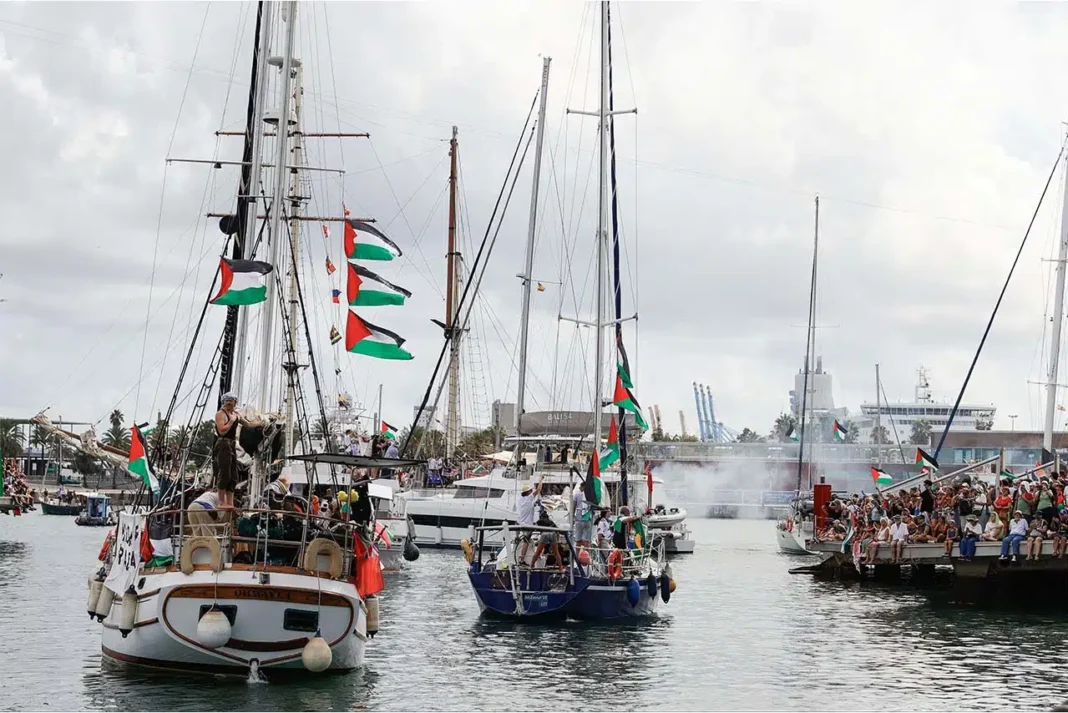

In recent days, the Sumud flotilla set sail to deliver aid to Gaza. This news resonated not only on a political level but also emotionally, humanely, and psychologically. The word Sumud in Arabic means steadfastness, rootedness, and resilience. Yet the concept speaks to more than the struggle of a single people; it touches something universal in the human psyche. It reminds us of a fundamental truth: even in the harshest of circumstances, we strive to generate hope, hold on to life, and reconstruct meaning.
Psychology consistently shows that no matter how dire the conditions, human beings need to connect to find meaning, and to carry a light toward the future. Sometimes this becomes visible in the quiet space of a therapy room, and sometimes in the determined passage of an aid flotilla cutting through waves. Hope, after all, is not merely an individual emotion; it is a social force and, at times, a vehicle for collective healing.
Resilience: Strength Born from Trauma
Trauma wears people down, instills fear, and fragments their sense of security. Yet from the very heart of trauma, another force can emerge: resilience. In psychology, this process is often referred to as post-traumatic growth. In other words, people can reshape themselves at the very point of rupture, sometimes even becoming stronger than before.
The Sumud flotilla embodies this resilience. Beyond carrying food, medicine, and blankets, it carries an invisible but vital message: “You are not alone. The world sees you. There are people who share your suffering and wish to lighten your burden.”
Consider this through the eyes of a child. A child growing up in the shadow of explosions, living in constant fear, does not only need physical aid but also reassurance. In developmental psychology, we know that children’s recovery from trauma depends not only on circumstances but also on the presence of adults who can provide a sense of safety. The flotilla symbolizes precisely that sense of reassurance.
Bearing Witness: The Power of Breaking Silence
Bearing witness to a community’s suffering is not only a moral responsibility; it is also a psychological necessity. Silence deepens trauma, because silence often becomes another form of denial. Denied trauma intensifies loneliness and isolation.
The flotilla may not resolve the complexities of the blockade, but it reminds humanity of a crucial truth: silence is not neutrality. From a psychological perspective, even bearing witness has a healing impact. What breaks people most profoundly is the feeling of being unseen. Conversely, being seen and heard is the first step toward healing wounds.
It is important to note that bearing witness does not simply mean physical presence. It means responding with conscience, words, and compassion, saying “I see you, I hear you, I stand with you.” In this sense, the mere existence of the flotilla itself carries a profound psychological message.
Collective Healing: The Contagion of Hope
The devastation in Gaza is not only the trauma of one community; it is also a wound in humanity’s shared conscience. That is why this journey concerns not only those directly affected but also all of us. Acts of solidarity do not just heal the other; they also heal the one who gives. Extending a hand to another is, in truth, a way of restoring our own humanity.
In psychology, this is often described as collective healing. Bearing witness to another community’s pain and responding with solidarity transforms both the sufferers and those who stand alongside them. Hope, much like grief, is contagious. When we direct compassion toward another, we simultaneously cultivate the goodness within ourselves.
One of the clearest demonstrations of this is the rise of volunteer movements during crises. When people mobilize to lighten someone else’s burden, they often discover renewed meaning in their own lives.
Research on trauma also reminds us that even in the bleakest circumstances, people have the capacity for meaning-making. As Viktor Frankl’s logotherapy emphasized, those who find meaning even amid suffering and loss demonstrate greater psychological resilience. In this light, the flotilla’s mission extends beyond material aid; it contributes to the process of reconstructing meaning itself.
Conclusion: A Story That Belongs to Us All
Perhaps the Sumud flotilla will not break every chain of blockade. But it breaks another, far heavier chain: the chain of despair. Psychologically, the heaviest burden is the feeling of helplessness. Even the sight of a single aid ship can transform that feeling into something else: “I am not alone; someone sees me.”
Sumud is not only the resilience of a particular people; it is also the human soul’s capacity to seek light even in the darkest times. And it reminds us of something essential: solidarity is not merely sending aid; it is the purest, most powerful expression of what it means to be human. Sometimes a ship carries more than cargo. It carries a people’s faith in tomorrow, and the conscience of humanity itself.