


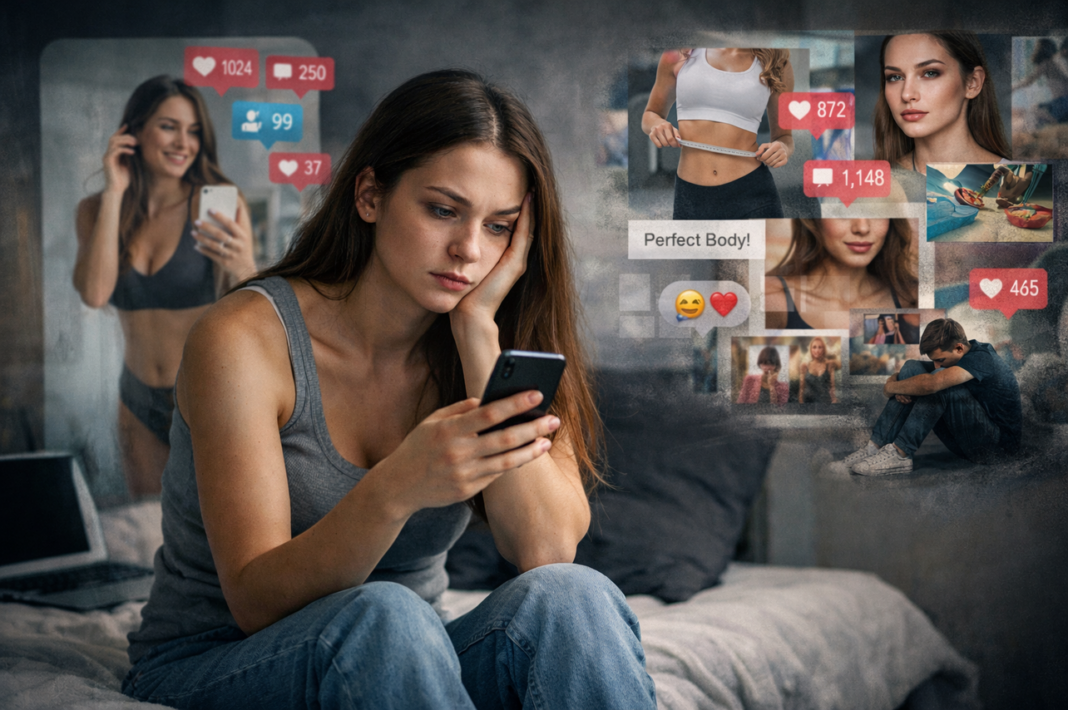

The digital age marks a period that fundamentally reshapes human experience. Today, social media is more than a platform where we share thoughts and images; it has become a powerful psychosocial environment that shapes our emotions, self-perception, and even value systems. At first glance, it appears as a tool that provides “communication convenience,” yet the psychological dynamics that emerge with increased usage deeply affect the inner world of modern individuals.
When we examine social media as a psychological concept, two core elements emerge: its influence domain and usage frequency. These two factors determine the quality of the relationship individuals build with social media.
The Influence Domain of Social Media: A Digital Social Laboratory
Social media is like a massive digital laboratory where millions of behavioral patterns can be observed simultaneously. Algorithmically filtered content constantly produces new stimuli designed to keep users engaged. These stimuli such as “likes,” “comments,” and “shares” activate the brain’s reward system and reinforce behaviors.
Scientific studies show that social media is not merely a communication tool but also reshapes emotional regulation. Twenge and Campbell (2018) found that as screen time increases, anxiety and depression rates rise significantly, especially among adolescents. This indicates that the wide influence field of social media transforms not only behavior but also emotional experience.
The invisible side of this transformation unfolds within the individual: The need for approval grows, identity becomes externally dependent, and self-perception increasingly relies on digital feedback.
The Psychological Cost of High Usage: Comparison Cycles, Loneliness, and Reality Distortion
Frequent use of social media is not just a waste of time; it is a psychological factor that influences identity development and emotional balance. Young people, in particular, feel increasingly inadequate as they are constantly exposed to idealized lifestyles online.
The underlying mechanism of this phenomenon is the tendency for social comparison. Chou and Edge (2012) showed that individuals who spend more time on social media tend to perceive others’ lives as better than their own. Although this perception does not reflect reality, individuals internalize it as if it were true.
The invisible harms of heavy usage include:
-
Psychological loneliness: Despite many interactions, superficial connections fail to meet emotional needs.
-
Continuous performance pressure: Every post becomes part of a “visibility competition.”
-
Reality distortion: Filtered images and edited videos cause individuals to view their own lives as inadequate or inferior.
At this point, social media widens the gap between the “real self” and the “ideal self” individuals wish to portray.
The Impact of Social Media on Body Image: The Distorted Digital Mirror
Social media is one of the strongest carriers of modern body ideology. Filters, flawless skin, idealized body shapes, normalized aesthetic procedures, and influencer culture directly shape body perception.
Body image distortion occurs through:
-
Triggered comparison,
-
Unrealistic standards,
-
Increased dysmorphic thinking,
-
Lowered self-esteem.
These effects are especially evident among adolescents, young adults, and individuals with appearance-related concerns. Social media operates like a “beauty standard generator,” devaluing natural physical diversity.
The Role of Psychological Resilience: Is Healthy Social Media Use Possible?
Social media is not inherently harmful; however, unconscious and excessive use increases psychological risks. Therefore, individuals must cultivate digital awareness.
Social media has become both the strongest communication tool and the most invisible psychological influencer of our time. Heavy use increases comparison cycles and self-worth pressure while imposing strong and often harmful effects on body image. Yet with awareness and intentional use, it is possible to build a protective barrier against the hidden side of social media.