


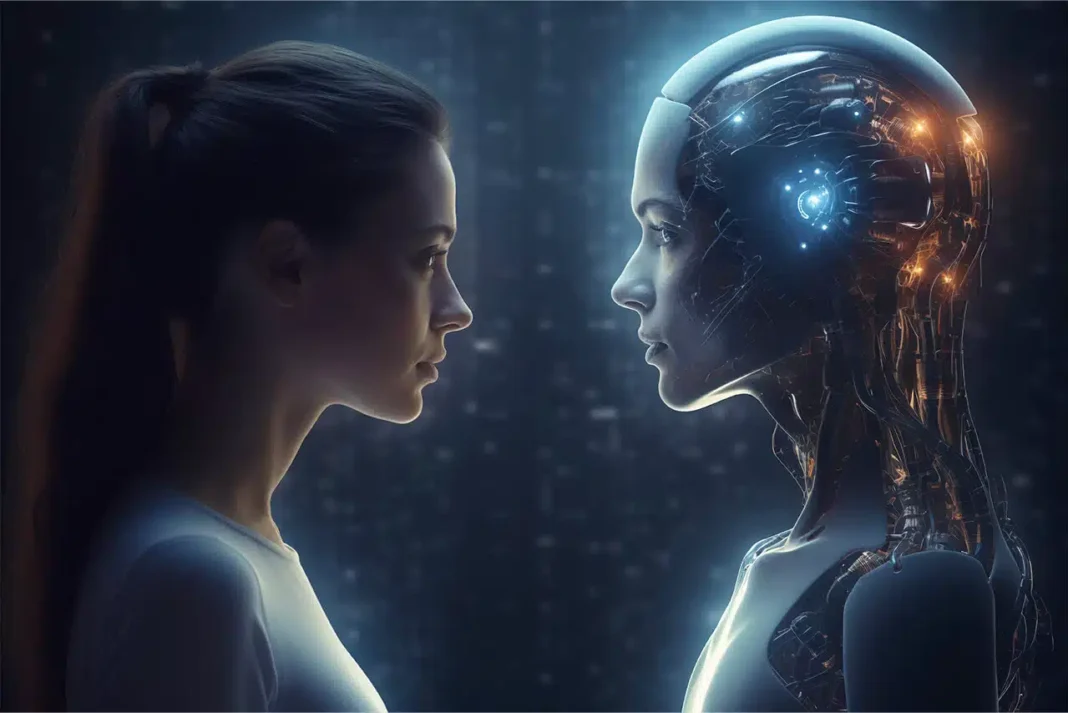

According to many studies, artificial intelligence (AI) can automate a significant portion of certain jobs. But does this mean the death of professions—or simply a redefinition of the working world?
When the morning alarm rings, Merve grabs her coffee before heading to the office and sits down at her desk in the accounting department to do her usual routine checks. Yet in recent months, most of the reports she used to prepare have been automatically generated by her company’s new AI system. Has Merve’s job become “less necessary”? That is not just an economic question, but one that shakes the foundations of professional identity.
With the growing popularity of AI-based therapy apps—where users can command, “Play the role of my psychologist”—many have begun to wonder: have therapists lost their value? Are psychologists no longer essential?
Which Professions Feel Most At Risk?
Routine, repetitive, and data-driven jobs are among those most anxious about the rise of advanced AI technologies: accounting, call centers, data entry, and the preparation of repetitive legal documents.
Automation has also entered the creative fields—illustrations, content production, and design—raising fears among artists and creators. Even professions once considered secure, such as software engineers, physiotherapists who rely on diagnostic algorithms, and psychologists using AI-assisted therapy tools, now face uncertainty.
Examples of potential disruption include automated translation systems, news-writing algorithms, and chatbot-based customer service.
Psychological Effects: Identity, Trust, And Anxiety
The rise of AI in the workplace is not only an economic shift—it is also a psychological transformation.
Work is no longer just a means of income; it forms part of one’s identity, self-esteem, and social value. Therefore, the fear that AI might “take our jobs” inevitably raises a deeper question:
“If my work can be done by a machine, then who am I?”
Loss Of Meaning
For humans, work is not only about production but about creating meaning. What makes a job “important” is its contribution to society and to one’s sense of purpose.
When AI takes over certain tasks, workers begin to ask, “What’s left for me to contribute?”
This is especially visible in professions like teaching, journalism, healthcare, and psychology—fields deeply tied to human meaning and connection.
Feelings Of Inadequacy
Since AI can perform many tasks faster and more accurately than humans, employees often develop a sense of “I’m not good enough anymore.”
This can undermine confidence and professional pride.
Imposter Syndrome
“If AI helps me this much, am I really a competent professional?”
This question has become increasingly common among designers, writers, academics, and other creative professionals. People begin to wonder whether their work truly reflects their own skills or the influence of an algorithm—an uncertainty that quietly erodes self-esteem and authenticity.
Technostress
This refers to the stress that comes from the inability to keep up with digital systems or the constant need to learn new tools.
New software, automation systems, and data platforms—especially for mid- and late-career employees—create a persistent fear of “falling behind.”
Over time, this can lead to mental fatigue, loss of motivation, and even burnout.
Why AI Can’t Replace Us
AI thinks in data; humans think in meaning, context, and emotion.
An algorithm may find the right answer, but it cannot understand the emotional resonance that answer has for a person.
This distinction makes humans indispensable in fields like psychology, therapy, education, art, leadership, and law.
AI can calculate what is correct mathematically, but not what is right ethically.
For instance, an AI judge assistant may suggest a fair verdict statistically, but it cannot weigh the moral nuances of justice.
Similarly, an AI therapist might analyze a client’s words but fail to understand why their tears fall silently.
Empathy cannot be measured by data.
Intuition is the product of lived experience.
Ethical reasoning requires emotional and cultural understanding.
AI may appear creative because it draws from millions of examples—but this is derivative creativity.
Human creativity is born from experience, emotion, and the courage to make mistakes.
Furthermore, AI cannot fully grasp cultural context.
The meaning of a word or gesture differs from one society to another, and these nuances are learned through experience.
For example, when a Turkish client says “kısmet,” it carries a mix of faith, hope, and acceptance—something no algorithm can truly feel.
Hence, AI’s output may be technically “accurate” but humanly off the mark.
The Human–AI Collaboration: A Shared Future
Rather than being a rival, AI can become a collaborative tool.
The most productive future is one where humans and AI work together.
Doctors may use AI to support diagnosis, but the final judgment still depends on human intuition and ethical sense.
Teachers might prepare materials with AI’s help, but understanding a student’s motivation remains their uniquely human task.
“AI can save us time — but only humans can create meaning.”
In the end, professional identity is not disappearing; it is transforming.
As long as empathy, creativity, and ethical awareness remain central to human nature, no algorithm will ever truly replace us.