


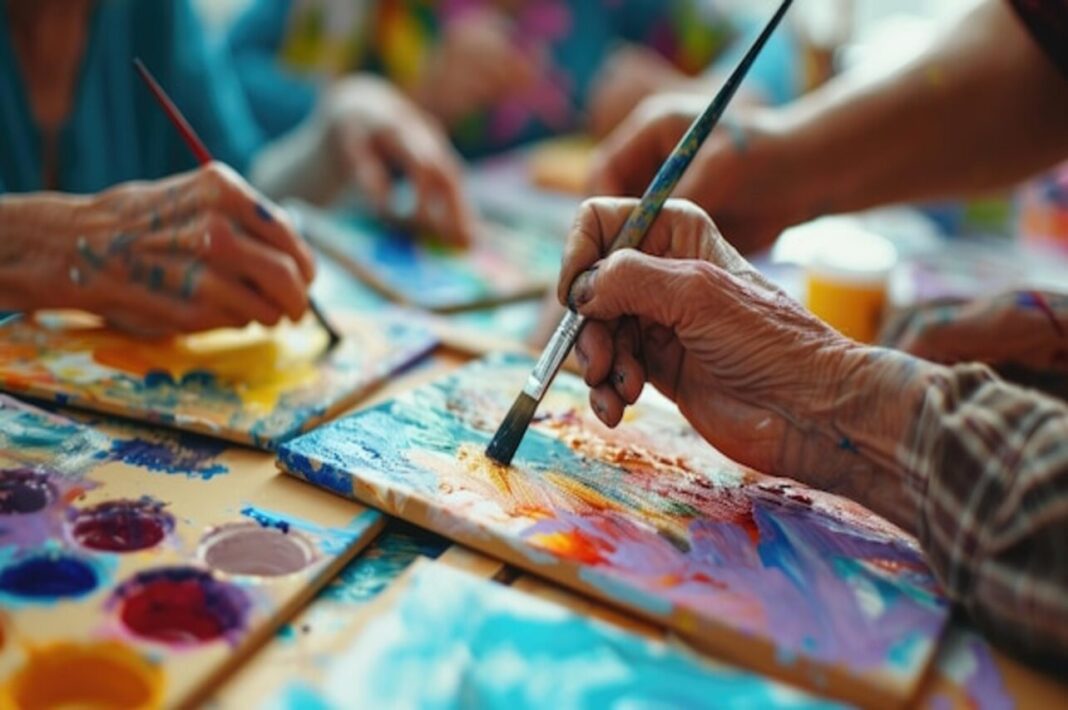

Art therapy has become increasingly popular in recent years as a powerful way to support mental well-being. It includes creative activities such as music, painting, sculpture, dance, and movement, allowing individuals to express their inner world freely, without concern for aesthetics (Case & Dalley, 2014). Both the materials used and the therapeutic setting play an important role in the healing process.
Art therapy offers a safe and supportive space, especially for people who find it difficult to express their feelings through words. Through creative expression, individuals can explore their emotions more easily, recognize hidden or suppressed feelings, and gain a deeper understanding of themselves. For instance, emotions that are hard to describe may appear through colors, shapes, or symbols in artwork. This process helps individuals better understand their inner experiences and find healthier ways to cope. Creating art can also provide a sense of control, making art therapy not just a form of expression but a meaningful path toward emotional healing.
The Role Of Art Therapy In Cancer Treatment
A cancer diagnosis can deeply affect a person’s outlook on life. Feelings of uncertainty, fear, anxiety, and loss of control often arise and can place a heavy emotional burden on patients. Art therapy creates a safe space where these intense emotions can be expressed and processed. The creative process helps individuals reconnect with themselves, better understand their emotions, and regain a sense of hope (Demir, 2025).
Sessions may take place individually or in groups, using different creative methods depending on each patient’s age, physical condition, and emotional needs. Activities such as painting, working with clay, listening to or creating music, and gentle movement allow patients to participate in ways that feel comfortable. The focus is on using creativity to express emotions and inner experiences rather than aesthetic concern. This process can reduce stress, improve emotional well-being, and help patients feel stronger and more mentally resilient (Elimimian et al., 2020).
In addition, art therapy can increase patients’ motivation and encourage them to stay engaged in their treatment. Rather than focusing only on hidden psychological processes, art therapy is also seen as a holistic form of emotional and social support (Councill & Ramsey, 2019). Its main goal is to help patients enjoy the moment, discover their inner strengths, and keep hope alive. The benefits of art therapy also extend to family members and caregivers, as emotional relief often leads to better communication, stronger relationships, and a more supportive healing environment (Raybin et al., 2022).
What Do Scientific Studies Say?
Scientific studies show that art therapy helps reduce anxiety and depression in people with cancer (Zhou et al., 2025), improves quality of life, and supports treatment adherence (Raybin et al., 2022). In children, art therapy is especially helpful in reducing fear and stress. Through creative activities, children can express their emotions more freely and regain the feeling of hope.
Conclusion
Art therapy is a valuable supportive approach that strengthens emotional resilience during cancer treatment. By allowing individuals to express their thoughts and feelings openly, it helps ease emotional stress, reduce anxiety, and nurture hope. In this way, art therapy plays an important role in holistic healing alongside medical treatment.
Today, healthcare increasingly recognizes the importance of emotional and social well-being, not just physical recovery. For this reason, integrating art therapy into multidisciplinary healthcare teams is essential. Collaboration among psychologists, art therapists, physicians, educators, and other healthcare professionals allows patients to receive more complete and compassionate care.
Looking ahead, art therapy is expected to become more widely used in healthcare settings, supported by growing scientific research. As more people gain access to the healing power of creativity, the quality of life of individuals living with cancer can continue to improve.
Resources
Case, C. & Dalley, T. (2014). The Handbook of Art Therapy. Routledge, 3rd edition.
https://doi.org/10.4324/9781315779799
Councill, T. D., & Ramsey, K. (2019). Art Therapy as a Psychosocial Support in a Child’s Palliative Care. Art Therapy, 36(1), 40–45.
https://doi.org/10.1080/07421656.2019.1564644
Elimimian, E. B., Elson, L., Stone, E., et al. (2020). A pilot study of improved psychological distress with art therapy in patients with cancer undergoing chemotherapy. BMC Cancer, 20, 899.
https://doi.org/10.1186/s12885-020-07380-5
Demir, V. (2025). Art Therapy in Cancer. In: Savaş, E. (eds) Psychotherapy for Cancer Patients. Springer, Cham.
https://doi.org/10.1007/978-3-031-88804-5_12
Raybin, J. L., Zhou, W., Pan, Z., & Jankowski, C. (2022). Quality of Life Outcomes With Creative Arts Therapy in Children With Cancer. Journal of Pediatric Hematology/Oncology Nursing, 39(3), 155–167.
https://doi.org/10.1177/27527530211055988
Zhou, S., Li, H., Yang, Y., et al. (2025). Effects of art therapy on psychological outcomes among children and adolescents with cancer: a systematic review and meta-analysis. BMC Complementary Medicine and Therapies, 25, 149.
https://doi.org/10.1186/s12906-025-04866-2