


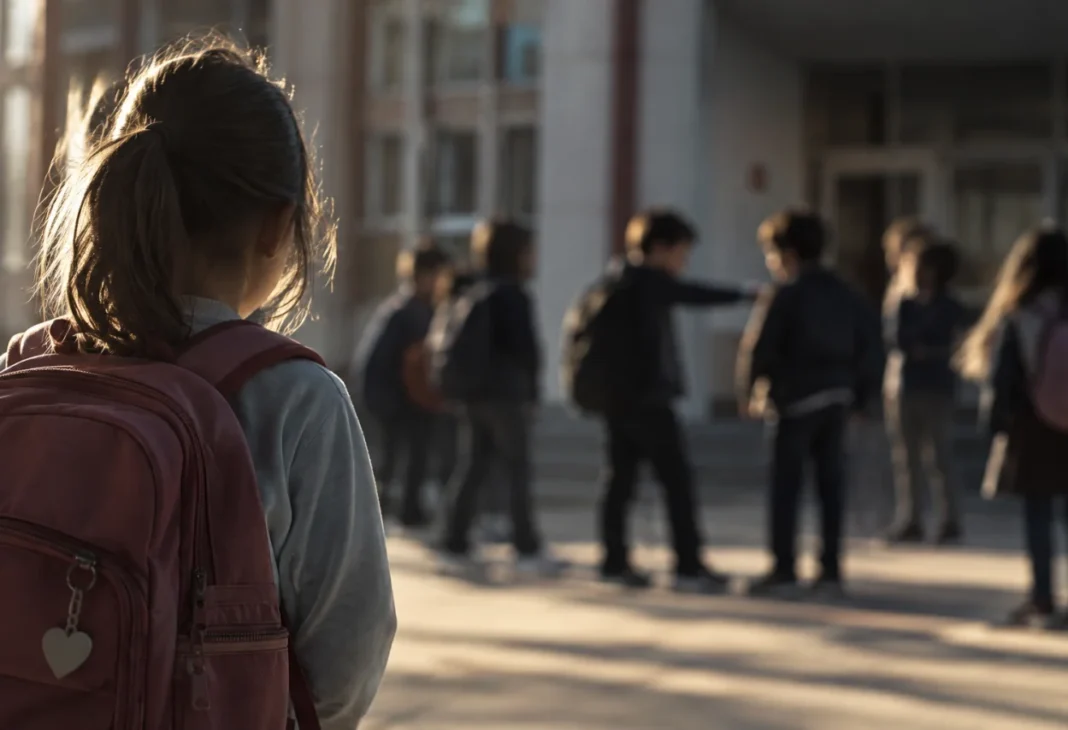

Violence, Children, and the Loss of a Sense of Safety
Why has concern for their child’s safety become one of the first things on a parent’s mind when sending them to school?
Schools are places where children receive an education, build friendships, play, and begin to discover the world. They should also be environments where children feel safe. However, incidents of violence among children raise concerns not only for the families directly affected but also for many parents who send their children to school every day. The possibility that a child could be harmed at school can create anxiety even when nothing negative has happened.
Moreover, these concerns are not limited to physical violence. Witnessing peer bullying, threats, exclusion, humiliation, and aggressive behaviors among children, including those in younger age groups, leads us to question how children relate to one another.
So how does violence find a place in children’s lives during a period when they are learning to build relationships, resolve disagreements, and express their anger?
The answer may not lie solely in children’s behavior. After all, children do not grow up independently of the society in which they live. The behaviors they encounter at home, at school, in their social environments, and in the digital world can shape their understanding of how to interact with others.
What deserves particular attention is not simply whether children witness violence, but how the violence they witness is responded to, explained, and sometimes normalized.
When a child repeatedly observes disagreements being resolved through shouting, threats, or physical force, they may begin to view these behaviors as possible ways of dealing with problems. Particularly in environments where aggression is associated with strength, harming others is justified, or violent behavior goes unchallenged, children’s understanding of acceptable behavior may be influenced.
However, an important distinction must be made. Not every child who witnesses violence becomes violent. Children’s behavior is shaped not only by what they observe but also by their relationships, the support they receive, their individual characteristics, and the circumstances in which they grow up. Attributing violence to a single cause may therefore lead us to overlook other dimensions of the issue.
The family is one of the first social environments in which children learn behavior. Yet learning does not take place exclusively within the family. Friendships at school, expectations within peer groups, and the need for acceptance can also influence children’s behavior. Particularly during periods when belonging to a group becomes increasingly important, some children may become more inclined to adopt behaviors that receive approval from those around them.
What is especially concerning is that harmful behavior may sometimes be considered normal not only by the child engaging in it but also by other children who witness it. When humiliating a classmate becomes a source of entertainment, exclusion is treated as ordinary, or physical strength is associated with gaining respect, violence may begin to appear in different forms within children’s relationships.
Furthermore, children’s social worlds are no longer limited to face-to-face interactions. The content they encounter online has also become part of their everyday experiences. Digital content that presents violence as entertainment, rewards humiliating behavior with attention, or portrays aggression as something admirable may influence how some children evaluate these behaviors. Of course, not every child imitates what they see. Nevertheless, it is important to consider how repeated exposure to certain behaviors may gradually make them seem more familiar and acceptable.
This is precisely where adults’ attitudes become significant.
Some disagreements between children are a natural part of growing up. It would not be appropriate to classify every argument as violence. However, repeatedly humiliating, threatening, excluding, or physically harming another child cannot simply be dismissed as an ordinary childhood disagreement.
Sometimes, behaviors are overlooked with comments such as, “They’re just children; these things happen.” Yet we may not fully consider what those experiences mean to the child being harmed. For a child, being able to speak about what happened is important, but knowing that their concerns will be taken seriously matters just as much.
Because a sense of safety is not simply about the absence of danger. Being able to ask for help, feeling heard, and knowing that someone will offer protection when needed are also essential parts of that sense of security.
When a child does not feel safe at school, the effects may extend beyond school hours. Their willingness to attend school, their approach to friendships, and their ability to feel comfortable in social environments may also be affected. Similarly, for a parent concerned about their child’s safety, school may become more than a place of education; it may also become a continuing source of worry.
Yet parents cannot keep their children beside them at every moment. Growing up also means gradually spending time in environments independently of one’s family. Therefore, a sense of safety depends not only on parents’ efforts to protect their children but also on the reliability of the environments in which children spend their time.
A safe school is not simply one that intervenes after violence occurs. Creating an environment where children can express themselves, boundaries are clear, harmful behaviors are not ignored, and support is available when needed is equally important.
Rather than placing responsibility solely on teachers, families, or children, it may be more meaningful to examine how these environments interact. A child’s experiences at school are not entirely separate from how those experiences are addressed at home, just as behaviors learned at home are not independent of the relationships encountered at school.
Perhaps one of the most important aspects to consider when discussing violence is the example adults set for children.
We expect children to resolve disagreements through communication, treat one another with respect, and recognize other people’s boundaries. But how much room do we make for these behaviors in the adult world? How do we communicate when we disagree? How do we express our anger? How do we define strength, being right, and standing up for ourselves?
These questions are not intended to place all responsibility for violence among children on adults. Rather, they encourage us to look more closely at the social environments in which behaviors are learned.
Children do not learn only when they are told what they should or should not do. They also observe the differences between what adults say and what they actually do. Hearing that a behavior is wrong is not the same as experiencing an environment where that behavior is genuinely considered unacceptable.
When discussing violence among children today, we need to consider not only the incidents themselves but also the circumstances in which they may occur. Understanding how violence can be learned, under what conditions it may become normalized, and why some children may come to see harmful behavior as a way of resolving problems is important for creating safer environments.
Because when we speak of a world in which children should feel safe, we must also recognize that such safety cannot be achieved solely through the behaviors we expect from children.
And perhaps the question we need to reflect on is not only why children may resort to violence.
When we expect children to build a world without violence, what kind of world are we showing them?