


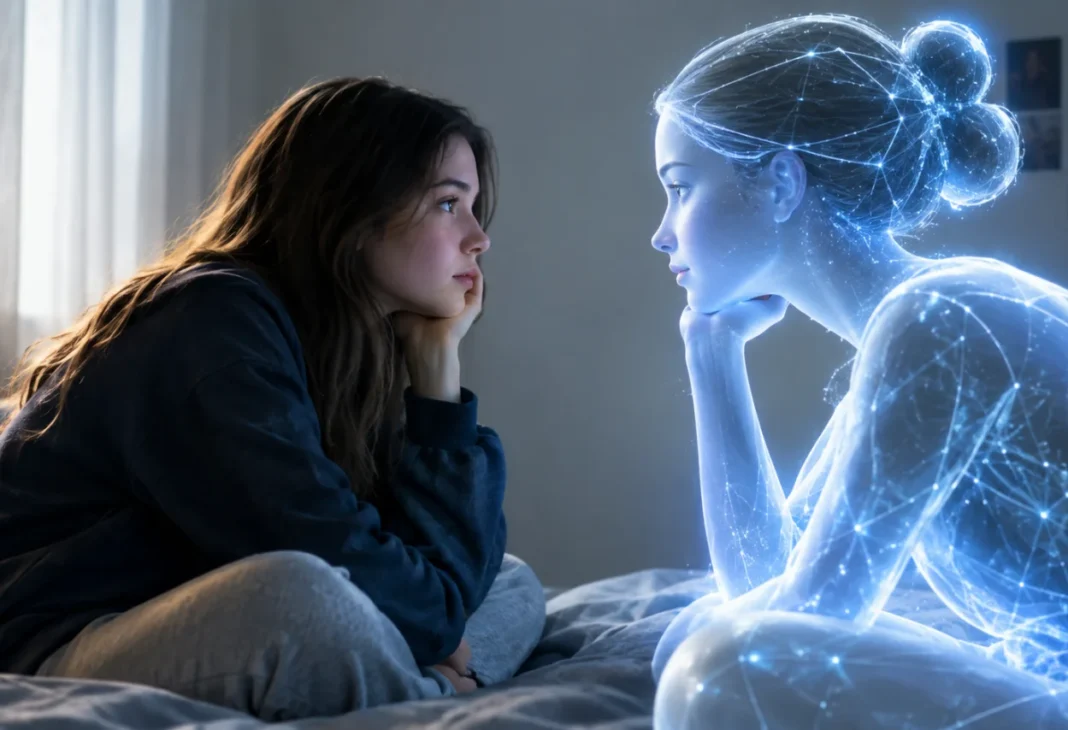

The Appeal of the Digital Sanctuary
Generative AI models, which now permeate every corner of our lives, are driving a quiet yet profound transformation, particularly in the world of adolescents. For teens escaping the exhausting, rough, and occasionally disappointing dynamics of human relationships, AI companions have effectively become a safe harbor. The ability to unburden oneself without fear of judgment, receive instant validation, and experience a continuous sense of belonging… Research supports this reality: a considerable portion of adolescents now choose these smart assistants over human peers for their deepest conversations and emotional sharing (Sun et al., 2026). So, is this adaptation as innocent as it appears from the outside, or is it an invisible trap that dulls adolescents’ social muscles?
When we look at the psychological literature, we see a bidirectional mechanism behind this digital loyalty. On one side stands the stimulation hypothesis; this view argues that virtual interactions offer youth a stepping stone to test their social skills in a safe laboratory environment, explore their identities, and cope with loneliness (Sun et al., 2026). On the other side, the displacement hypothesis rings alarm bells. According to this view, flawless bonds formed with algorithms weaken face-to-face communication, lowering adolescents’ resilience to cope with the rough and challenging dynamics of real life, and driving them into a fragile loneliness (Sun et al., 2026).
Next-Generation Risks in the Family Ecosystem
When we address the issue from a familial perspective, the picture deepens further. A qualitative review conducted by Malak Akgün and Özkan (2025) reveals that generative AI will leave both constructive and concerning marks on family mental health in the near future. While parenting guidance or daily practical tools offered by AI can make life easier, they simultaneously open the door to next-generation psychological labyrinths such as empathy deficiency, digital isolation, screen addiction, and even eco-anxiety. These one-sided relationships that adolescents form with AI—characterized by “never objecting and always being agreeable”—undermine human connections in the real world that require sacrifice, negotiation, and mutual understanding (Sun et al., 2026).
Return to Reality
We do not have the luxury of getting swept up in this unstoppable current of technology and remaining mere spectators. Breaking this vicious cycle does not come from bans; rather, it comes from enriching family-internal communication, instilling digital balance from an early age, and taking preventive mental health steps (Malak Akgün & Özkan, 2025). As mental health professionals and educators, we must correctly interpret the opportunities presented by AI and repair adolescents’ bonds with the real world. Let us not forget that no algorithm can ever replace the flawed, rough, yet profoundly healing warmth of being human.
Kaynakça
- References
- Malak Akgün, B., & Özkan, B. (2025). Üretken yapay zekanın yakın gelecekte aile ruh sağlığı üzerine öngörülerinin nitel bir incelemesi [A qualitative review of predictions on the future of family mental health regarding generative AI]. Karadeniz Teknik Üniversitesi Sosyal Bilimler Enstitüsü Sosyal Bilimler Dergisi, 15(30), 367-386.
- Sun, X., Wang, Y., & McDaniel, B. T. (2026). AI companions and adolescent social relationships: Benefits, risks, and bidirectional influences. Child Development Perspectives, 20(1), e14190.