


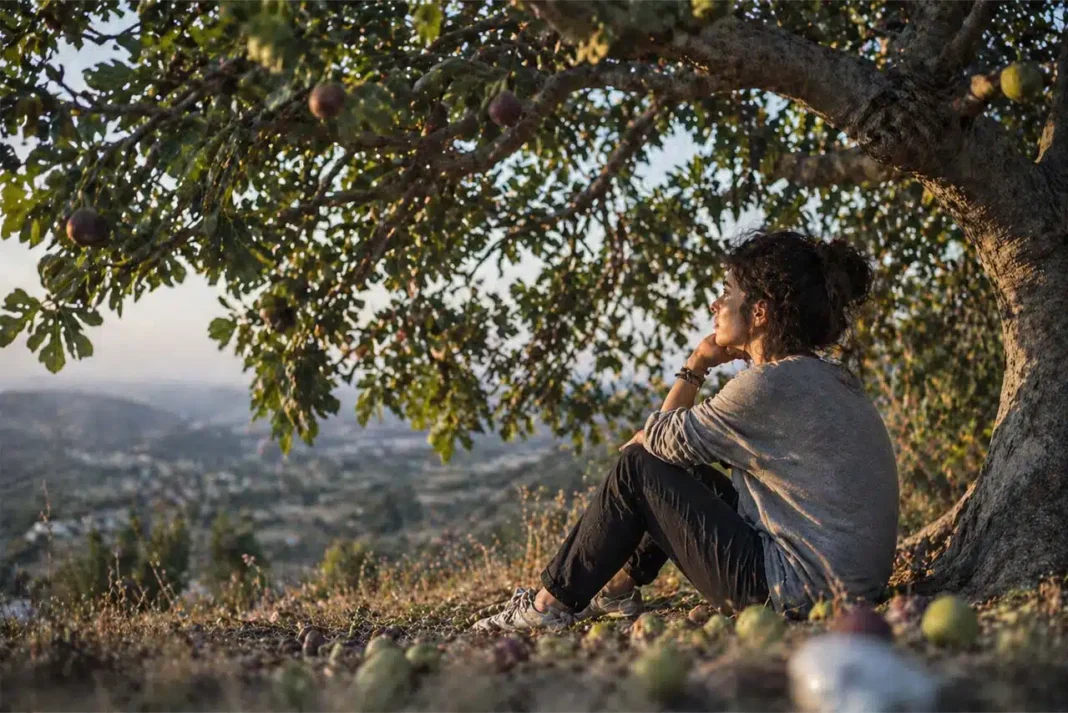

Are you familiar with Sylvia Plath’s fig tree metaphor? The Bell Jar, published in 1963, is Plath’s first and only novel. The fig tree metaphor in the novel has left a deep impression on many readers who fear an uncertain future, feel overwhelmed by choices, and wish they could experience all the possibilities life offers at once.
The narrator of the novel, Esther Greenwood, imagines herself sitting under a fig tree while thinking about her future. On the branches of the tree there are many figs, each representing a different possibility in life: a successful career, a happy marriage, an intellectual life, a life filled with travel, or an entirely different path. Esther wants every fig, yet she cannot decide which one to choose. Because the moment she chooses one, she will have to give up the others. As she sits beneath the tree unable to decide, she imagines the figs slowly shriveling and falling to the ground one by one. The price of not choosing is ending up with none of them.
This metaphor powerfully illustrates the psychological pressure created by life’s choices. Choosing is not only about selecting one path; it is also about letting go of other possibilities. For this reason, for some people making a decision is not merely a preference, but also a form of loss.
Today, this situation may be even more visible than it was in Plath’s time. Career paths, lifestyles, cities, relationships, and even the identities we might want to build for ourselves present countless alternatives. At first glance, the wide range of possibilities offered by the modern world seems like freedom. Yet it also carries a heavy responsibility. As the number of options increases, so does the fear of making the wrong choice.
The Psychological Weight of Choice
In psychology, this is sometimes referred to as the paradox of choice. While having more options theoretically increases freedom, in practice it can also amplify anxiety and indecision. Our minds constantly imagine alternative lives. Questions like “What would have happened if I had chosen a different major?”, “How would my life be if I had moved to another city?”, or “Who would I be today if I had taken that opportunity?” have crossed many people’s minds at least once.
A child who once dreamed of becoming a singer might grow up to become an engineer. During the day they go to work, fulfill their responsibilities, and continue their life. Yet some nights, just before falling asleep, another life might appear in their imagination: stage lights, applause, and an unrealized possibility.
The Mind’s Alternative Stories
The human mind is remarkably skilled at creating alternative stories. Yet there is an important point to remember: our lives consist of a single story, while our minds are capable of writing countless parallel ones. Most of these imagined stories are idealized versions where flaws are invisible and only the beautiful parts are highlighted. In reality, however, every path in life comes with its own difficulties.
In the novel, Plath portrays the darker side of these choices. Indecision can gradually lead to paralysis and a sense of helplessness. Yet it is also possible to look at the metaphor from another perspective.
Making Peace with Decisions
In psychology, approaches such as Acceptance and Commitment Therapy (ACT) emphasize that life is not shaped by making “perfect choices,” but by acting in accordance with our values. What matters is not how many possibilities we may have missed, but how we live the life we choose. Making peace with a choice rarely begins by convincing ourselves that it was perfect. Instead, it begins by accepting responsibility for it. No path in life is completely risk-free, and every decision carries both gains and losses.
Grieving the possibilities we leave behind does not necessarily mean feeling regret. Rather, it means acknowledging the reality of our decisions. After all, “what ifs” are a natural part of being human and will always exist. From time to time, we all wonder about another possibility. Yet this curiosity does not diminish the value of the life we have chosen.
Perhaps the real question we should ask ourselves while sitting under the fig tree is this: “Which fig feels most meaningful to me?”. And sometimes, the bravest decision is not waiting for the perfect fig, but simply reaching out and choosing one.
References
Plath, S. (1963). The Bell Jar. Harper & Row.
Schwartz, B. (2004). The Paradox of Choice: Why More Is Less. Ecco.