


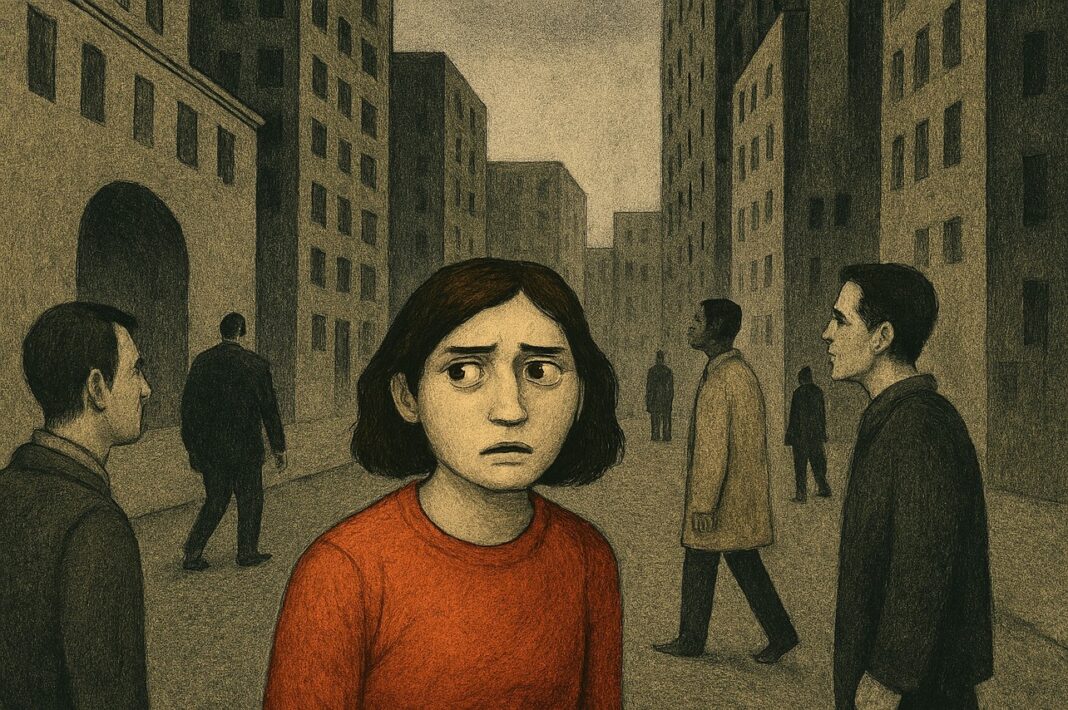

Trust is far more than a moral bond between individuals; it is the bedrock of social stability and a living process forged through human interaction. Sociologically, we define trust as the optimistic gamble one takes on another’s behavior amidst uncertainty. Mistrust, on the other hand, is not merely the absence of trust; it is an active state of vigilance. It functions as a behavioral catalyst, forcing individuals to constantly calculate risks and, in doing so, widening the gulf in social interactions.
In the landscape of late modernity—where identities are fluid and traditional anchors coexist with micro-level affiliations—trust has increasingly shifted from interpersonal relationships to systems: the state, the law, and specialized expertise. However, when these systems falter, individuals are plunged into a chronic regime of mistrust, where trust is no longer assumed but must be renegotiated repeatedly.
We are often told that rising mistrust is the inevitable cost of modernity. Yet this claim requires critical interrogation. While mistrust may initially function as a protective shield, over time it erodes solidarity, suppresses empathy, and paralyzes collective action. The central issue, therefore, is not the complete elimination of mistrust, but understanding the mechanisms through which it is produced—and identifying the structures and power relations that benefit from its persistence.
Fear And Anxiety: The Twin Pulses Of The Modern Age
Although frequently used interchangeably, fear and anxiety perform distinct roles within the social fabric. Fear has an object; anxiety does not. Fear responds to a concrete threat, whereas anxiety generates a diffuse and lingering sense of dread. In contemporary societies, where risks are increasingly unpredictable and abstract, anxiety has become a chronic condition.
Precarious labor markets, global health crises, digital surveillance, and environmental collapse have transformed the future into a space perceived as fundamentally unstable. What once appeared as temporary nervousness—triggered by economic insecurity or performance pressure—has now become embedded in everyday life.
Reducing anxiety to an individual psychological issue obscures its structural origins. Anxiety is not merely a private emotional burden; it is deeply rooted in structural inequality and institutional failure. Critical perspectives warn that when anxiety is framed as a personal weakness to be managed through self-regulation, the systemic conditions producing it remain unchallenged.
Fear, in contrast, relies on identifiable threats—often socially constructed and strategically amplified. Through political rhetoric and media narratives, fear is meticulously manufactured and circulated. It ceases to be a survival response and becomes a mechanism of control. By labeling certain bodies or groups as “risky,” these narratives fracture social cohesion, narrow democratic space, and normalize permanent suspicion.
Experiences Of Mistrust In Everyday Life
Trust and mistrust are not produced solely within macro-social institutions; they are continuously negotiated in micro-level daily encounters. Public transportation, brief interactions with strangers, and engagements on digital platforms all require rapid risk assessments.
In these moments, body language, appearance, speech patterns, and social identity operate as cues for instantaneous trust judgments. However, such assessments are rarely neutral; they are shaped by stereotypes and implicit biases. Everyday interactions increasingly involve calculations of potential harm, leading to routines structured around caution, distance, and control.
This cycle of everyday mistrust can be summarized as follows:
Uncertainty → Anxiety → Controlling Behaviors → Social Distancing → Normalization of Mistrust
Critical analyses reveal that these practices reproduce existing social inequalities. Trust, under these conditions, ceases to function as a universal moral value and instead becomes a privilege closely tied to social capital.
Social Encounters And The Perception Of The “Other”
Mistrust intensifies where social boundaries between “us” and “them” are sharply drawn. Immigrants, ethnic minorities, and individuals with non-normative lifestyles are frequently coded as potential risks. Fear, in this context, is not an individual emotion but a socially reproduced phenomenon sustained through media narratives, political discourse, and cultural representation.
As a result, mistrust hardens social boundaries and transforms encounters into sites of tension. Late modern societies are often described as “risk societies,” where threats are rarely experienced directly and instead mediated through expert knowledge, statistics, and probabilities. Individuals are compelled to assume responsibility for managing their own safety, turning anxiety into a capacity that must be regulated rather than resolved.
Security policies, self-optimization discourses, and the emphasis on psychological resilience become integral to this framework, subtly shifting responsibility away from institutions and onto individuals.
Decaying Foundations: Institutions, Media, And The Architecture Of Mistrust
Institutional trust has long been a cornerstone of social order. Yet ongoing crises in politics, law, and healthcare have severely undermined confidence in these systems. Media discourse accelerates this erosion through a continuous narrative of crisis, producing a pervasive sense of powerlessness.
As institutional legitimacy weakens, individuals are increasingly drawn toward alternative explanations and parallel realities. From a critical standpoint, mistrust emerges not as an anomaly but as a rational response to opaque governance and diminished democratic participation.
The digital transformation further complicates this landscape. Platforms that promise connection simultaneously foster surveillance anxiety and perpetual self-monitoring. Fear extends beyond physical spaces into digital existence. Algorithmic visibility, data extraction, and constant exposure generate a condition of self-censorship and emotional regulation.
In this sense, the digital sphere is not neutral; it functions as a producer of collective anxiety and emotional governance. Trust is no longer an organic social bond but a manufactured outcome shaped by technological, political, and economic design.