


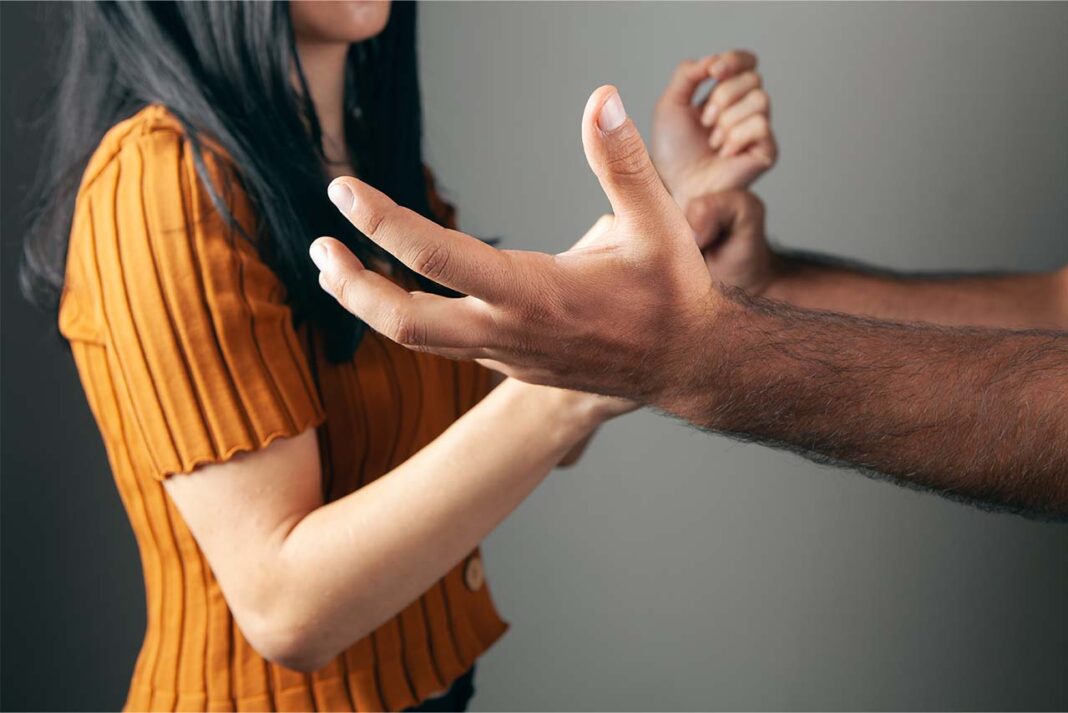

In the 1970s, despite the horrific murders he committed, one of America’s most notorious serial killers, Ted Bundy, received hundreds of letters from women who sent him photos, kept his pictures, and even proposed marriage. During one of his trials, Bundy asked a woman to marry him right on the witness stand, and she accepted. This woman, Carole Ann Boone, defended Bundy’s innocence and attended every single hearing.
So what kind of psychology makes so many women fall in love with a serial killer? The answer lies hidden in the concept of hybristophilia. In the following text, I will examine in detail why hybristophilia arises, the psychological dynamics that fuel it, and how it resonates in society, all based on academic foundations.
Definition and History
Also known as Bonnie and Clyde syndrome, hybristophilia is a rare but highly striking phenomenon in the field of forensic psychology. By definition, it refers to individuals who find violence or criminals romantically or sexually attractive. This phenomenon is particularly observed among women and is used to describe the emotional and erotic attraction toward criminals who have gained fame through the media or committed major acts of violence.
The term hybristophilia was first introduced by psychologist John Money in 1986, defined as a condition close to paraphilia. Etymologically, it derives from the Greek words “hubris” (arrogance/act of violence) and “philia” (love/attraction).
The popular name “Bonnie and Clyde syndrome” comes from the infamous couple Bonnie Parker and Clyde Barrow, who, between 1932–1934, robbed gas stations, restaurants, and small-town banks across multiple states in America, while being deeply in love with each other.
Causes and Motivations
Many studies show that the reasons behind hybristophilia are varied and often consist of interrelated psychological, social, and evolutionary factors:
-
Slavikova, M. & Panza, N. R. (2014) found that women who feel romantic attraction toward incarcerated criminals often have histories of physical or sexual abuse. These women display traits such as emotional dependency and the need for validation. In other words, a traumatic past increases attraction toward criminals. The study also identified two subgroups: Manipulator/Pragmatist and Neurotic/Anxious.
-
Manipulator/Pragmatist (Benefit-Oriented): This group focuses on gaining personal advantage or benefit from relationships. They use their emotions and romantic interest strategically; for instance, maintaining communication with the criminal for social status, financial security, or thrill-seeking. Emotional bonding and empathy are secondary, while personal needs dominate. Examples include writing striking letters, behaving strategically to capture the criminal’s attention, and seeking tangible or psychological gains.
-
Neurotic/Anxious (Emotional Security-Seeking): This group craves emotional security and attachment. Past trauma, abuse, or neglect may cause them to seek attachment even in chaotic or dangerous relationships. Their self-esteem is typically low, anxiety levels high, and they may cling to criminals to feel loved or accepted. Typical behaviors include frequent desire to communicate with the criminal, heightened reactivity to emotional fluctuations, and experiencing intense anxiety when the criminal shows indifference.
-
A study analyzing Tumblr and online forum content revealed that many women with hybristophilic tendencies find the violence and killings committed by criminals to be “dangerous, attractive, and arousing.” To elaborate: for some women, violent acts are not only a “display of power” but also at the center of sexual fantasy. In other words, death/killing is perceived almost like a sexual stimulus. This reflects both a fetishistic dimension (sexual pleasure linked to a specific object/act) and a psychodynamic dimension (stemming from anxiety, trauma, or need for control).
-
Another finding suggests that individuals with higher self-awareness tend to show passive admiration, while others actively idealize the romantic aspect of crime—something heavily influenced by media portrayals (Shreesta et al., 2022).
-
Another study found that the “fear mechanism” plays an important role in attraction to violent offenders (Polygence Project, 2023).
-
Evolutionary and psychodynamic perspectives argue that attraction to dangerous individuals may represent an extreme form of the evolutionary preference for strong, protective partners. At its core, the “pull of power” is thought to reflect the desire for protection (Seltzer, L. F., et al., 2012).
-
Forensic psychology professor Katherine Ramsland noted that “Some believe they can change a person as cruel as a serial killer. Others want to nurture him because they see that he was once a child” (Ramsland, 2012).
Social Media and Cultural Reflections
This phenomenon has also found its way into art, expressed through both music and cinema. Well-known examples include Natural Born Killers (written by Quentin Tarantino) and the 1967 film Bonnie and Clyde. Both films vividly display such pathological love dynamics.
Looking beyond art, we see that when films and other media (news, documentaries, series) portray criminals as charismatic, mysterious, and “forbidden fruit,” some women indeed find them attractive. The way criminals are represented in the media can create a romanticized “anti-hero” image. For socially marginalized or thrill-seeking women, this image can become the object of romantic fantasy (Bartels & Parsons, 2009).
Analyses of TikTok and online platforms between 2015–2023 show that media plays a role in romanticizing criminals while overlooking victimization. Romanticization, trivialization of trauma, and sexual objectification may normalize hybristophilic behaviors, particularly among young women.
In today’s social media era, hybristophilic women’s desire to engage with criminals has shifted “from prison letters to Instagram DMs.” What was once limited to physical letters has become faster, more visible, and mass-scale communication on digital platforms (Schweitzer, A., 2015).
Perhaps as a result of this massification, criminals like Ted Bundy and Richard Ramirez have been turned into “icons” on platforms such as TikTok and YouTube, with aesthetic content (e.g., “fan edits,” videos with romanticized songs) being widely shared. While some content is meant for entertainment, a number of women express genuine romantic attraction and admiration (Yardley, Wilson, & Brookes, 2021).
Some women perceive these criminals as “misunderstood romantic figures,” which fuels the rapid spread of idealized and eroticized content about them on large platforms (Shreesta et al., 2022).
It should not be forgotten that such relationships can be dangerous and manipulative. Criminals may exploit feelings of admiration, leading to emotional captivity or financial exploitation. Social stigma, shame, and isolation may also intensify.
Scope and Types in Literature
A more recent article published in 2024 by Investigative Psychiatry emphasizes that most findings about hybristophilia remain theoretical and anecdotal. It also notes that the lack of empirical and epidemiological research explains why hybristophilia is not included in the DSM-5 as an official diagnostic category and why more systematic studies are necessary.
As a result of systematic research spanning over 20 years, hybristophilia is today classified into two main subtypes:
-
Passive Hybristophilia: The individual does not participate in the criminal’s acts but feels romantic or sexual attraction. Typically referred to as a “prison groupie.”
-
Aggressive Hybristophilia: The individual actively participates in the planning of crimes, encourages the offender, or assists in criminal acts.
Conclusion
Hybristophilia is a rare but highly intriguing phenomenon in forensic psychology that still requires deeper investigation. Romantic or sexual attraction to violence and criminals intertwines with multiple psychological dynamics—such as trauma, low self-esteem, media romanticization, and evolutionary patterns of attraction.
Although it may initially appear as a safe or redemptive fantasy for women, such attraction carries serious risks, including emotional manipulation and exploitation. Recognizing these psychological layers is crucial not only for developing healthier therapeutic approaches within forensic psychology but also for raising societal awareness about potential dangers.
References:
-
Money, J. (1986). Lovemaps: Clinical concepts of sexual/erotic health and pathology, paraphilia, and gender transposition in childhood, adolescence, and maturity. New York, NY: Irvington.
-
Ramsland, K. (2012, February 7). Women who love serial killers. Psychology Today. Link
-
Shreesta, A., Dempsey, M., Tuohy-Hamil, S., & King, R. (2022). What does she see in him? Hybristophiles and spree killers. Journal of Police and Criminal Psychology, 38(4), 800–812. Link
-
Sláviková, M., & Panza, N. R. (2014). Characteristics and personality styles of women who seek incarcerated men as romantic partners: Survey results and directions for future research. Deviant Behavior, 35(11), 885–902.
-
Seltzer, L. F. (2012, April 24). Why do women fall for serial killers? Psychology Today. Link
-
Investigative Psychiatry. (2024, January 29). Understanding hybristophilia: A complex psychological phenomenon. Link