


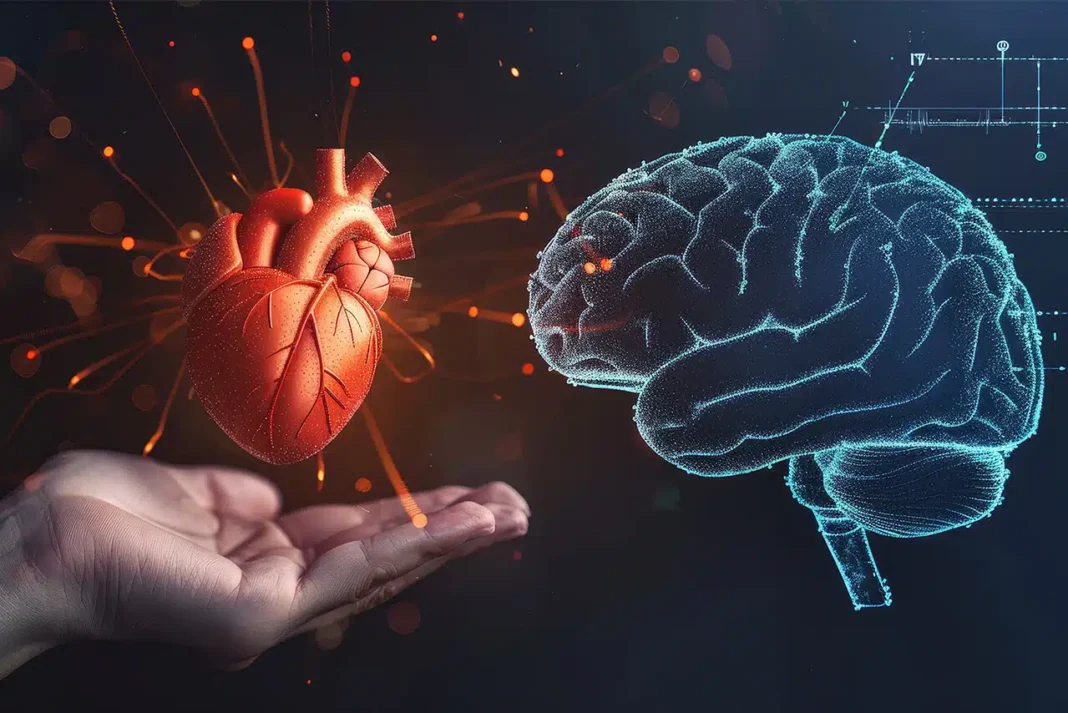

Life is a path woven by consecutive choices; sometimes flowing quietly, sometimes veering off and sweeping us to an entirely new shore. In making these choices, we sometimes listen to the meticulous calculations of logic, and other times to the whispers of the heart. The psychological literature suggests that explaining the decision making process solely through rational analysis is insufficient. Daniel Kahneman’s System 1 and System 2 model identifies two aspects of the mind: one that is fast and intuitive, and another that is slow and analytical. Antonio Damasio, on the other hand, argues that a mind devoid of emotions cannot make healthy decisions. Perhaps the issue does not lie in the conflict between these two poles, but in their harmonious interaction.
The Layers of the Decision-Making Process
Decision making is a multifaceted process in cognitive psychology. Kahneman’s System 1 is fast, intuitive, and emotional, while System 2 is slow, conscious, and analytical. These two systems are not independent but constantly interact. Damasio’s “somatic marker” hypothesis suggests that emotions function as biological signals in the decision-making mechanism. A decision that seems logical but lacks emotional grounding may not guarantee long-term well-being.
But cognitive processes are not the only things that shape our decisions. Personality traits, cultural norms, values, and mood also play a role in the process. For instance, anxious individuals tend to avoid risks, while positive emotions enhance creativity, making it easier to explore alternative solutions. Therefore, decision making encompasses much more than just the right-versus-wrong dichotomy; it is a dynamic, multilayered system.
The Guidance of Emotions
For a long time, emotions were seen as irrational, but they are now recognized as an integral part of the decision-making process. Damasio’s research shows that emotional responses based on past experiences reappear as physiological signals in similar future situations, guiding the mind. Bechara’s Iowa Gambling Task study revealed that individuals avoided risky choices through emotional responses even before conscious awareness was formed.
However, emotions do not always offer advantages. Intense fear or anger can narrow cognitive capacity and lead to hasty decisions. On the other hand, positive emotions encourage flexible thinking and innovative solutions. Emotions can act as both guides and obstacles, depending on the type, intensity, and context of the emotion.
The Nuances of Logic
Logic lies at the heart of functions like information gathering, evaluating options, and calculating probabilities. Kahneman’s System 2 comes into play particularly in complex problems. Logical analysis can lead to more reliable outcomes in high-stakes situations like financial investments or academic planning. The role of the prefrontal cortex in this process has been clearly outlined by neuroscience.
However, the absolute supremacy of logic can be misleading. An overly analytical approach can result in “analysis paralysis,” where the individual becomes unable to make a decision. Additionally, decisions based solely on logic may ignore emotional and social dimensions, leading to dissatisfaction. Effective decision making arises from the balanced interaction of logic and intuition.
Integrated Decision Making: The Meeting of Mind and Heart
Neuropsychological research shows that emotional and cognitive systems are in continuous interaction at the neural level. This collaboration leads to healthier decisions, especially in situations involving uncertainty and high risk. For example, in a career choice, statistical data alone or emotional connections may not be enough. However, at the intersection of logic and emotions, decisions that are both rational and personally fulfilling emerge.
To strike this balance, individuals need to be aware of their emotional responses, recognize their cognitive biases, and clarify their values. This way, the decision-making process becomes a conscious, holistic structure, free from automatic reactions.
Conclusion: The Power of Harmony
Decision making is one of the most complex functions of the human mind. Emotions offer intuitive guidance, while logic processes information systematically. Neither relying solely on emotions nor trusting only the cold calculations of logic is enough. The healthiest decisions occur when these two systems work together as complementary forces, not opposing ones.
The question of “Mind or heart?” actually transforms into “Mind and heart together?” Our decisions should not be measured solely by their correctness but by how well they align with the meaning of our lives, our values, and our identity. Perhaps the most accurate choices are those made when the calculations of the mind and the intuitions of the heart converge at that precious moment.
References
-
Kahneman, D. (2011). Thinking, Fast and Slow. Farrar, Straus and Giroux.
-
Damasio, A. R. (1994). Descartes’ Error: Emotion, Reason, and the Human Brain. Putnam.
-
Bechara, A., Damasio, H., & Damasio, A. R. (2000). Emotion, decision making and the orbitofrontal cortex. Cerebral Cortex, 10(3), 295-307.
-
Kahneman, D., & Tversky, A. (1979). Prospect theory: An analysis of decision under risk. Econometrica, 47(2), 263-291.
-
Slovic, P. (2000). The Perception of Risk. Earthscan Publications.
-
Gigerenzer, G. (2007). Gut Feelings: The Intelligence of the Unconscious. Viking.
-
Cacioppo, J. T., & Berntson, G. G. (2005). The affect system: Affective neuroscience and psychopathology. Handbook of Affective Sciences, 173-191.
-
Rolls, E. T. (2000). The Brain and Emotion. Oxford University Press.