



I pause as the sun sets. Lying on the grass, I feel the coolness rising from the earth through the soles of my feet. The light stings my eyes just enough to feel like a warm invitation. The ground gently accepts my weight, quietly exchanging my burdens for a sense of lightness.
For fifteen minutes, I speak to no one, make no plans; even my thoughts slow down. I simply exist. I surrender to the moment, blending into the flow of time. Then, everything begins again. A kind of rebirth.
Centuries ago, European travellers to Italy marvelled at this state of being. In their journals and letters, they recorded it as dolce far niente—the sweetness of doing nothing. It was the very opposite of the productivity-driven pace they were used to, and over time, the phrase wove itself into the language of European romanticism.
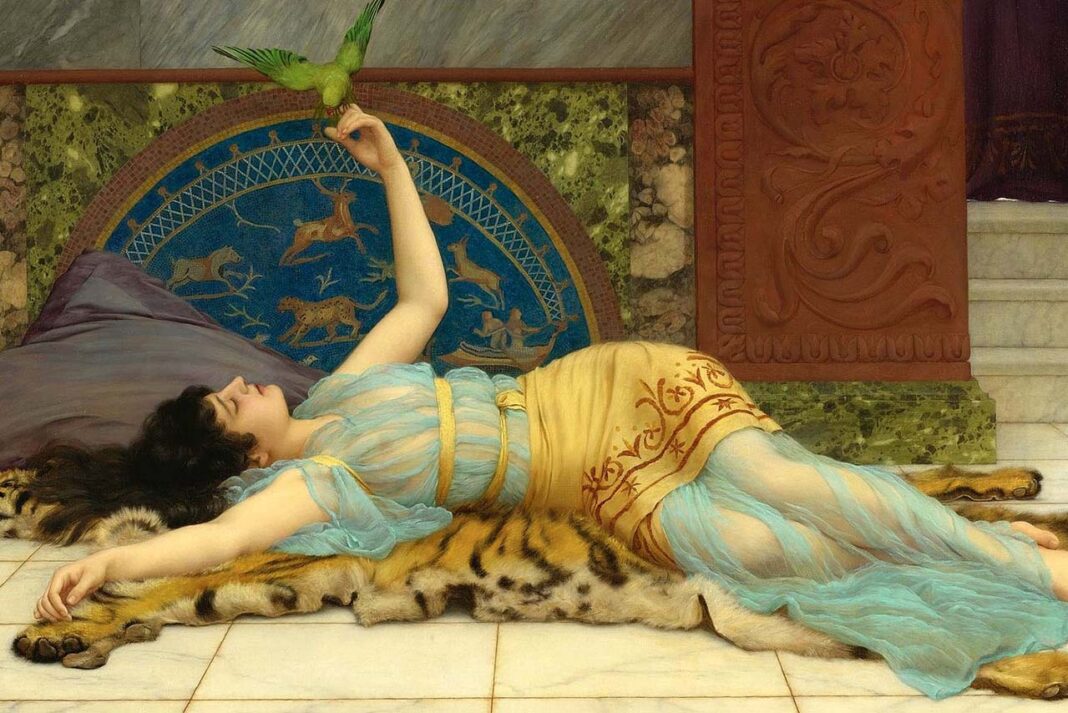
Art captured it too. In 1880, British painter John William Waterhouse created Dolce Far Niente, depicting a young woman lying in serene repose. She appears to be doing nothing, yet her expression suggests fullness rather than emptiness—an unspoken pact with the world: “For now, I will simply be.” The painting whispers that stillness is not a lack, but a kind of completion. Sometimes, doing nothing is the most meaningful act, for in stillness, life offers us its own rhythm.
This art of pausing is not exclusive to the Mediterranean sun. Denmark’s hygge brings the same essence into colder climates—moments of comfort created with warm light, a cup of tea, the sound of rain, or the embrace of a blanket. While dolce far niente evokes the open air and surrender to time, hygge is about being enveloped in warmth and safety. Both rest on the same foundation: stepping away from the rush to savour the simple act of being.
The roots run deeper still, reaching back to Ancient Rome. Otium was more than “free time”—it was a cultivated state for nourishing the mind and spirit, stepping away from negotium (business) to read, think, create, or wander in nature. For the Stoics, it was the path to ataraxia, a calm mind. For the Epicureans, it was found in friendship and simple pleasures. Cicero saw otium as essential not just for personal peace, but for reflecting and contributing to the greater good. Philosophies differed, yet they met on common ground: renewal often begins in moments of deliberate stillness.
Modern science now affirms what ancient wisdom knew. Even when we are still, the brain remains active. The Default Mode Network—an intricate web of neural connections—lights up, forming creative links, balancing emotions, and processing memories. Yet today’s culture of constant busyness erodes these quiet spaces. Notifications, endless to-do lists, and the pressure to always be “on” leave little room for the mind to reset.
For me, one of the simplest ways to reclaim this space is to stare at a blank wall. I often do it without thinking, only to realise it gives my mind a brief holiday. In those few minutes, my thoughts settle, my memory organises itself, and life seems to rearrange in slow motion.
In our world, pausing has become almost a luxury. We prepare each day as though stepping onto an invisible stage—always rushing, always completing. Yet doing nothing is not wasted time; it is an investment in what lies ahead. Stillness clears the mind, strengthens the body, and nourishes the soul.
The joy of doing nothing may look like idleness from the outside, but it is, in truth, one of the most conscious acts of living. To sit with ourselves, to accept life’s transience, to stay fully in the moment—these are the roots of our deepest renewal.
When we stop chasing time, perhaps for the first time, time chooses to stay with us. And in that mindfulness, you realise: the universe has been speaking all along.