


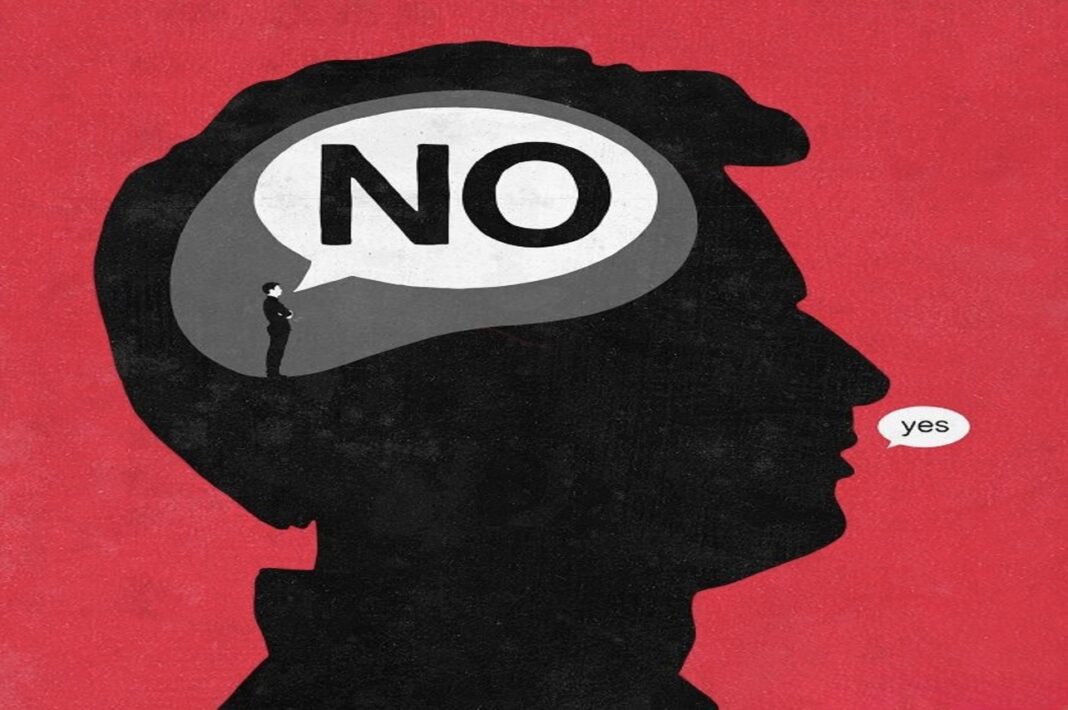

For many people, saying “no” is not just a simple word; sometimes it carries the fear of losing a relationship, approval, or the possibility of being accepted.
Saying “no” can sometimes be far more difficult than it seems. Although it appears to be a simple word, for many people it is accompanied by internal tension, feelings of guilt, and the fear of losing something. Declining an invitation, turning down a request, or expressing our personal boundaries is often not just a preference but also a psychological struggle.
Many people fear that when they say “no,” they might lose something important. A relationship might be damaged, the other person might feel disappointed, or they might be perceived as “selfish,” “cold,” or even a “bad” person. For this reason, saying no can sometimes feel less like setting a boundary and more like risking love, acceptance, and belonging.
However, this raises an important question: Does the inability to say no really protect relationships, or does it gradually create an invisible burden?
The Hidden Fears Behind Saying No
The difficulty of saying no is often rooted in deeper psychological dynamics rather than simple politeness. For some people, disappointing others can feel almost like a threatening experience. This can be particularly noticeable in relationships where approval and acceptance are highly valued.
From a psychological perspective, the strong tendency to meet others’ expectations is often related to early relational experiences. If someone had to be compliant, avoid conflict, or prioritize others’ needs over their own in order to feel accepted during childhood, these patterns can continue into adult relationships.
In such cases, saying “no” is not merely rejecting a request—it can also mean confronting internal fears such as:
-
“What if they stop liking me?”
-
“What if they think I’m selfish?”
-
“What if the relationship gets damaged?”
Even when these fears are not consciously recognized, they can strongly influence our behavior.
The Pressure To Be A “Good Person”
Social norms can also make saying no more difficult. In cultures where helpfulness, sacrifice, and compliance are seen as signs of being a “good person,” expressing one’s own needs can sometimes feel like a negative act.
This may lead some people to develop a relationship style centered around constantly pleasing others. The commonly used term “people pleaser” reflects exactly this pattern: prioritizing others’ satisfaction over one’s own boundaries.
At first glance, this may seem to make relationships smoother. However, in the long run, constantly accommodating others can become emotionally exhausting. Over time, individuals may struggle to recognize their own needs or may experience growing feelings of fatigue and hidden resentment.
Why Boundaries Matter
From a psychological perspective, boundaries play a crucial role in helping individuals regulate themselves and their relationships. Boundaries are not only about saying “stop” to others; they are also a way of protecting one’s time, energy, and emotional well-being.
Healthy boundaries do not weaken relationships. On the contrary, they often make them more sustainable. In relationships without boundaries, individuals may eventually experience emotional exhaustion or develop a sense of silent dissatisfaction.
For this reason, saying no does not necessarily mean rejecting a relationship. Rather, it can be a way for individuals to maintain contact with their own needs and sense of self within that relationship.
Does Saying No Weaken Relationships?
Perhaps the real issue here is reconsidering what saying no actually means. Rejecting a request does not mean rejecting the person. Similarly, setting a boundary does not mean devaluing a relationship.
In fact, saying no can often express two things at the same time: respecting the other person while also respecting oneself.
From a psychological perspective, the ability to say no is closely related to recognizing and expressing one’s emotional boundaries. This is a skill that can be learned and developed over time.
Contrary to common fears, saying no rarely destroys relationships. On the contrary, relationships in which boundaries are openly expressed often become healthier and more balanced.
Perhaps the key is to see saying no not as a harsh rejection, but as a way of creating space for ourselves within our relationships. Because sometimes saying “no” is not just about rejecting a request—it is also about listening to our own needs. And perhaps a truly healthy relationship is one in which both people feel free to say “no” from time to time.