


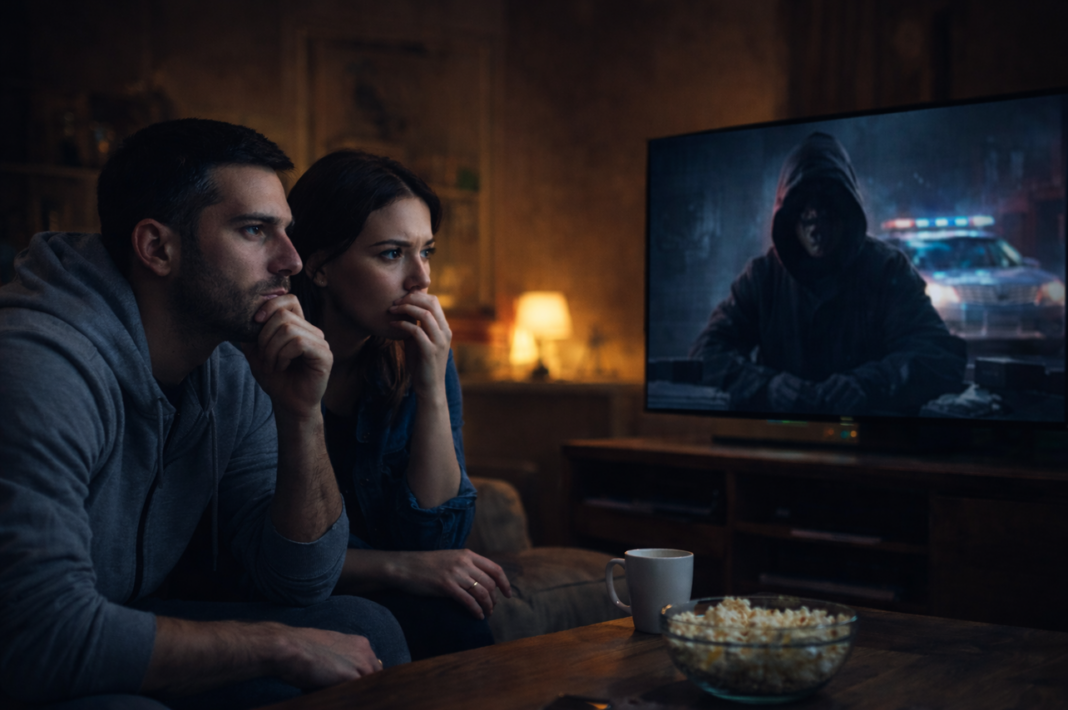

Human nature is shaped by that fine line between light and darkness. Empathy, justice, and loyalty that guide us toward goodness are as much a part of human psychology as curiosity, fear, and destructiveness that lead us toward darkness. Our inability to tear ourselves away from the screen while watching a crime documentary, the fact that horror films have created a massive global industry, or society’s secret admiration for evil figures… All of these lead to a single question: Why are humans curious about evil? This curiosity is not deviant, pathological, or abnormal as is commonly believed. In fact, it is a very “human” tendency closely related to historical, evolutionary and psychological mechanisms.
1. The Psychological Foundations of Curiosity About Darkness
Freud: The Return of the Repressed
According to Freud, the human mind consists of three layers: the id, the ego, and the superego. The id represents our most primitive drives; the superego, moral norms; and the ego, the mediator. Our curiosity about evil can be explained by Freud’s concept of “the return of the repressed.” Drives such as aggression, jealousy, and the desire for power are repressed in accordance with the norms taught by society. However, everything that is repressed continues to live in the dark back garden of the mind. Therefore:
-
Horror stories
-
Crime-themed series
-
Interest in dark characters
are safe ways to express repressed impulses in a controlled manner. The experience of millions of people who find bad characters “secretly fascinating” supports Freud’s view.
Jung: The Shadow Archetype
Carl Gustav Jung’s “shadow” archetype represents all the aspects of a person that they do not want to see. According to Jung, the shadow is hidden in the unconscious but does not disappear; it constantly reveals itself through art, mythology, and stories. Our fascination with dark figures is actually a need to understand our own shadow. Because humans cannot control the parts of themselves they do not understand. That is why Jung says:
“To reach the light, you must first understand the darkness.”
Zimbardo and the Lucifer Effect
Philip Zimbardo’s Stanford Prison Experiment showed how ordinary people can quickly become cruel. Zimbardo called his observations the “Lucifer effect”: Given the right conditions, anyone can do evil. Our fascination with evil is related to the question we hesitate to ask ourselves:
“What would I do in the same situation?”
This encounter is an uncomfortable but important confrontation that helps humans understand their own darkness.
2. Evolutionary Psychology: The Adaptive Function of Darkness
Fear, darkness, and paying attention to threats are fundamental mechanisms that ensure the survival of the human species. From an evolutionary perspective:
-
Individuals who detected danger early survived.
-
Being sensitive to signs of violence, aggression, and threats provided an advantage.
-
Curiosity about the behavior of enemies, predators, and rivals was an adaptive strategy.
For this reason, the human brain responds more strongly to negative stimuli than positive ones (negativity bias). Our curiosity about evil is therefore an evolutionary mechanism.
Fear Accelerates Learning
Observing dangerous situations provided opportunities to learn from the experiences of group members. Evolutionary psychology literature shows that focusing on threatening figures increases cognitive alertness. In other words, the intense attention we experience while watching a crime documentary is actually a modern reflection of a “survival mode” that has existed for millions of years.
3. The Allure of Darkness in the Media: Why Can’t We Stop Watching?
Emotional Safe Danger
Horror movies, thriller series, and crime stories offer us “safe fear.” The danger is not real, but the brain activates the threat perception for a short time. This causes adrenaline to rise, the heart rate to increase, and emotional intensity to increase. This experience can create a pleasure close to addiction. This mechanism is a reflection of the desire to experience fear within a safe framework in the modern world, just like in roller coaster culture.
The Magnetism of Villains
It is not surprising that villains (such as the Joker, Hannibal Lecter, Darth Vader) are becoming heroes in modern popular culture. Because:
-
Deviance
-
Power
-
Freedom to break the rules
-
The allure of stepping outside social norms
touch on desires that are suppressed in everyday life.
Society has always needed the storytelling of evil to reinforce moral norms. From the evil queens in fairy tales to modern psychopathic characters, these figures are societal “icons of evil.”
4. The Evolution of Moral Boundaries: Why Is Evil Instructive?
Moral boundaries are not fixed; they vary from culture to culture and era to era. However, there are some universal dynamics:
Morality is a Neurological Map
Neuropsychological research shows that empathy and moral decision-making processes are governed by the brain’s prefrontal cortex and limbic system. Stories about evil play a role in training these networks.
The Dark Archive of Collective Memory
Societies’ retelling of dark events (wars, massacres, crime stories) is the “never again” mechanism of collective memory. Examples of evil are the boundary lines that reinforce moral norms.
Myths, Fairy Tales, and Horror Stories Are a Mechanism of Discipline
Mythological monsters, witches, devil figures… All of these have been symbols used to regulate society. Even the villains in children’s fairy tales have a pedagogical function: Where do boundaries begin, where do they end? Stories of evil enable morality to be learned through darkness.
Conclusion
Looking into Darkness is Part of the Human Experience
Humans are curious about evil because:
-
Dark impulses always exist in the unconscious.
-
Recognizing our shadow side is necessary for psychological integrity.
-
Evolutionary sensitivity to threats provides a survival advantage.
-
The media and the world of stories offer safe fear and controlled darkness.
-
Societies reproduce their moral boundaries by narrating evil.
Curiosity about evil is not pathological; it is one of the most fundamental, most honest truths of human nature. Because a mind that does not understand darkness cannot fully grasp light.
References
Baumeister, R. F. (1997). Evil: Inside human cruelty and violence. W.H. Freeman.
Freud, S. (1920). Beyond the pleasure principle. International Psychoanalytic Press.
Jung, C. G. (1959). Aion: Researches into the phenomenology of the self. Princeton University Press.
Pinker, S. (2011). The better angels of our nature: Why violence has declined. Viking.
Sapolsky, R. M. (2017). Behave: The biology of humans at our best and worst. Penguin Press.
Zimbardo, P. (2007). The Lucifer effect: Understanding how good people turn evil. Random House.
Wilson, M., & Daly, M. (1992). The man who mistook his wife for a chattel. In J. Barkow, L. Cosmides, & J. Tooby (Eds.), The adapted mind: Evolutionary psychology and the generation of culture (pp. 289–322). Oxford University Press.