


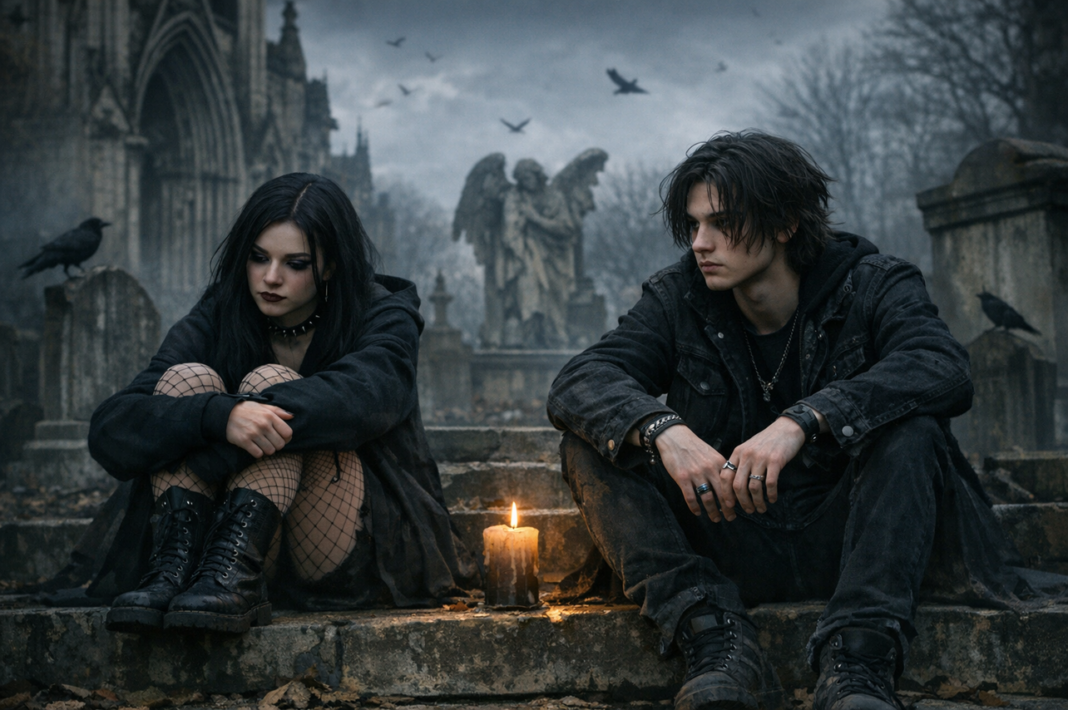

Adolescents being into dark themes are mostly seen as a threatening warning. However, this orientation, for most teens, is a form of expression rather than a danger itself. “Dark aesthetic” offers a symbolic language that interferes when the words are not enough to express themselves, in such a developmental process in which adolescents shape their own unique identities. This article aims to approach the topic—why adolescents are so much into these dark themes—from a more developmental and emotional regulation point of view rather than a psychopathological stance.
Dark Aesthetics and the Adolescent Brain
Dark aesthetics refer to art productions—visual, musical, fashion-related, and online aesthetic orientations (e.g., goth, dark academia, melancholic art content)—that consist of dark themes. The neurological developmental milestone that adolescents are going through can be one of the factors that make them prone to this gloomy theme.
The adolescent brain is in a period of “imbalance,” where early-maturing emotional regions dominate over underdeveloped control regions (Casey et al., 2008). That is, the brain, expecting high emotional arousal, does not seek this arousal in a rational place. Dark imagery and melancholic themes, however, allow for the externalization of highly aroused emotions without overloading the nervous system.
This process is also related to emotional regulation. During aesthetic experience, amygdala activity is not completely suppressed; rather, it is reorganized within a meaningful framework (Barnett & Vasiu, 2024), which allows emotions to be modulated rather than suppressed. Therefore, the inclination toward dark aesthetics in adolescence can be interpreted, from a neurological perspective, as an extension of an overstimulated nervous system’s attempt to balance itself.
Emotional Regulation in The Context of Dark Aesthetics
Adolescents seek ways to express the difficult emotions they experience because rational expression is both challenging and developmentally inadequate for them. In this context, art can help process a stimulus that is difficult to deal with by distancing it from subjectivity, rather than viewing it as a “real event” (Van Dongen et al., 2016).
The dark aesthetic trend, with its gloomy themes, provides a safe space for adolescents to express emotions such as fear, anger, death, and alienation—experiences that begin to be questioned during adolescence. This safe space can aid in the externalization process by allowing individuals to exist within an aesthetic theme without taking behavioral risks.
Finding and identifying with intense emotions within a shared theme is one of the factors that makes dark aesthetics appealing. At the same time, adolescents experiencing identity confusion may temporarily adopt a new identity driven by impulses such as rebelling against authority and being different from the mainstream. In adolescence, experimenting with different identities within a safe space is a fundamental and natural part of forming one’s own identity.
Therefore, dark aesthetics serve adolescents in terms of identity formation, emotional balance, and regulation. It is not a coincidence that during the period when this theme is most popular and visible, people share similar emotional processes with these adolescents.
The Origins of Dark Aesthetics: The Gothic Architectural Period
Gothic cathedrals were built during a time when people lacked security, stability, and individual control. Epidemics, death, and strong beliefs about divine punishment created a state of collective anxiety and chaos. These intensely experienced emotions were expressed aesthetically.
Dark interiors, towering heights, and threatening figures functioned as a regulated expression of fear. From a psychological perspective, Gothic architecture offers an aesthetic regulation space for intense emotions. People experienced their fears within dark stones, light, and shadow; thus, these emotions ceased to be an uncontrolled threat and were modulated within a meaningful framework.
In this respect, Gothic architecture can be considered an early example of transforming emotional chaos into an artistic form.
This historical parallel helps explain why adolescents’ inclination toward dark themes is not merely “pessimism” or “rebellion.” Like medieval societies, adolescents cannot yet fully articulate the intensity of their emotions. Dark aesthetics offer a symbolic, safe, and regulating space for these experiences.
Conclusion and the Danger of Darkness
Dark aesthetics can function as a safe space for expressing intense emotions; however, this space may become detrimental when it is the only channel through which adolescents express themselves. Dark themes are supportive as long as they allow connection with emotions, but when they become the sole means of coping, they may increase emotional burden rather than relieve it.
Especially in adolescence, aesthetic preferences serve as a silent indicator of mood. When this indicator is confined to a single color or theme, it becomes important to pause and explore alternative forms of expression. The issue, therefore, is not choosing darkness—but avoiding getting lost within it.
References
Barnett, K. S., & Vasiu, F. (2024). How the arts heal: A review of the neural mechanisms behind the therapeutic effects of creative arts on mental and physical health. Frontiers in Behavioral Neuroscience, 18, 1422361.
https://doi.org/10.3389/fnbeh.2024.1422361
Casey, B., Getz, S., & Galvan, A. (2008). The adolescent brain. Developmental Review, 28(1), 62–77.
https://doi.org/10.1016/j.dr.2007.08.003
Van Dongen, N. N., Van Strien, J. W., & Dijkstra, K. (2016). Implicit emotion regulation in the context of viewing artworks: ERP evidence in response to pleasant and unpleasant pictures. Brain and Cognition, 107, 48–54.
https://doi.org/10.1016/j.bandc.2016.06.003