


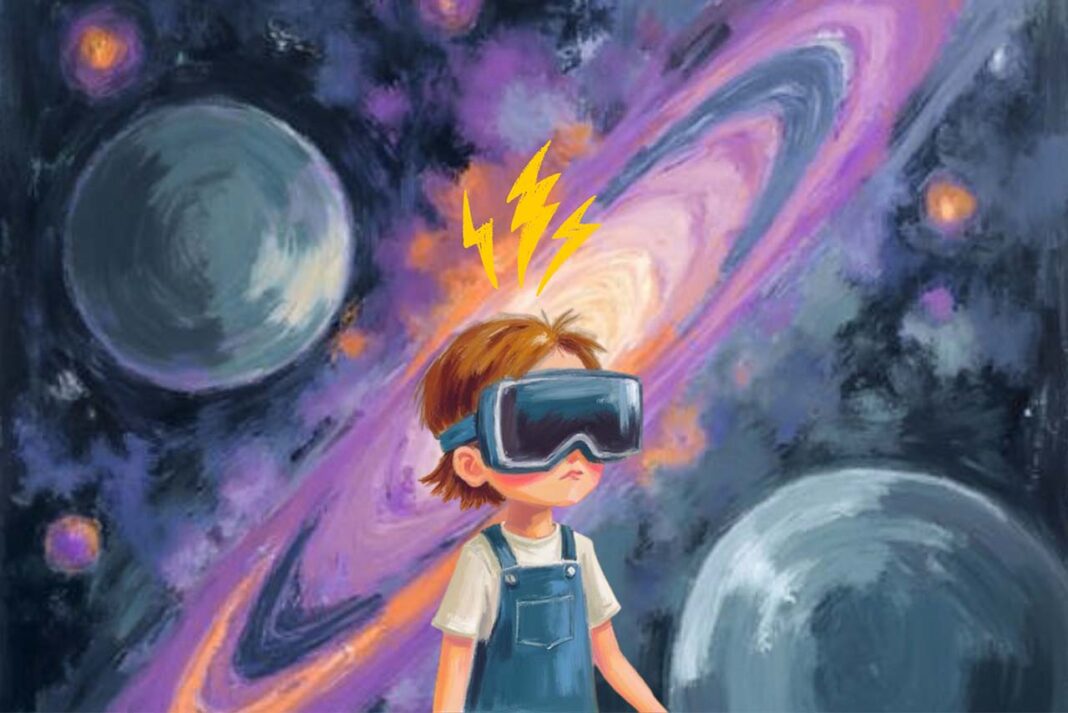

Introduction: The Limits Of Traditional Exposure Therapy
Exposure-based therapy aims to help children confront their fears in a gradual and safe manner. In practice, making fear “appear” can be a challenging task. The underlying reason is that a child who is afraid of spiders may not encounter one during a therapy session, and a child who fears storms cannot summon thunder into a clinician’s office.
This therapy style can be used for childhood anxiety, but in real-life situations, it is often limited by practical constraints. Some fears are difficult to recreate in clinical settings, and for many children, even imagining the feared situation can feel overwhelming.
Virtual Reality As A Therapeutic Tool
As technology develops, new innovations become part of our daily lives. Virtual reality (VR) offers a new way forward. With VR technology, it is possible to create immersive and controlled environments that allow feared situations to be approached step by step.
By taking advantage of the realistic appearance of VR glasses, a storm can grow louder, a spider can move closer, or a dog can become more active while the child remains physically in a safe environment. Rather than replacing traditional therapy, VR expands what is possible within the therapy room.
What Does Research Say About VR And Anxiety Disorders?
Recent research has begun to test how VR-based exposure works with children who are experiencing anxiety disorders. In a small clinical case series, children with specific phobias underwent a single-session exposure treatment delivered through immersive virtual reality. During these sessions, they confronted feared stimuli such as storms, spiders, or dogs within carefully structured virtual environments.
The findings show that children respond to virtual fears in meaningful ways. This demonstrates how interdisciplinary collaboration between psychology and technology can be beneficial. Both subjective distress and physiological arousal increased during VR exposures, indicating that these experiences were processed as emotionally real rather than symbolic.
For some children, repeated exposure was associated with signs of physiological habituation, a pattern often linked to therapeutic improvement. Children and parents reported high satisfaction with the intervention. Additionally, anxiety levels decreased for most participants at follow-up.
Overcoming Barriers In Exposure-Based Treatment
Overall, VR technology shows promise as a tool that may help overcome long-standing barriers in exposure-based treatment, particularly issues of accessibility and feasibility. Situations that are difficult, expensive, or impossible to recreate in real life can now be simulated in a controlled therapeutic setting.
While further research is needed, VR has the potential to bring feared situations into therapy in a way that feels real enough to matter. In doing so, it may reshape how clinicians approach exposure therapy and expand treatment possibilities for children struggling with anxiety.
References
Ramsey, K. A., Essoe, J. K. Y., Boyle, N., et al. (2025). Immersive Virtual Reality Exposures for the Treatment of Childhood Anxiety. Child Psychiatry & Human Development, 56, 1117–1128. https://doi.org/10.1007/s10578-023-01628-4
Innovae. (n.d.). The virtual reality technology. Innovae. https://www.innovae.com/en/the-virtual-reality-technology/
American Psychological Association. (n.d.). Exposure therapy. APA. https://www.apa.org/ptsd-guideline/patients-and-families/exposure-therapy