


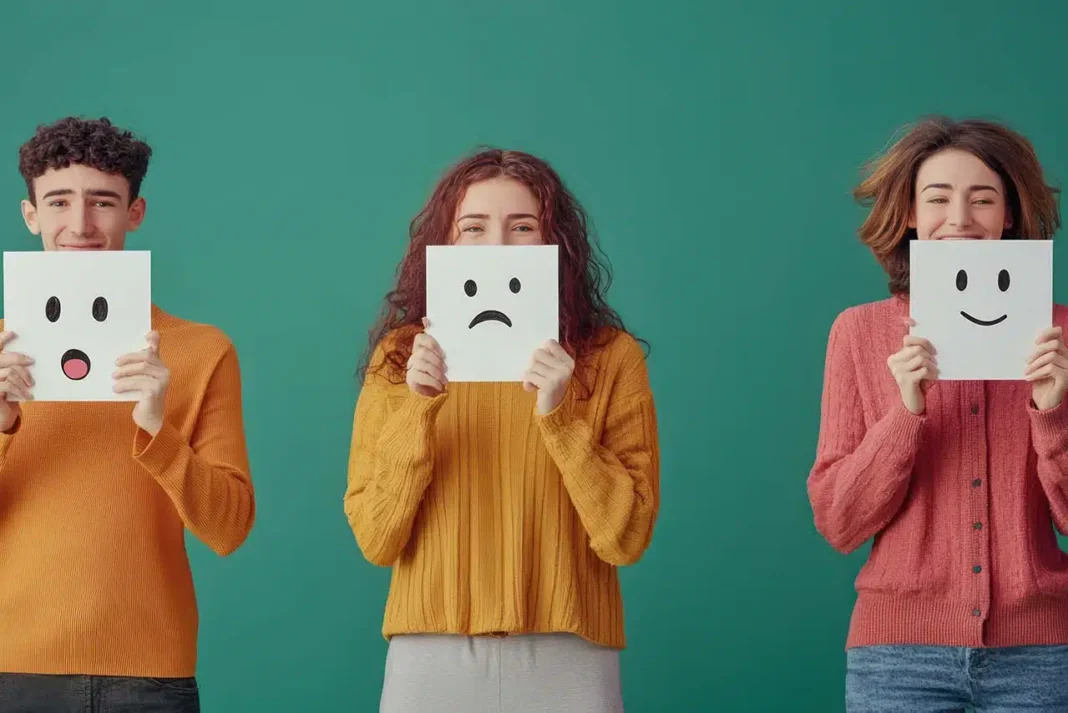

“Will it pass?”
Perhaps this is the question we ask the most in life, the one whose answer we are most curious about. When we face sadness or pain, our first instinct is often to hold onto this question. Because when a person is hurt, they want to know: Is this feeling infinite? Will I stay like this forever? We tend to interpret this question through the lens of suffering. When we ask, “Will it pass?” we typically think of sorrow, loss, or the moments that shake us. However, today let’s approach this question from another perspective; let’s look at the fluid, ever-changing nature of emotions from a different window.
It’s hard for that happiness to come back with the same intensity, isn’t it? The enthusiasm of that day, the liveliness of that moment, slowly fades away with time. As our mind loses all the details of that moment, the feelings slowly disappear as well. However, when we were experiencing that happy moment, we didn’t even realize how time was passing. The intensity of that moment can only be fully felt within that very moment. The next day, when we try to relive it, we can’t get the same flavor. The magic of that moment sadly disappears in an irreversible way.
But here’s the interesting part: The lost happiness is replaced by something else. Over time, another joy, another beauty, another moment of connection comes. Our emotions never really stop; one feeling follows another. Pain and happiness both come and go. Yet, something always remains: the presence of the feelings in that moment, the influence of the memories we accumulate, the buildup of experiences… Happiness flows like a river, and even though we lose a part of it in every flow, we find ourselves again with the next stream. This is why we keep asking, “Will it pass?” Because deep down we know that everything passes, but in that transition, something remains: things that change, grow, and deepen us.
And perhaps this is exactly why they are valuable. Because every emotion is complete only in its own time. Each moment comes and goes with its own integrity. Both happiness and pain temporarily host us within themselves; then, they quietly walk out the door.
But this departure is not an annihilation. It is a transformation. Even though the freshness of your laughter might not remain, the warmth it left behind becomes a character trait, a memory, a perspective. Even though your pain may not burn as intensely as it once did, the depth, resilience, or awareness it gave you continues to live with you somewhere.
The same thing holds true for fear as well. That sudden spike of panic when running away from a dog… it too passes. It might speed up your heart for a while, and echo in your mind for a bit, but then it fades, disappears, and distances itself. What remains could be a faint memory, perhaps a lesson, maybe even a story.
All emotions, without exception, follow this cycle: They come, stay, change, and pass.
No emotion can maintain its initial intensity for long. This is a natural part of psychological resilience and how our brain works. An emotion is the product of a moment. Over time, both our body and mind place that emotion in a different space. Sometimes its intensity diminishes, sometimes its meaning changes, sometimes our perspective on it transforms.
Sadness is like this too. Pain is like this. Even that deep shock after a loss doesn’t stay with the same intensity forever. Time turns it into a meaning, a shell, a memory, or perhaps a state of awareness…
That’s why we shouldn’t fear the passing of sadness. Similarly, we shouldn’t fear it never fully passing either. Because some emotions don’t completely disappear; they transform. They might stay as a trace, a memory, or perhaps as a whisper that teaches us something… These traces are the most natural parts of being human. A smile, a twinge, a warmth, a fragility…
These might stay. Let them. This doesn’t mean the emotion hasn’t been resolved; on the contrary, it means it has found its place, aligning with you.
To allow emotions to be free—to let both pain and joy, fear and excitement flow—is not to interrupt their natural course. It is to let the journey of the emotion unfold within you. Because the more an emotion is suppressed, the more it stays. The more space is given, the more it transforms. Just like a guest… If you shut the door, it gets stuck inside, but if you leave the door ajar, it will leave in its own time.
That’s why the answer to the question “Will it pass?” is actually this: Yes, it will pass… but exactly how it will pass will be determined by time. Some emotions will leave traces, some will quietly disappear, and some will transform into another color. All we need to do is accept this process without forcing it, without fear, without resistance.
Because emotions, like us, also want to be set free.