


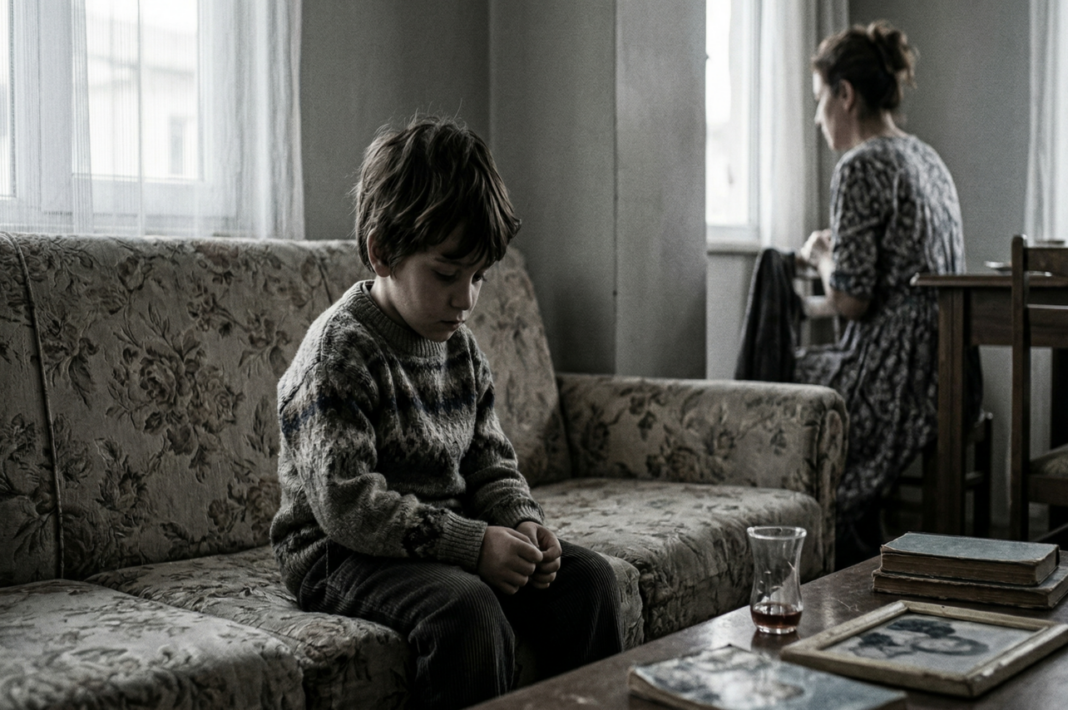

Introduction: The Silent Rejection Of Existence
The story of human existence begins long before biological birth, with the “imagined child” constructed in the minds of parents. For healthy development, it is not enough for a baby to be fed and sheltered; they must also occupy a place within the parents’ desires, dreams, and future plans. However, not every child opens their eyes to the world with this symbolic “welcome” message. Children born as a result of unplanned—and more importantly, unwanted—pregnancies fall into an invisible emotional void at the very beginning of life. This article examines the enduring psychological imprints of being an unwanted child on an individual’s inner world, self-esteem, family relationships, and worldview.
1. Ontological Insecurity: Questioning One’s Place In The World
For an unwanted child, the fundamental trauma is not a specific event but a state of being. In Erik Erikson’s stage of “Trust vs. Mistrust,” an infant learns whether the world is safe through the mother’s gaze and touch.
-
Lack of Mirroring: According to Donald Winnicott’s concept of “mirroring,” when a mother looks at her baby, the baby sees their own worth reflected back. An unwanted child, however, may encounter not joy in the mother’s eyes, but the reflection of burden, a constrained life, or suppressed resentment. This prevents the belief “I am valuable” from ever taking root.
-
Existential Guilt: These children often grow up with a pervasive and inexplicable sense of guilt—as if their very existence makes life harder for someone else (usually the mother). In adulthood, this may manifest as a personality that apologizes simply for taking up space in the world.
2. Family Dynamics: Invisible Walls and Role Confusion
The position of an unwanted child within the family is often complex. Even if physical needs are met, there is often an emotional “scarcity” in parental investment.
-
Scapegoat Role: Economic difficulties, career losses, or marital dissatisfaction may easily be attributed to the child’s existence. The message “If it weren’t for you, everything would be different” may be expressed directly or conveyed through subtle emotional cues.
-
Compensatory Love (Reaction Formation): In some cases, the mother may attempt to suppress her guilt by becoming excessively giving and overprotective. However, this form of love often feels mechanical; the child senses the underlying emotional disconnection, leading to confusion.
-
“Privileged” Sibling Divide: If a later, planned, and wanted sibling is born, the unwanted child often acutely perceives the disparity in affection and attention. This can foster a deep sense of injustice and intensify sibling rivalry.
3. Worldview: Life As A Struggle
Unwanted children often develop a defensive and fatalistic outlook on life. Rather than seeing life as something to be enjoyed, they perceive it as a test to survive.
-
Development of a False Self: Believing they are inherently unlovable, the child may strive for perfection to gain acceptance. This “good child” mask—formed by suppressing personal needs and prioritizing others—conceals a profound fear of abandonment.
-
Attachment Patterns: Avoidance and Anxiety: In adulthood, these individuals may exhibit either anxious dependency (doing everything to avoid abandonment) or avoidant detachment (keeping distance to prevent disappointment). The core belief often remains: “If even my mother didn’t want me, why would anyone else?”
4. Neurobiological Imprints and The EMDR Perspective
This deep wound is not only cognitive but also embedded in the nervous system. In trauma literature, “unwanted childhood” is understood not as a single incident but as a form of complex trauma that creates a persistent sense of threat in the brain.
From an EMDR (Eye Movement Desensitization and Reprocessing) perspective, the feeling of “being unwanted” exists as an unprocessed memory network stored in the limbic system. When triggered in adulthood—by criticism or rejection—the individual may become emotionally overwhelmed and regress to the helpless state of the infant.
In EMDR therapy, deeply rooted negative beliefs such as “I am worthless” or “My existence is a mistake” are targeted. Through bilateral stimulation, the brain reprocesses these past experiences. Over time, the individual comes to understand—on an emotional level—that the mother’s lack of readiness or desire was not a reflection of their inherent worth.
This is not merely a cognitive realization but a physiological one: the nervous system begins to settle with the internalized sense of resilience that “I am safe now, and I belong here.”
5. Conclusion: Affirming One’s Own Existence
Being born as an unwanted child may feel like starting life at a disadvantage. However, the human psyche has the capacity for resilience—the ability to grow even in the harshest conditions.
The “invisible bond” of the past does not have to define one’s future. Healing begins with recognizing the wound, understanding that the mother’s story is not one’s own, and seeking professional support when needed—such as therapies like EMDR that help regulate the nervous system.
Ultimately, a person’s worth is not determined by how their story began, but by their ability to embrace their existence and become the author of their own life. To exist is not a mistake—it is, in itself, a truth and a miracle.
References
-
Bowlby, J. (1988). A Secure Base: Parent-Child Attachment and Healthy Human Development. Basic Books.
-
Winnicott, D. W. (1971). Playing and Reality. Routledge.
-
Shapiro, F. (2017). Eye Movement Desensitization and Reprocessing (EMDR) Therapy: Basic Principles, Protocols, and Procedures. Guilford Publications.
-
Miller, A. (1981). The Drama of the Gifted Child: The Search for the True Self. Basic Books.
-
Stern, D. N. (1985). The Interpersonal World of the Infant. Basic Books.
-
Van der Kolk, B. A. (2014). The Body Keeps the Score. Viking.
-
Cassidy, J., & Shaver, P. R. (2016). Handbook of Attachment. Guilford Press.
-
Lanius, R. A., Vermetten, E., & Pain, C. (2010). The Impact of Early Life Trauma on Health and Disease. Cambridge University Press.